Samarasata Sthal, Sector 23, Rohini, Delhi | Sunday, 29 November, 2026
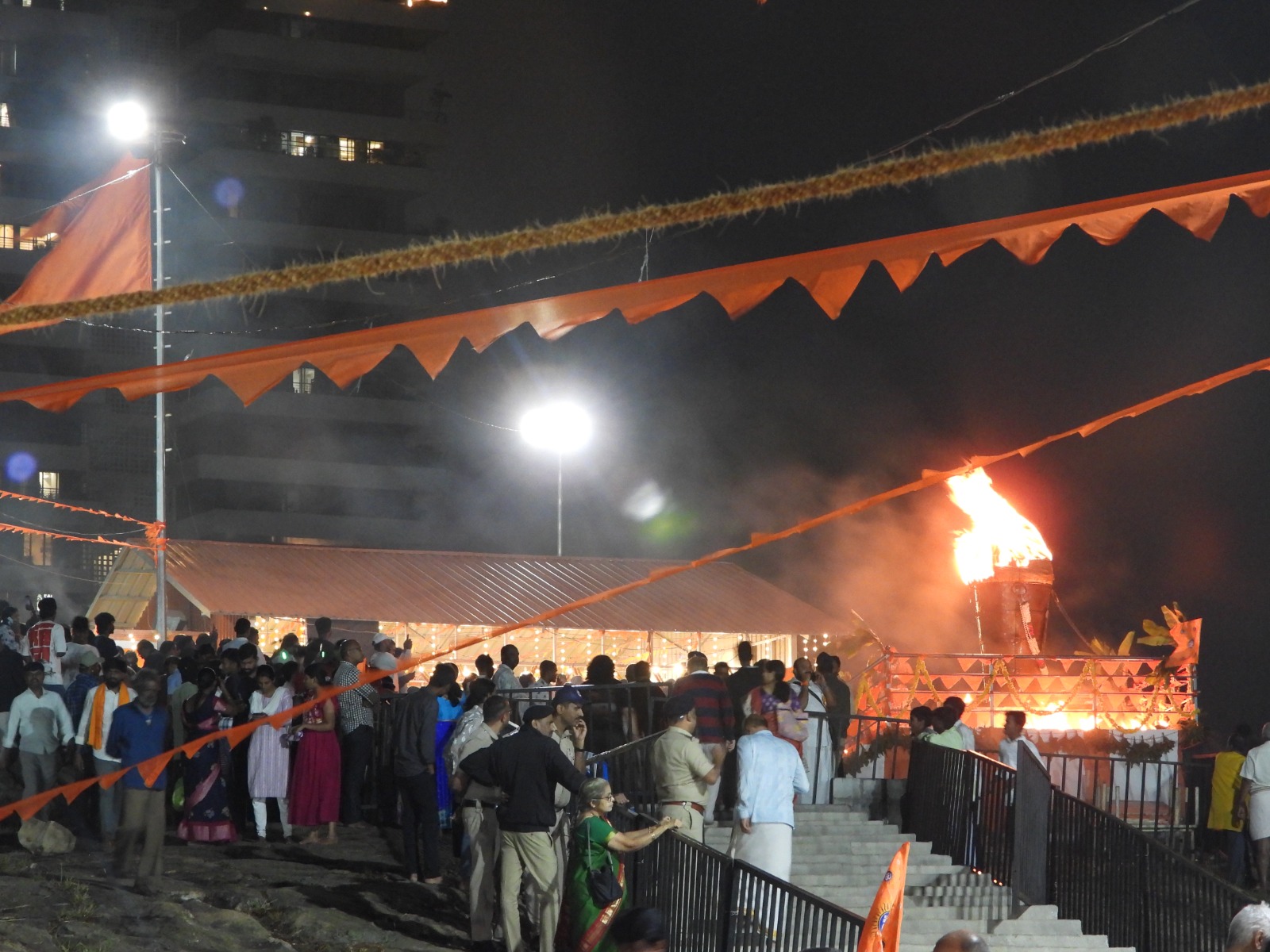
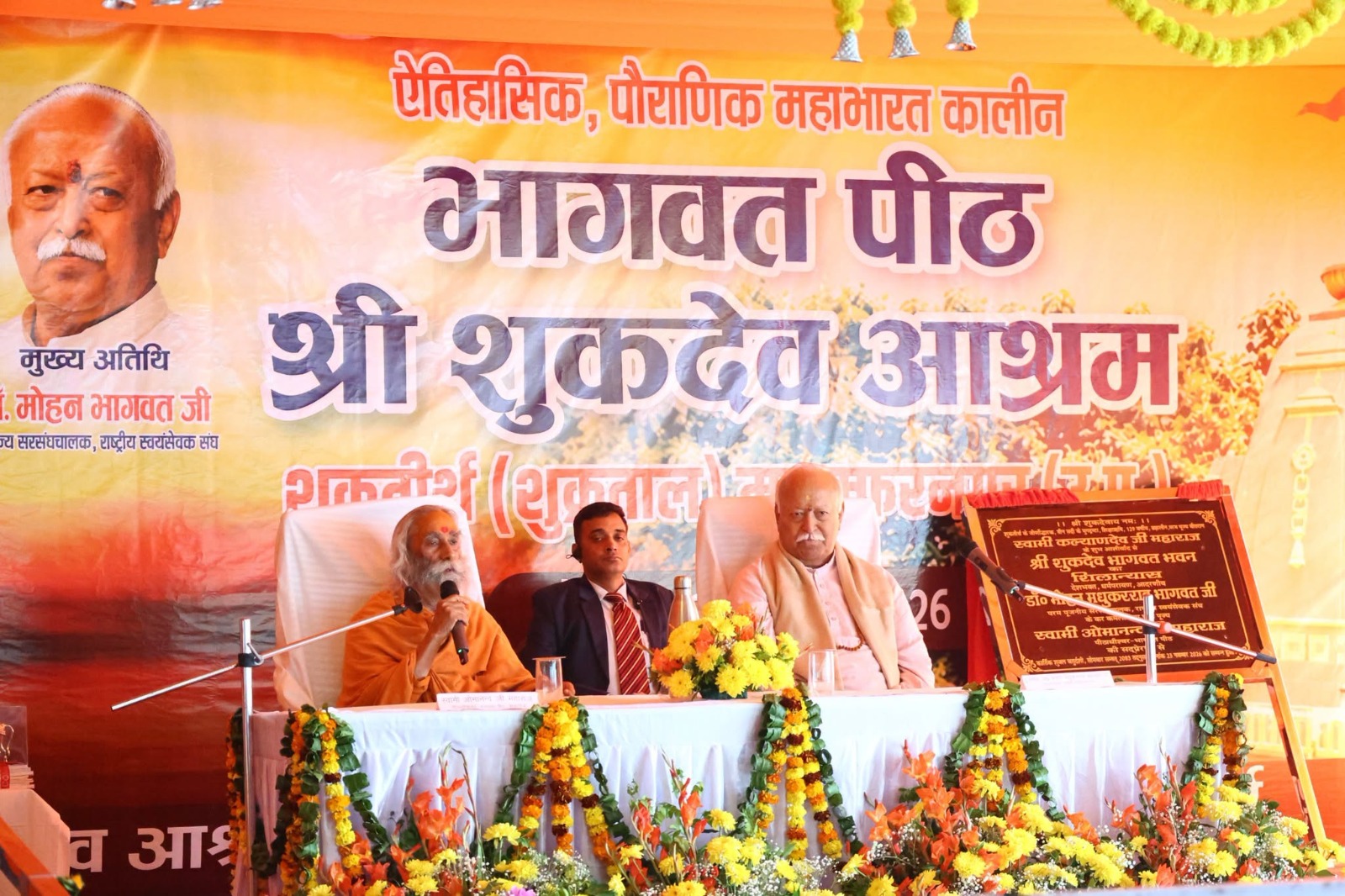
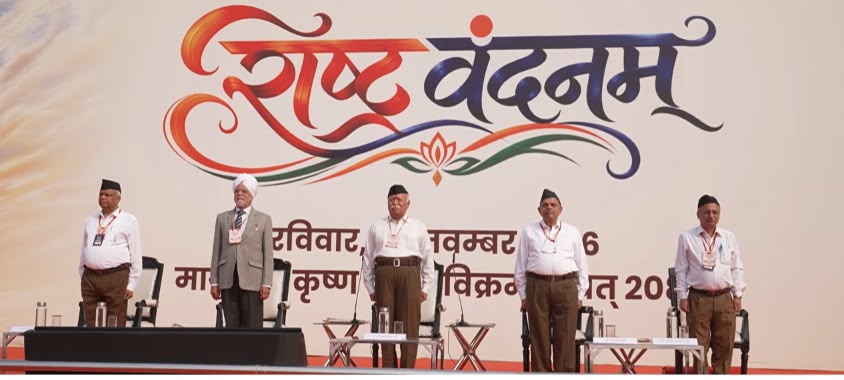
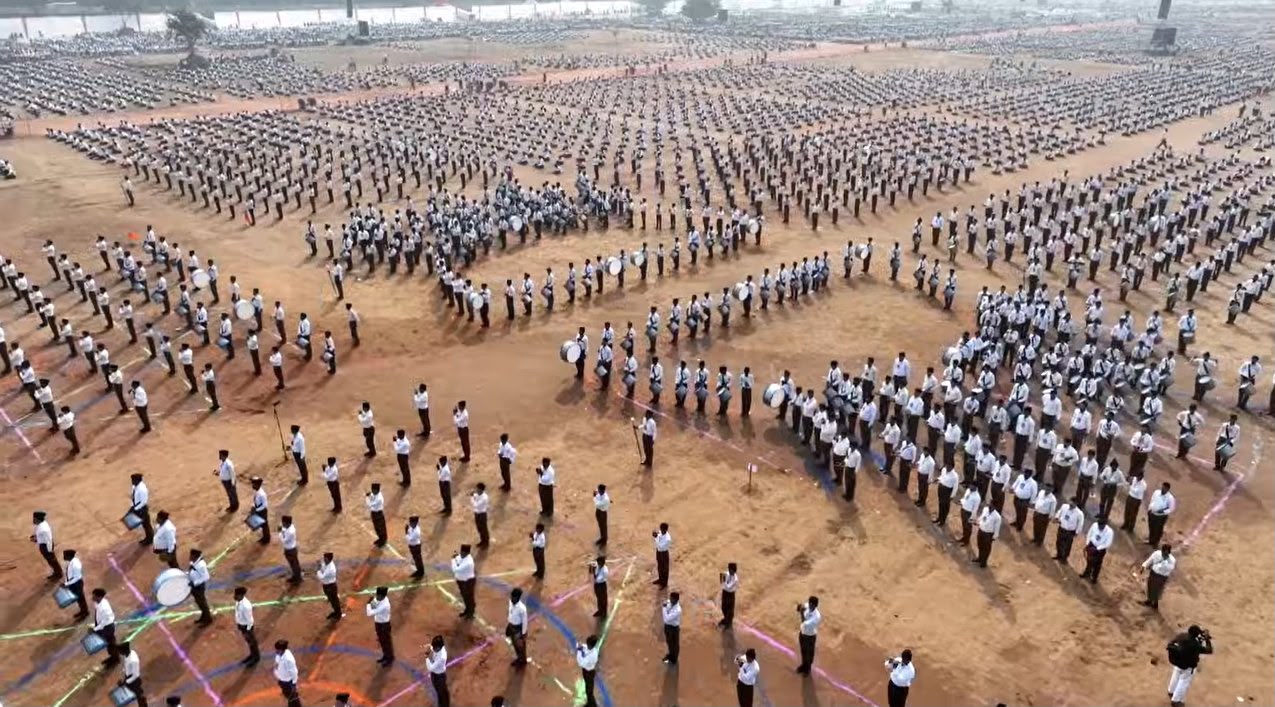
Delhi Prant of the Rashtriya Swayamsevak Sangh (RSS) organised ‘Rashtra Vandanam’— a vast confluence of Swayamsevaks and the sajjan shakti of society—on November 29, 2026 at Samarasata Sthal in Rohini, north-west Delhi. The objective of the programme was to carry to society the message of national unity, social harmony, discipline, environmental protection, swadeshi, self-reliance and a drug-free society.
Chief Guest: Justice Jagdish Singh Khehar, former Chief Justice of India.
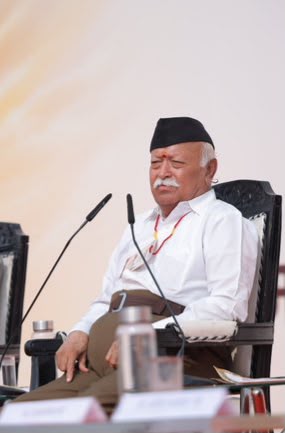
Chief Speaker: RSS Sarsanghachalak Dr. Mohan Bhagwat ji.
RSS Sarkaryavah Shri Dattatreya Hosabale and other senior officials of the Sangh were also present on the dais.
Key facts about the Programme
- The programme began at 11.30 am.
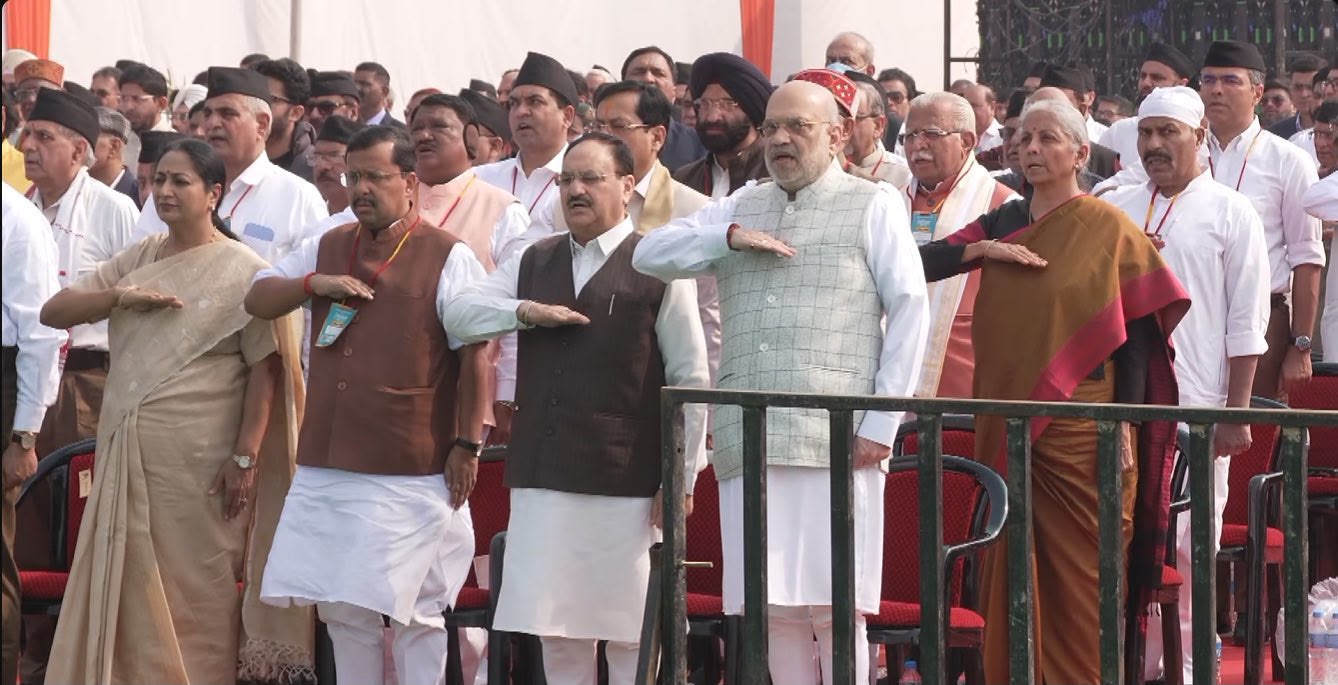
- The guests included Union Home Minister Amit Shah; Union Ministers Nirmala Sitharaman, Manohar Lal, Shivraj Singh Chouhan and Sarbananda Sonowal; Bharatiya Janata Party National President Nitin Nabin; Chief Minister of Delhi Rekha Gupta; ministers in Delhi government; various sadhus and saints; and leading figures from society.
- The programme included the Sangh prayer, salutation to the flag, physical and yoga demonstrations by Swayamsevaks, and a performance by 700 ghosh players.
- A few months back, three resolves were made together with society — tree plantation, zero waste, and public awakening against addiction.
- During the centenary year, the Swayamsevaks in Delhi Prant contacted 22 lakh families through Griha Sampark Abhiyan, and Hindu Sammelans in 1,705 bastis.
Video link of the programme: https://www.youtube.com/watch?v=oPmpMldTyeQ
Address by Chief Guest, Justice Jagdish Singh Khehar (former Chief Justice of India)
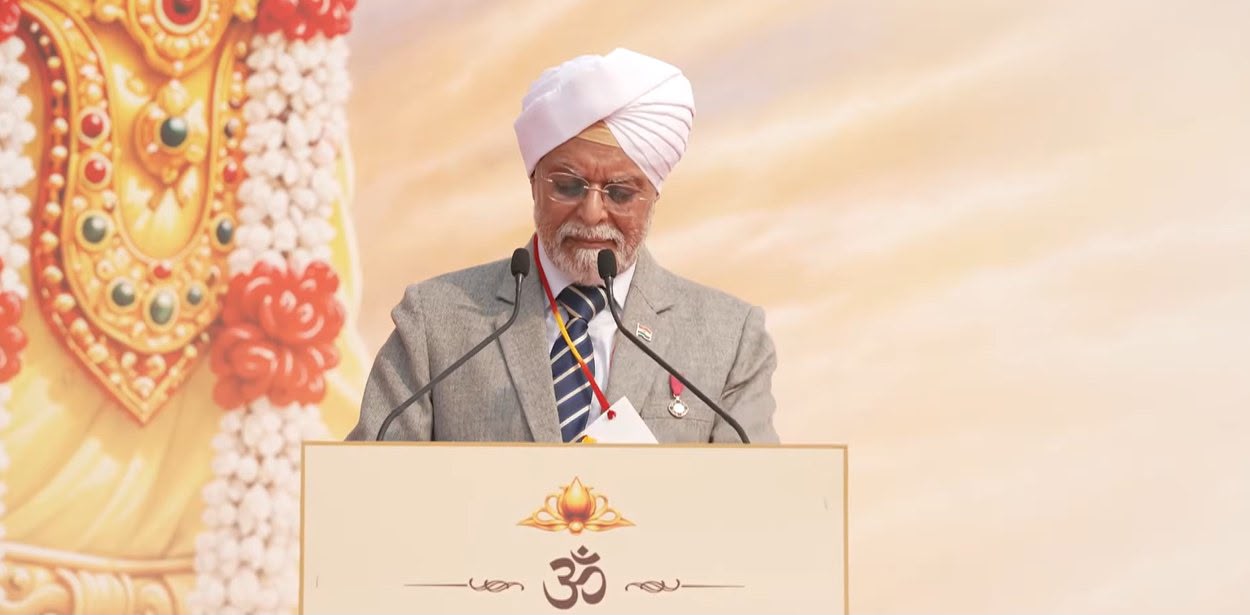
Justice Khehar delivered the speech in English; therefore his words are reproduced here as it is.
Dr. Hedgewar and the founding of the RSS
- Dr. Keshav Baliram Hedgewar felt that a handful of Britishers could rule over all of India because Hindus were divided, lacked valour, and even lacked civic character.
- He believed that after India gained independence, a strong and cohesive society was essential to sustain economic and political freedom.
- With these objectives, Dr. Hedgewar founded the RSS in November 1925 with just fifteen to twenty young men.
- After he enrolled about a hundred Swayamsevaks by 1927, his main preoccupation turned to forming RSS Shakhas.
- It is for all to see that his efforts towards the growth of the RSS have borne fruit.
- Estimates suggest that after a hundred years, the RSS has millions of Swayamsevaks, making it possibly the world’s largest organisation.
- I am delighted to congratulate the RSS on reaching the remarkable milestone of completing one hundred years.
- I am delighted and overwhelmed to recognise that an organisation, which started with just 15 to 20 young men, is today possibly the world’s largest organisation.
Staying true to its original purpose
- Encyclopedia Britannica and Wikipedia note that the original resolve of the RSS was to cultivate character, instil discipline, and organise the Hindu community.
- Over these hundred years, the RSS has survived social and political changes and remained a cultural, social, and nationalistic organisation.
- The RSS has stayed away from traditional established political systems. It does not contest elections, nor does it have a formal party-political platform.
- I congratulate the RSS for remaining steadfast to the cause for which it was originally established a hundred year ago.
Swayamsevaks at the forefront in times of crisis
- Recorded history shows that Swayamsevaks have been at the forefront during moments of crisis.
- During the Partition of India in 1947, Swayamsevaks played an active role in organising self-defence, providing relief, and evacuating Hindus and Sikhs in Punjab.
- After the Chinese invasion of 1962, Swayamsevaks, at great personal risk, supported the Indian Army and civil administration by carrying men, materials, fuel and other essential supplies behind the front lines.
- In recognition of their bravery and patriotism, the then Prime Minister invited the RSS to participate in the Republic Day Parade on 26 January, 1963. More than 3,000 Swayamsevaks participated in the parade.
- With reference to the 1984 massacre of Sikhs in Delhi, official RSS publications maintain that Swayamsevaks actively helped protect Sikh families and guarded threatened neighbourhoods.
- This position was also confirmed by writer and historian Khushwant Singh, who credited the RSS with helping safeguard Sikh lives and maintaining communal harmony, despite his close association with the leadership of the then ruling party. And that is the truth of my belief.
- Following the earthquakes in Assam (1950), Latur, Maharashtra (1993), and Gujarat (2001), thousands of Swayamsevaks cleared debris, set up temporary medical camps, distributed food, and participated in long-term village rehabilitation.
- The same spirit of service was demonstrated by Swayamsevaks during the COVID-19 pandemic. A research note confirms that RSS relief had reached over 85,000 locations by May 2020.
- In Kolar, Karnataka, 300 Swayamsevaks worked for two weeks to clear debris, weeds, and cobwebs from a hospital that had been closed for nearly two decades. Their efforts helped revive the 800-bed hospital for COVID-19 support.
- I would like to thank the Swayamsevaks for their contribution during moments of crisis.
Centenary outreach abroad
- The most successful way of celebrating 100 years is by showcasing the organisation’s past and declaring its future direction. The RSS has done exactly that over the last one year.
- The RSS has projected its objectives and showcased its work overseas.
- At the Universal Oneness celebrations in New York, Dr. Mohan Bhagwat explained the Indian position as unity in diversity, or rather, oneness in diversity.
- During his address in Toronto, Canada, Dr. Bhagwat said: “We always see unity. In Bharat, there have been many castes, many creeds and many languages. Everything is many. Nothing is alone. Nothing is simple. But it is all one. We do not say all are one. We say all is one.”
- Dr. Bhagwat thereafter visited the United Kingdom as part of the RSS centenary outreach. Earlier, Shri Dattatreya Hosabale had also visited the USA, Germany, and the UK.
- These were path-breaking events. The hundred-year history of the RSS is laudable. My best wishes to the RSS for its future endeavours.
Address by Pujaniya Sarsanghachalak Dr. Mohan Bhagwat ji
Centenary year: not celebration, but tapasya
The tapasya of the Sangh Swayamsevaks has been going on for the last hundred years. Even after the festivities of the centenary year are over, they are still doing tapasya, and will continue to do so, because it is for this very purpose that they became Swayamsevaks of the Sangh.
The programmes of the centenary year were held all over Bharat with great enthusiasm. But the Sangh did not make its tapasya a subject of festivity or celebration. This year was used to increase dialogue and contact, to carry our message to as many people as possible, and to expand direct work.
Swayamsevaks have made efforts so that the work grows. While doing this, society took over some of the programmes. For instance, the Hindu Sammelan was mentioned. For that, a committee of Hindu society was formed in every mandal, in every basti. That committee did all the organising and planning, and completed the programme. In the same way, the Sangh Swayamsevaks carried out some programmes through their own efforts. But in both, our aim was the growth of our work, the growth of our contacts, and the growth of our dialogue with society. And that was entirely successful.
Our chief guest has given you its summary in brief. He has placed before you very well what happened. In a way, he has packed an ocean into a pitcher. We too could not have described it in such a short time. But what we saw, that I am going to tell you.
We did this work of expanding our contacts and increasing dialogue in our own country as well as in other countries of the world. Because we felt that it is necessary. It is necessary from the point of view of our country, necessary from the point of view of our Hindu society, and necessary from the point of view of the Sangh as well.
The nation is supreme
In the country we saw that there is enthusiasm everywhere. Generally, in the whole of society, and especially in the new generation, there is a surge to make our country the foremost country in the world. For that they want to perform deeds of valour, they want to make effort. They want dialogue, they want consultation, they want clarity of goal. The capacity to act is with them.
Nothing comes before the country; the country is supreme. I, my family, my caste, my province, my language, my opinion, sect, community, party — all these come afterwards. The country first.
And what this country is — a somewhat hazy idea of it exists everywhere in the same way. What is the identity of our country? What is the face of our country? What is the inner being of our country? When people think about this, they begin this social life of ours, this national life of ours, from the pre-Vedic age and bring it down to the present.
Mahatma Gandhi too had said that Hindutva is the name of a continuous search for truth. Hindu society has grown tired while performing the tapasya of this search, and that is why it is in this sorry state today. When it wakes up after completing its rest, it will, with greater valour and brilliance than before, perform its destined task in the world. Now it seems that the process of stretching before waking has begun in society.
In this age-after-age process of the continuous search for truth, many streams took shape, many schools of thought arose, and different rituals, names and forms came into being. In spite of all this, we people of Bharat are one people. This is now settling firmly into people’s experience.
Some people do not want this feeling to enter people’s minds, so that the shop of their self-interest keeps running. But despite such efforts, this truth is becoming firm in the hearts of the people. Bharat is waking up from within.
Therefore, taking along the janashakti and the sajjan shakti that follows it, the whole of society should engage with all its life in the task of national reconstruction and of making Bharat the foremost country in the world. This effort all of us have to make. The Sangh’s plans are made with this very aim, and work on them has already begun.
Experiences of travel abroad
I went to only three countries. Our Sarkaryavah ji went to two or three countries more, and other officials went as well. But this effort was made in all five continents.
The reason for making this effort was that there are many who carry on inverted propaganda about Bharat, about Hindutva and about the Sangh. And it goes on unchecked. Only one side comes before people; the other side does not come before them. So that too should come before them. One should go and tell them. That is why we travelled.
We saw that even in the face of such propaganda, among ordinary people, among those who run the economy there, among the young generation, and among those who lead there in spite of their political opinions, there is wonder about Bharat, pride as well, and expectation as well.
Unity in diversity
When Bharat became independent, many Western scholars used to say that this country would not last long. The people here would fight among themselves and in the end would ask the Western countries to come and rule them.
There is diversity in Bharat. Westerners call it “mind-boggling diversity”. Seeing so much diversity, they simply could not believe that our country has been one nation for centuries.
A little friction keeps happening. That is nothing new. When sixty or seventy families live together in a Hindu joint family, some disturbance does keep happening. Which family is there where this never happens? But all this stays within a limit. Every member of the family understands that in spite of all this, we are one family.
Here too differences of opinion and quarrels keep happening. Taking advantage of this, some people try to sow the seeds of permanent division in our minds. But our nature is not like that. In spite of all this, we people of Bharat are one.
When a foreigner attacks Bharat, the moment the news of the attack comes, all differences and quarrels come to an end. From the soldier fighting on the border to the beggar begging in the lanes, everyone fights the war against foreign aggression in his own place.
During the Kargil war, a gentleman who ran a coaching class in one city gave his entire year’s collected fees to the war effort. In the same city, a beggar begged for three days, saved the money in his little box, and gave that too to the war relief fund.
Everyone had the same feeling — the country has been attacked, the country is ours, and we are its people. Not only the soldier; we too will fight for the good of the country, each in his own way.
What is needed is only this: that this sense of oneness which wakes up in times of crisis should remain ever steady in our hearts, and our conduct should be full of goodwill towards one another.
The world looks at Bharat with wonder
It was the arrogance of Westerners that we taught democracy to Bharat. But they did not give it. The democracy that we accepted even after passing through such severe tests, we have kept intact to this day. This seems astonishing to them.
They had not imagined that Bharat would come so far forward in the world’s economic dealings so soon. Today that is visible. They are astonished.
There is a capacity among the people of Bharat to bring together things which they cannot reconcile, and to walk on with them reconciled. To give primacy to the individual, but also to join society with the individual. To make the individual exist for society. How do these two go together?
On the way here just now, I was listening to a song by Bhupen Hazarika. That song asks a question about the Ganga. There was an expression in that song to the effect that when the individual becomes self-centred, society becomes without personality. This is the world’s experience. But here, the freedom of the individual and his responsibility towards society come together at one and the same time.
In our traditional ways of development, bringing ever-new ways of development continuously on the basis of new knowledge, and along with that keeping the environment safe — this has been going on here.
For our own protection we have to use weapons. To protect crops from disease, pesticides are used which kill living beings. But our traditional pest-control methods do not kill them; they control them. We have developed such techniques. How this became possible — there is curiosity in the minds of people of the world about it. They want Bharat to give them knowledge on these subjects.
There may be many things to learn from the various countries of the world; we should look at them with an open mind and learn. But we have something to give to the world which the world does not have, and which no one else can give either. This experience came in conversations and dialogue with people abroad.
So many sects and communities came into Bharat. In spite of all ups and downs, from the time they came until now they have lived here. They are safe, they are respected. How does this happen?
There was an Archbishop at an inter-faith meeting there. He invited me, saying that in our place we get killed for no reason in the quarrels of sects and communities. You should come and tell us how one can live tolerating one another. How can a Hindu find oneness and belongingness in everything? There is curiosity about this in his mind.
And without giving even a single paisa, purely on the basis of love, a working method that raises Swayamsevaks who serve with dedication, having done tapasya in the sun for a hundred years, is not with anyone else in the world. Countries of the world have begun to say: teach us this for our young generation.
The inverted propaganda that goes on has its own place; it will go on. But if we make contact, if we go below the upper layers, then we realise that there is immense goodwill for Bharat. There is a respectful view of the Hindu, and expectation from all this as well.
Walking on the path of truth — this is our vow
Our task is to walk on the path of truth — of Bharat, of Hindu society and of the Sangh. Whether people appreciate it or not, whether they condemn it or not, whether we gain anything or not, we have to keep walking.
nindantu nitinipuna yadi va stuvantu
Let those skilled in niti, people of moral wisdom, censure us or praise us.
lakshmih samavishatu gachhatu va yatheshtam
Let wealth and resources come into the home, or leave and go wherever they please.
adyaiva va maranamastu yugantare va
Whether we must enter the jaws of death this very moment, or live a life more terrible than death, wasting away bit by bit.
nyayyatpathah pravichalanti padam na dhirah
Those of steadfast mind never turn their step, once set on the path of justice, this way or that. They keep walking on their path.
This is our vow.
The truth that we have realised by coming into the Sangh is Dr. Hedgewar’s own realisation. To express it fully in our lives, to attain that kind of character-strength and that unity of personality, is our tapasya. Our aim is that such an atmosphere is created in the whole of society, and that by the effort of the sajjan shakti of society, Bharat is once again established at the position of Vishwaguru.
Dharma and Bharat’s duty
Swami Vivekananda had said that Bharat was born to give dharma to the world. Here dharma does not mean modes of worship, food habits or outward customs. Dharma is that by which everyone gets happiness, all remain free of ailment, people look upon one another with a good eye, and no one becomes a sharer of sorrow.
That which brings material happiness and spiritual happiness together is dharma. The rule which determines the duty of every person and every object in the world, keeping their essential nature in mind, is dharma.
May our mind, intellect and body walk together and attain the soul. Fulfilling well the purusharthas of artha and kama, walking under the discipline of dharma, may we move forward towards moksha. Growing along with the individual, the group and creation, may we move towards the ‘Parameshthi’. The balance that is needed for this, and the discipline that is needed for this, is called dharma.
Vivekananda says that Bharat will rise. Why was Bharat born? To do that work. It has to give dharma to the whole world.
Yogi Aurobindo said that Sanatana Dharma and the Hindu nation are one and the same thing. When God wills that Sanatana Dharma rise in the world, then Bharat rises. And such a will has arisen in Lord Krishna. Therefore, Bharat’s rise is inevitable. This is the Uttarpara Speech.
The great men of realisation, having plunged extremely widely and deeply into the body, mind, intellect and soul of our Bharat, have placed this before us. If we look at history from then until today, step by step we are moving in that very direction. This is the duty that stands before Bharat. Now the world too has slowly begun to accept it.
Some people from the countries included in the Commonwealth told me that Bharat should lead the Commonwealth. This is their expectation. What is to be done, when it is to be done and how it is to be done — the policy-makers will decide. But the world has expectations of Bharat.
Today Bharat is the most trustworthy country in the world. Even amid international tensions, Bharat holds goodwill towards all and helps everyone. Countries which do not help Bharat, even those which hold hostility, Bharat helps them too. This is not a matter of today; it is Bharat’s character.
This is the expectation of the world, and this is the aspiration of the ordinary people of Bharat. The only thing is —
udyamena hi siddhyanti karyani na manorathaih
The dreams of one’s mind are not fulfilled merely by wishing. For that one has to make effort, one has to work, one has to labour, one has to do tapasya.
na hi suptasya simhasya pravishanti mukhe mrigah
Deer do not come and fall into the mouth of a sleeping lion, saying, come, eat me. It is man alone who creates the situation of “come, bull, kill me”. Animals never commit such madness.
Why the Sangh began — Dr. Hedgewar’s experience
So, this effort needs to be made. That is precisely the Sangh’s work. The Sangh became so large in a hundred years. It is appreciated. For that we are grateful. But is the Sangh’s work meant for receiving its own appreciation? The Sangh did not begin for this.
In all the efforts that were going on to bring this country of ours to an energised state, Dr. Hedgewar worked as a genuine worker. He was a revolutionary. He was a worker in the Congress of that time. He suffered imprisonment twice in the freedom movement. He was an active worker in the efforts of social reform. He was engaged in works of service.
While doing all this, it occurred to him that all those who do these works and all those who lead them share one experience: the issues for which this work is being done will get solved. But one cannot say that those problems will not come again and again, because something needs to be done in society.
Manabendra Nath Roy was one of the early workers of the Communist Party in the country. Later he became a radical humanist. He has a book called ‘Radical Humanism’. In it he has written down the experience of his life. He says that while educating the common people and bringing change into their lives, unless we join them in the efforts of change, no good work in Bharat is going to succeed. Further he says that I know this is a very long road. But this is the only road, so it is the best road, the shortest road, because it is the only road.
Social change: devotion, discipline and compassion
Many great men who dedicated their lives to Bharat have emphasised the need for change in society. Devotion to Bharat Mata is needed. Swami Vivekananda had said: for fifty years, forget your gods and goddesses, accept Bharat Mata as your object of worship, and serve her crores of children. He had said that the poor and the ignorant should be looked upon as gods and served.
Sister Nivedita said that social discipline is needed, social consciousness is needed. In a free nation, the daily expression of patriotism is this: following one’s civic rules and civic discipline, and working with civic sensitivity.
The day before yesterday I went to a programme. Nobel laureate Kailash Satyarthi was there. From the character of Shri Ram he drew out one excellent quality of compassion, proved it through his writing, and placed it before everyone. Compassion is not merely sensitivity; it is also to become active. To feel sensitivity in the mind on seeing the sorrow of society, and to engage oneself in removing that sorrow — that is compassion.
The episode of Jayaprakash Narayan
An old episode from right here comes to my mind. A large camp like this was held in Delhi. At that time Babu Jayaprakash Narayan had come to see the camp. This is from before the years ’70 to ’75. Coming there, he was greatly surprised. After seeing the whole camp, it became clear that the expense is low. A Swayamsevak bears his own expense.
When introductions took place, there were fifty to seventy workers in the meeting of the main workers. In their introductions they said: it is thirty years since I joined the Sangh; it is fifty years since I joined the Sangh. He was surprised. He asked just one question: you people have been working for thirty years; you get nothing, no one even says thank you. So what inspiration is it that keeps you doing this work?
One of our workers stood up and answered: the sorrow of our society — that is our inspiration. That sorrow does not let us sit at ease. Whatever needs to be done to remove that sorrow, we set about doing it.
Society runs on goodwill
Why does this happen? It does not happen by words. It does not happen by listening to speeches like this. Here an experience of apnapan — of everyone being one’s own — is at work. There should be in society that goodwill of apnapan towards one another.
During the centenary, we held Sadbhavna Baithaks (meetings of goodwill). We will carry those goodwill meetings forward in the future as well. Why? Because society runs on goodwill.
Society does not run only on the basis of systems, arrangements and law. Law and systems are helpful, but behind following them there must be this feeling that this is our own society, our own country and our own city.
For a clean city, the feeling of “our city” is necessary. In the same way, for a supreme Bharat there must be the feeling of “our Bharat” and “our Bharatiyas”. This very feeling of apnapan is the foundation of the Sangh’s work.
The goal: the whole of society becomes Sangh-may
The sensitivity that awoke in Dr. Hedgewar’s mind on seeing the sorry state of his society and country expressed itself actively in his life. We changed ourselves, and then, for changing the whole of society, we did not weigh our capacity; we did not weigh favourable and unfavourable circumstances. We did not weigh resources and means. We set out. And having set out, as we walked, it became a caravan.
But why are we still walking now? A hundred years have passed. Such a large force stands raised. Now rest a little. There is no time for rest. This work remains to be done.
We did not set out to produce an influential group by the name of Sangh in the country. Today that has happened. But by expanding it we have to make the whole of society Sanghmaya. Even if it will not come to the Shakha. Even if the whole of society will not have everyone in ganvesh. In it there will also be people who do not even know the Sangh. Not everyone will call himself a Swayamsevak. But all people will, in their lives, holding the good of Bharat as supreme and treating Bharat’s society as their own in spite of its diversity, work to take it forward. For this, every person should remove his own defects and do the tapasya of adopting good qualities.
An atmosphere of goodness should be created in society, and its sajjan shakti should not remain silent but should speak out. On the basis of this sattvik power, society’s systems should receive direction and guidance. Such a self-reliant society should come into being which decides its own destiny and runs its own systems smoothly.
In Bharat there should be such a society where there is freedom, where there is effort for the maximum possible equality, where there is no discrimination, where all are respected and accepted, and where all get justice. Society should build its life on the basis of its identity, should use modern science and technology, but should not give up the foundation of its character and of truth. It should cause suffering to no one, should hold goodwill towards all, and should increase happiness and peace in the world by its very existence.
The modern world expects such a role from Bharat and from Hindu society. For this, Swayamsevaks will have to prepare themselves and society quickly. The Swayamsevaks sitting here are doing tapasya in the sun just now; in the same way they have to keep doing tapasya in the future too. Favourable conditions have come. We are not here to take advantage of them.
Shiva’s role and the path ahead
The churning for amrit goes on. Shivji sits at the edge and watches. Kaustubh, Parijat, Dhanvantari, the moon — he accepts none of these. What comes as halahal, the poison, he drinks it, he digests it. For the welfare of the world, ever with his detached and aloof disposition, but alert, he remains ready.
A collective working force that plays that role of Shiva — in which there will be the Sangh, in which there will be the creative power of society — that is what we have to raise. In the atmosphere created by it, this society, organised and endowed with good qualities, will make its country great. Bharat, having become the foremost in the world, will give the whole world a new creation that brings happiness and peace, by which the world will be benefited.
That day we have to realise as soon as possible through our own doing. And we are not to take a hundred years for it. Therefore, continuing our tapasya, making ourselves worthy for this, and through our contacts and dialogue joining all the sattvik powers of society in this campaign — joining them as complements, raising them to walk with us — this work let us all do.
This much I place as a request before the Swayamsevaks and the sajjan shakti sitting here. This is the work of the whole country, of all of us. The Sangh’s work is not for the Sangh. In this work you, we and everyone will have to engage together.