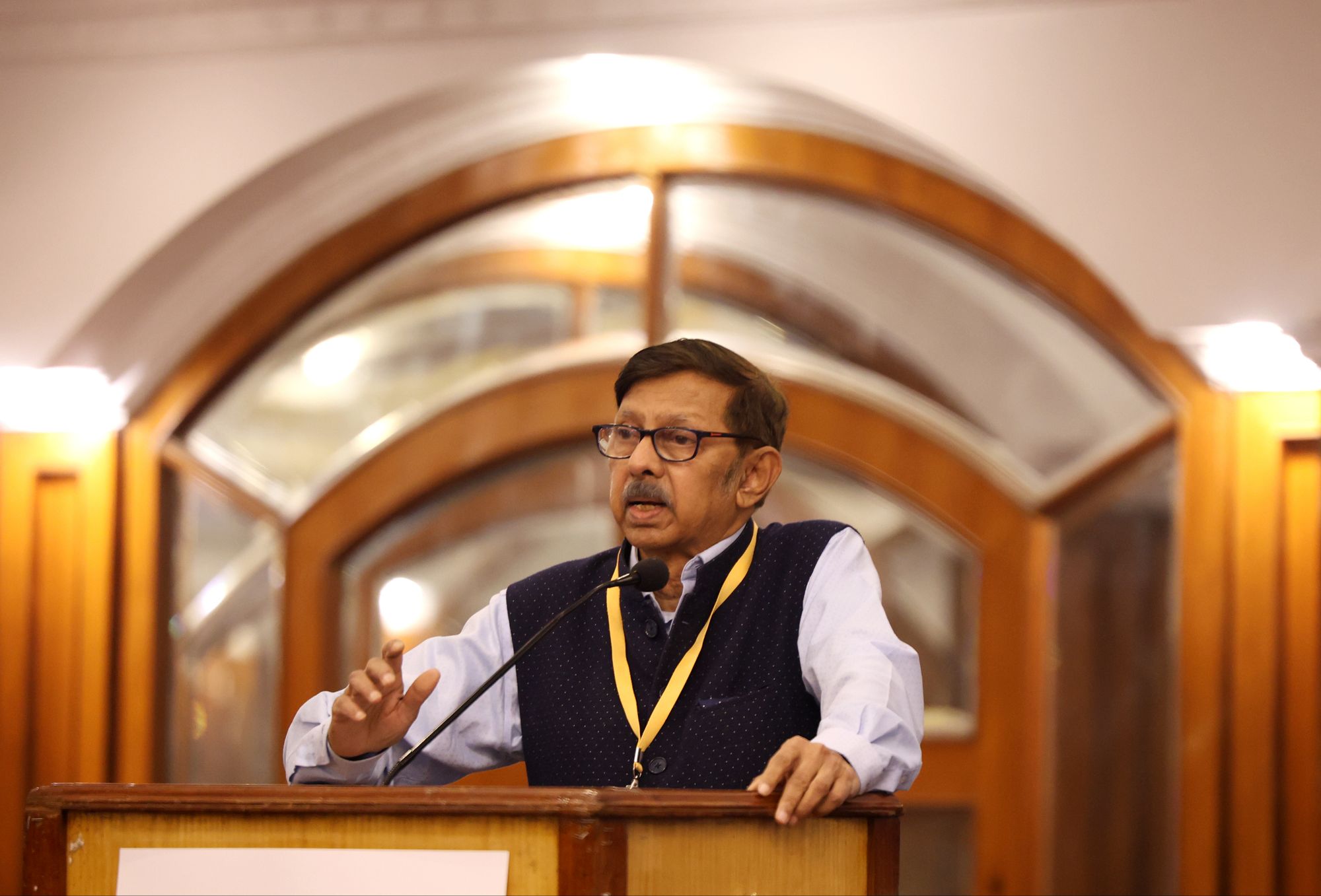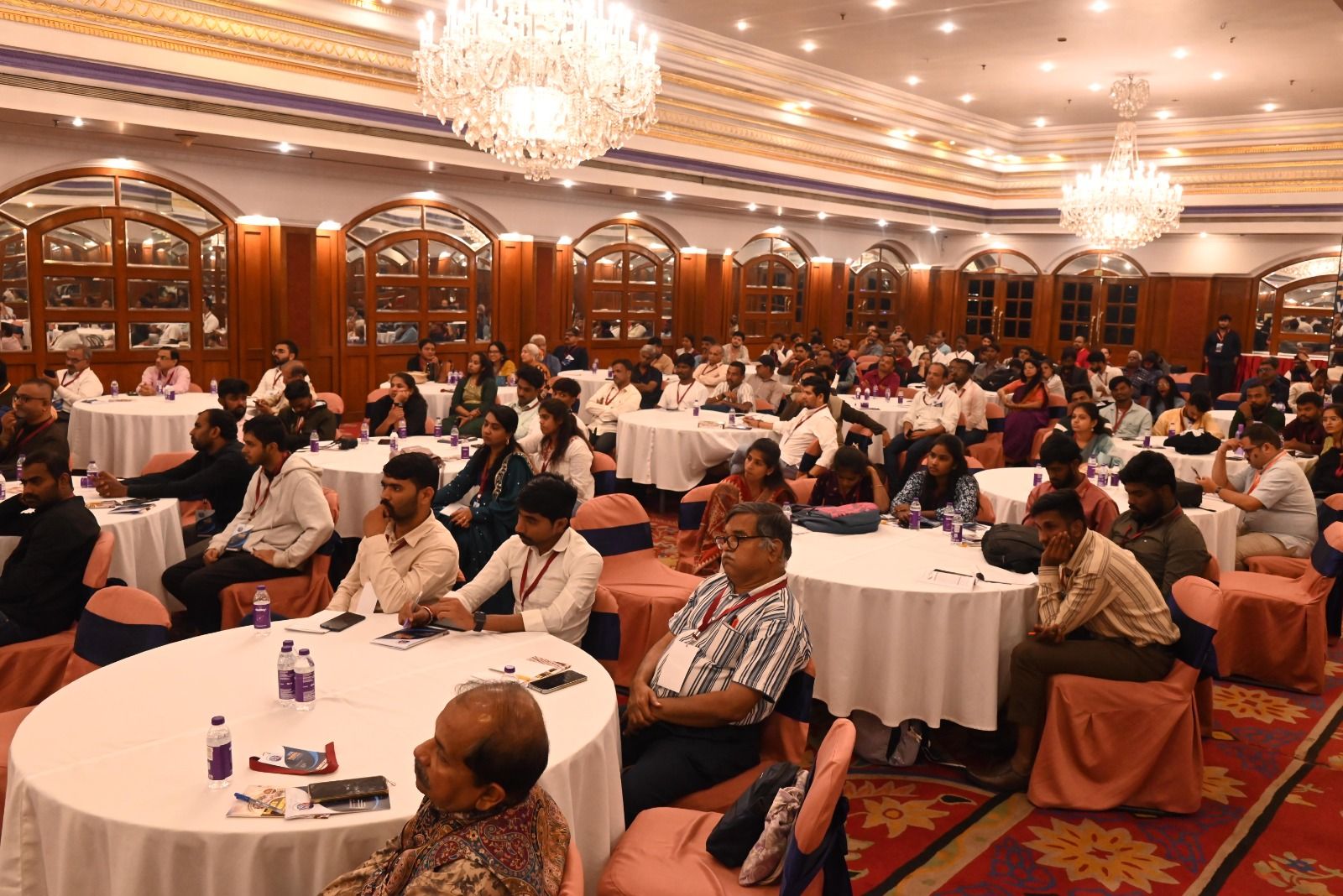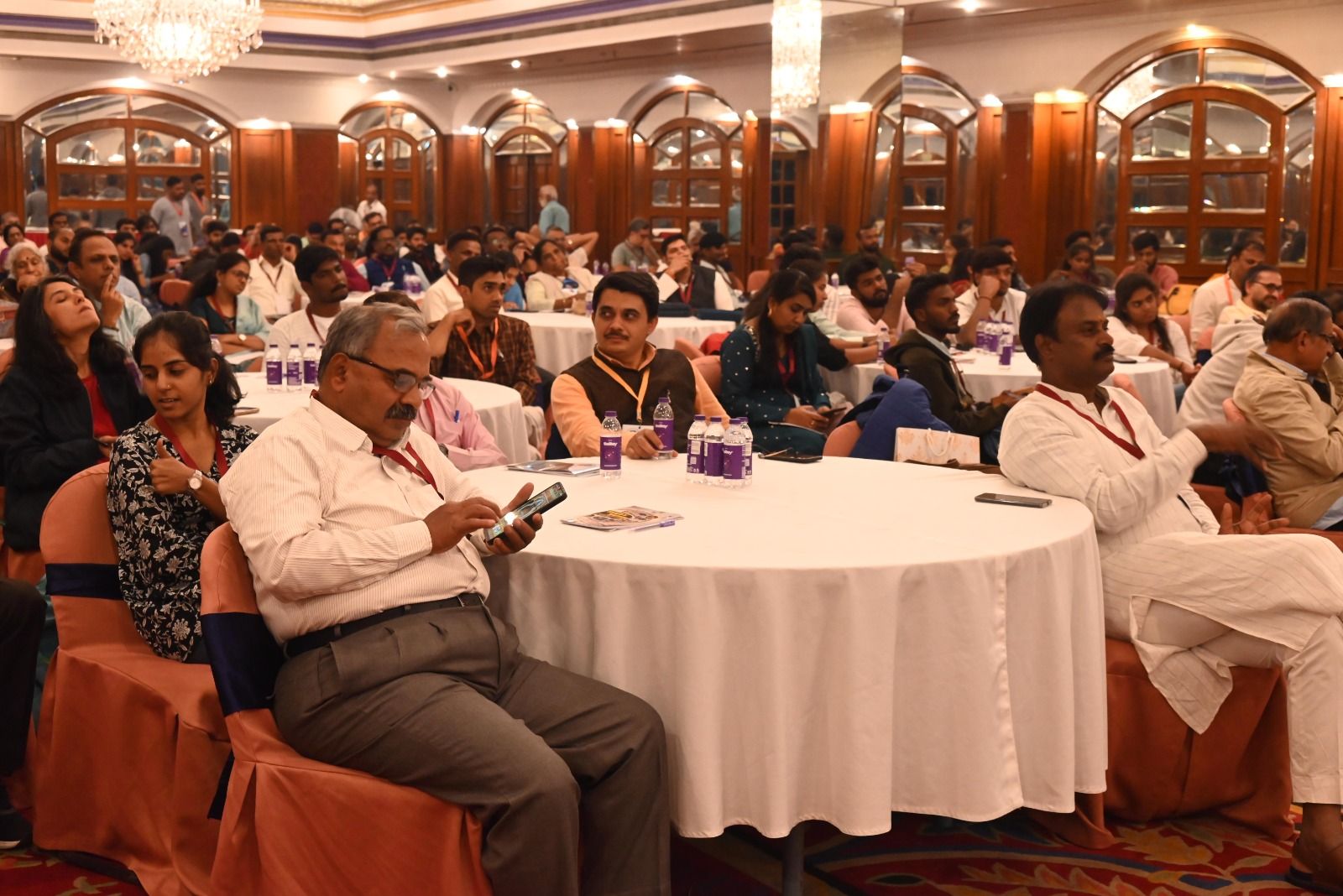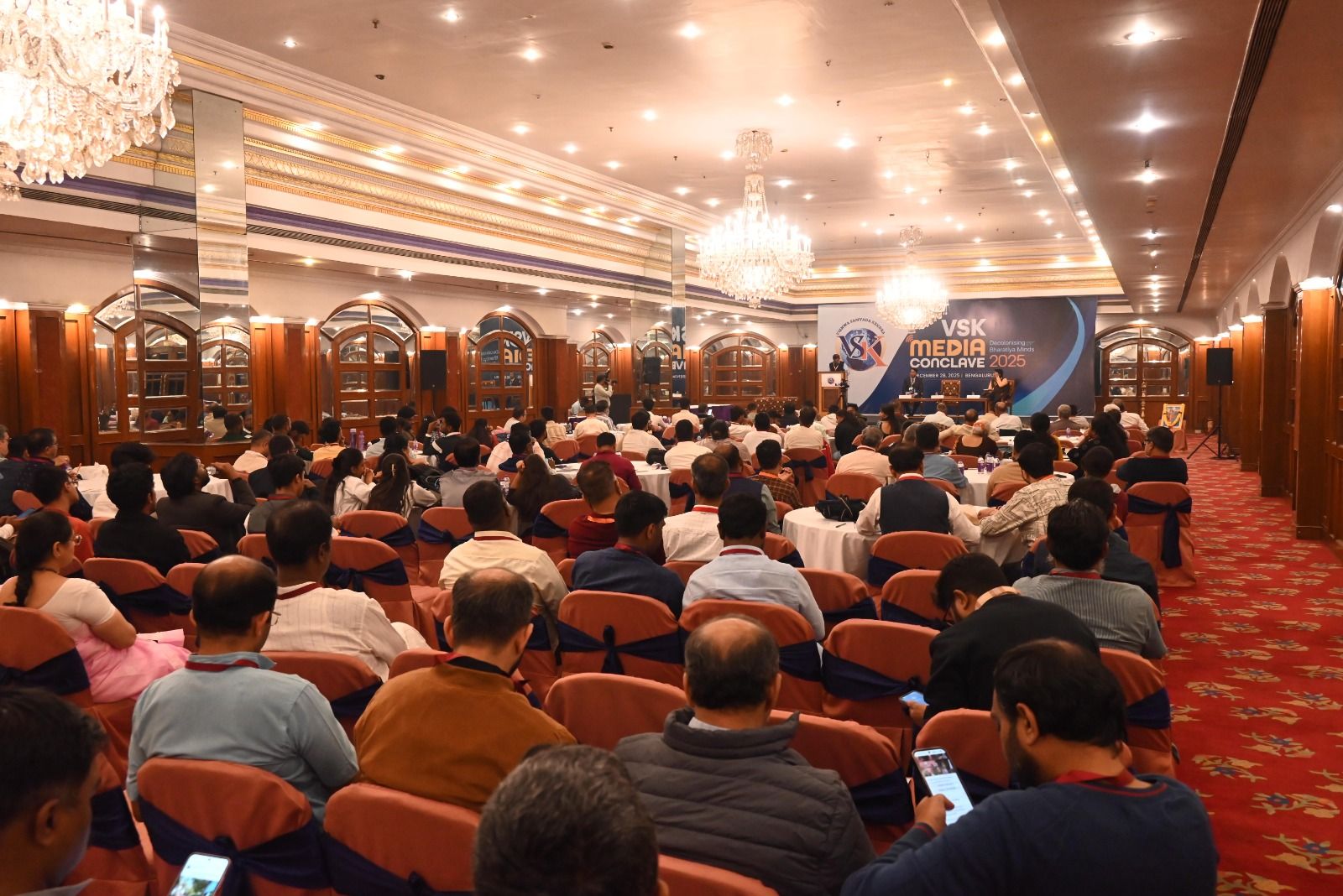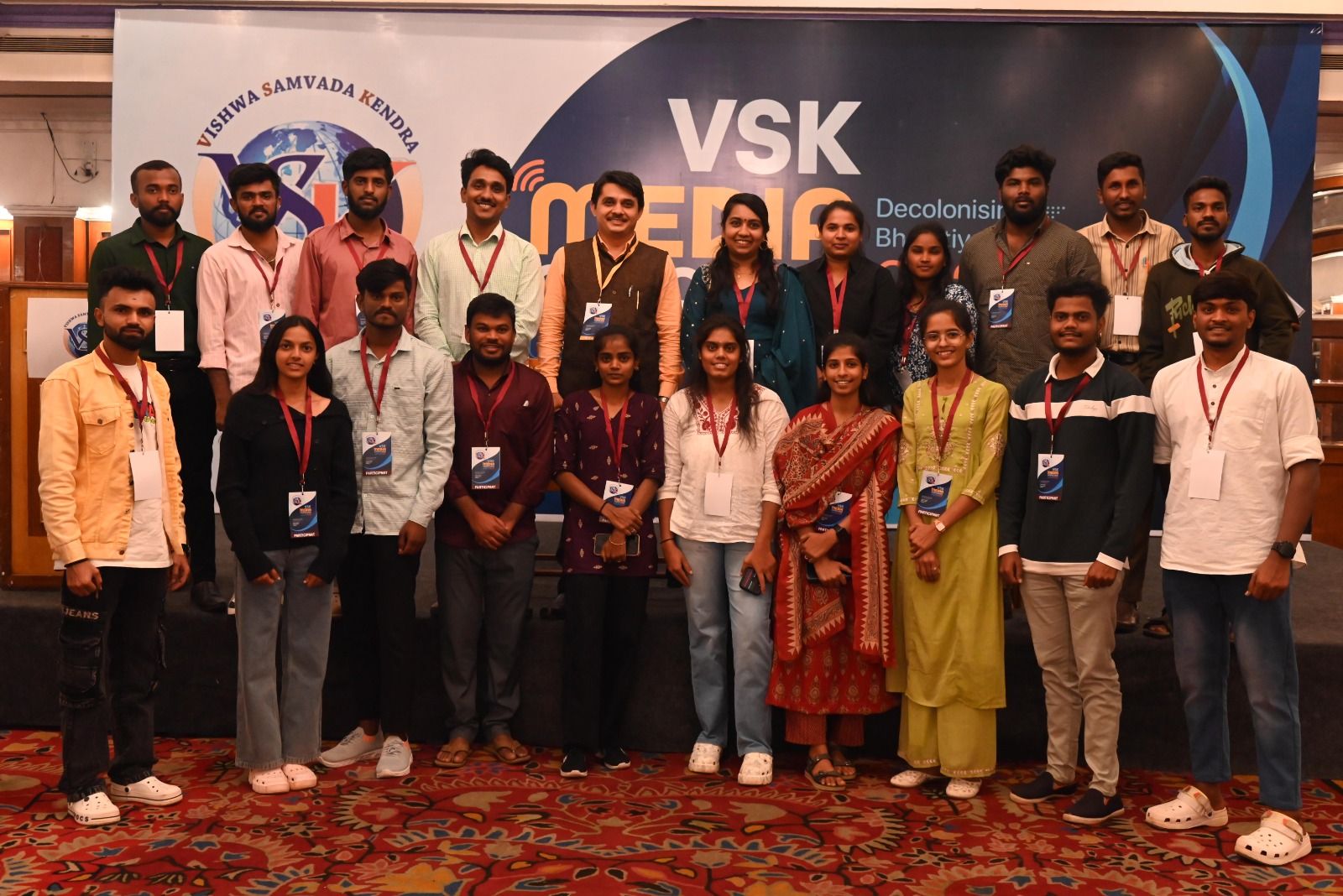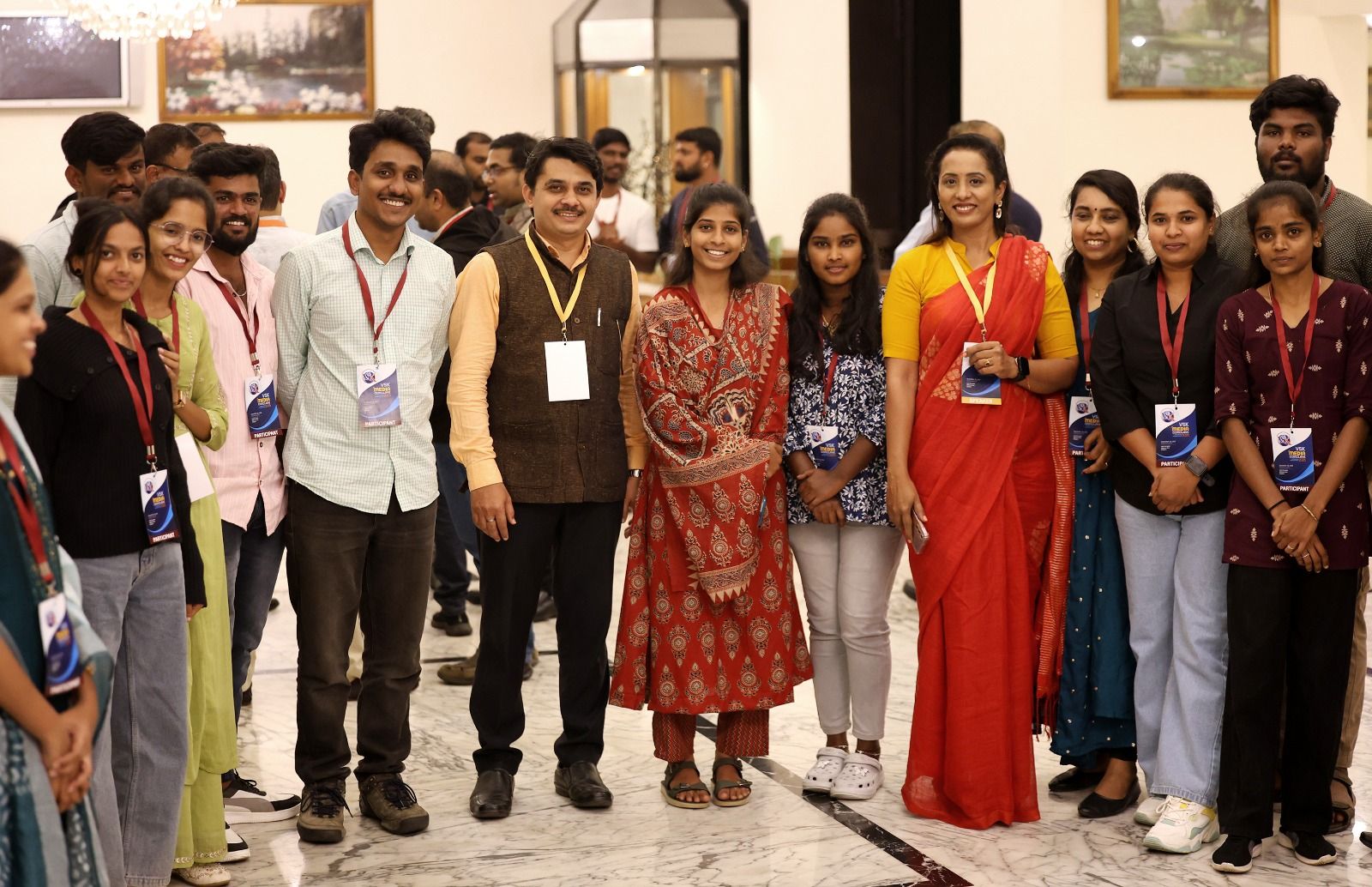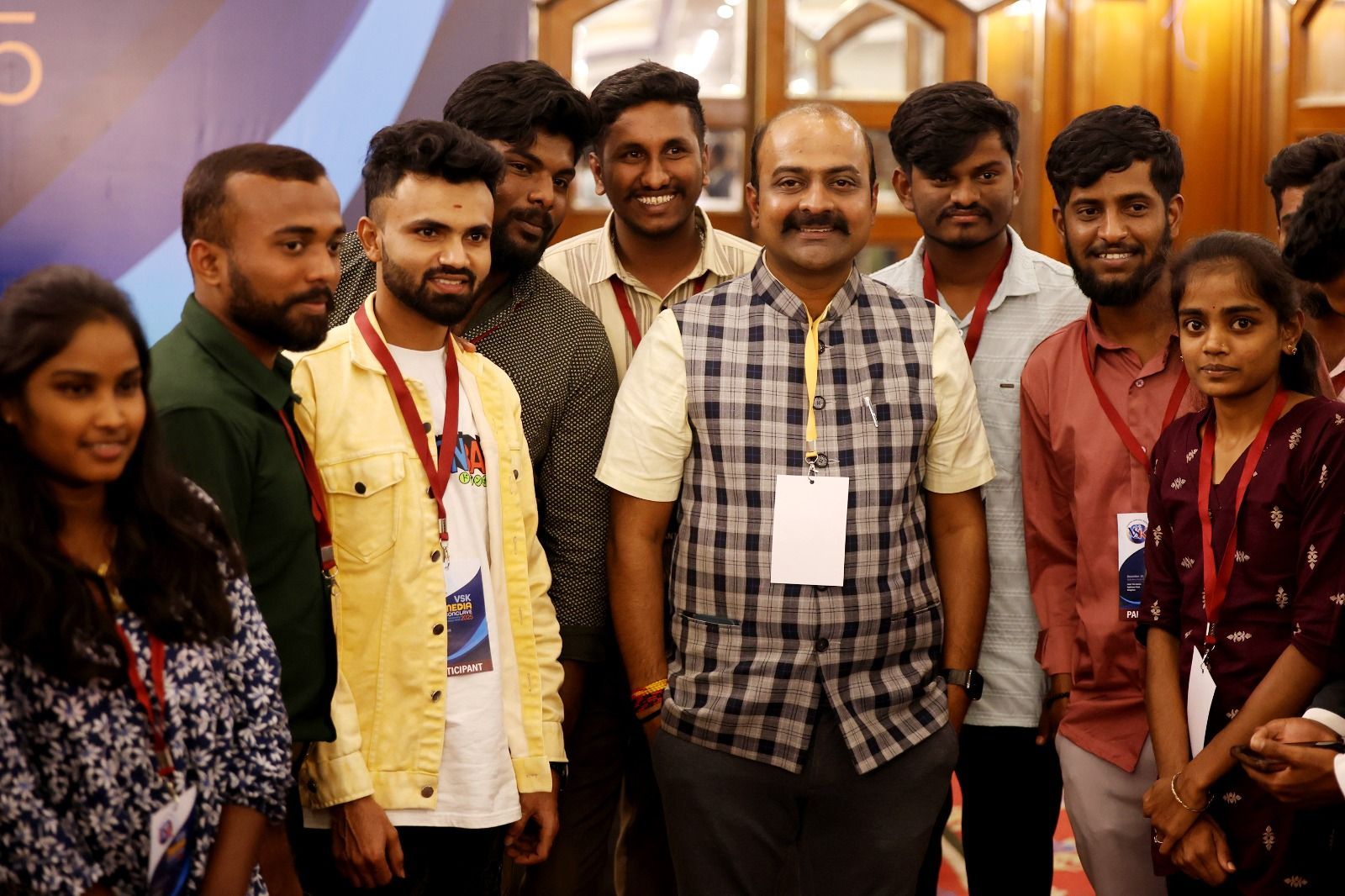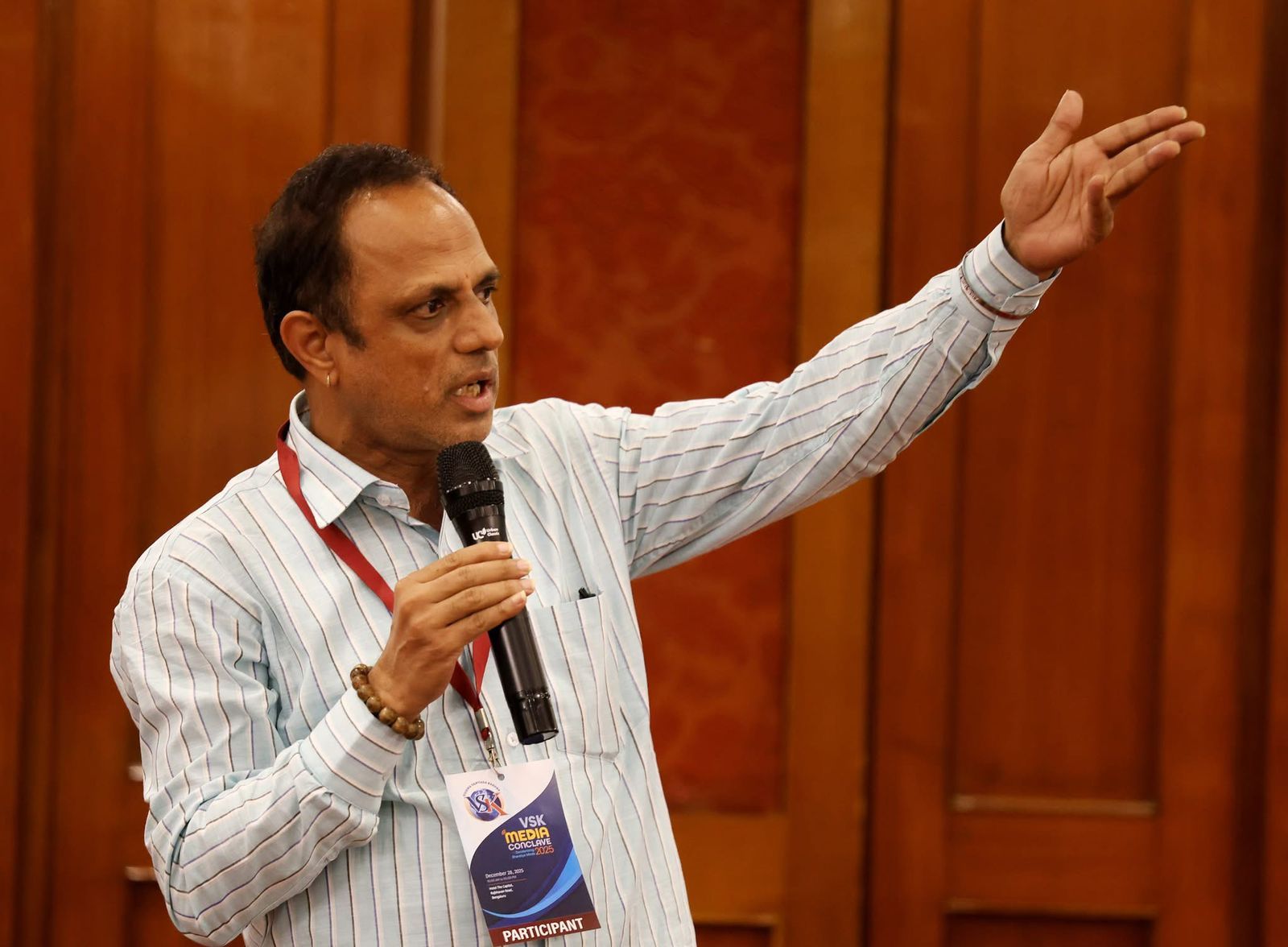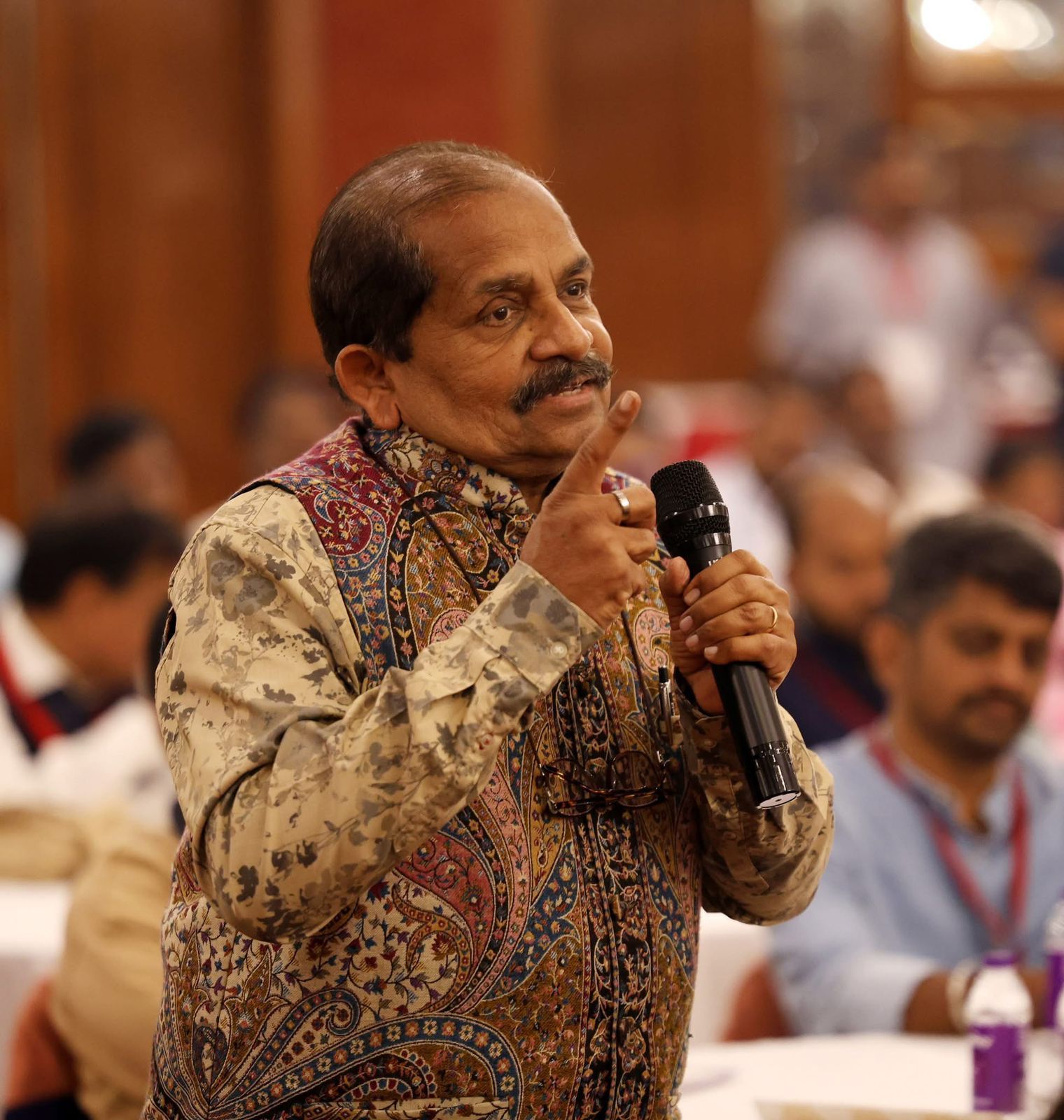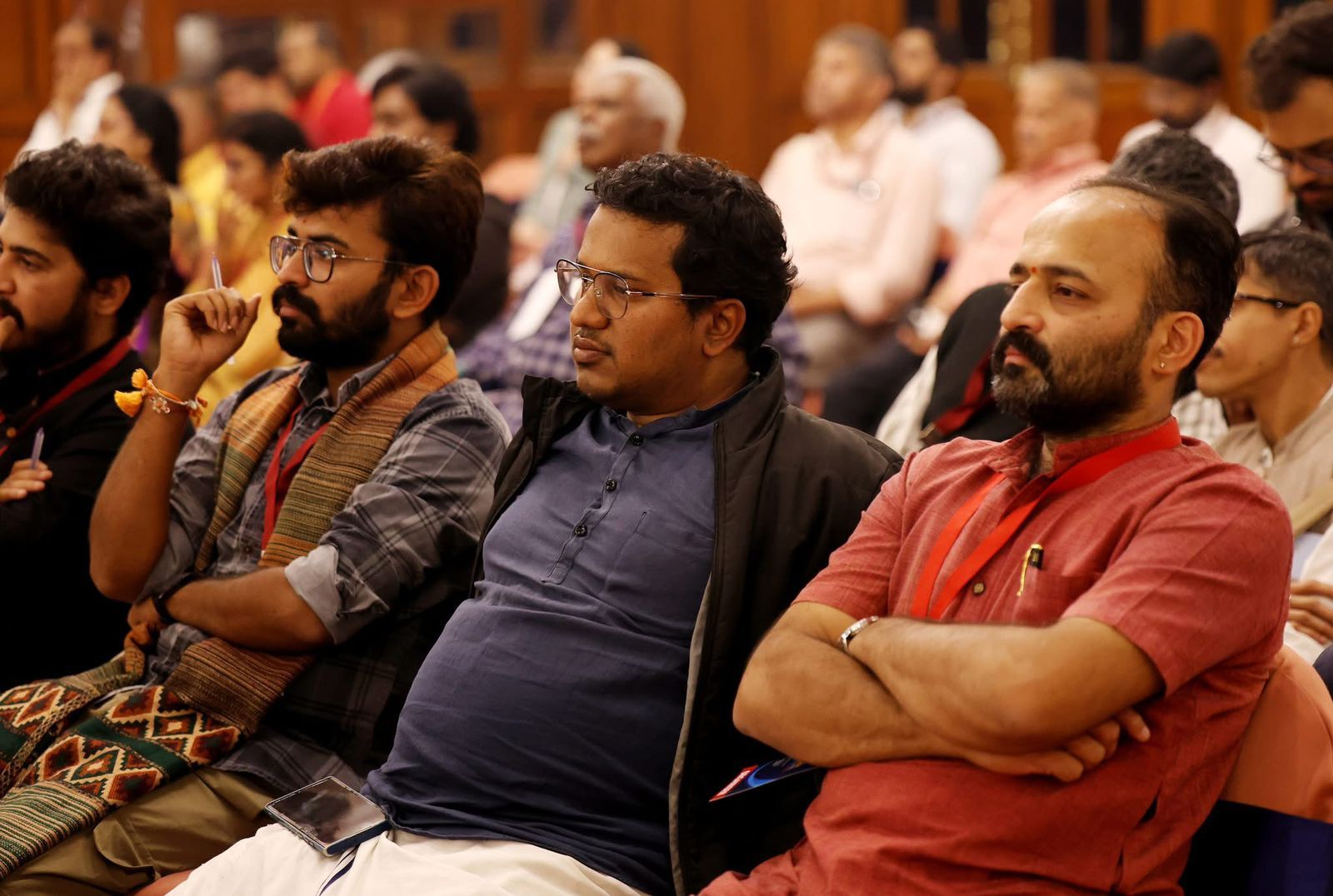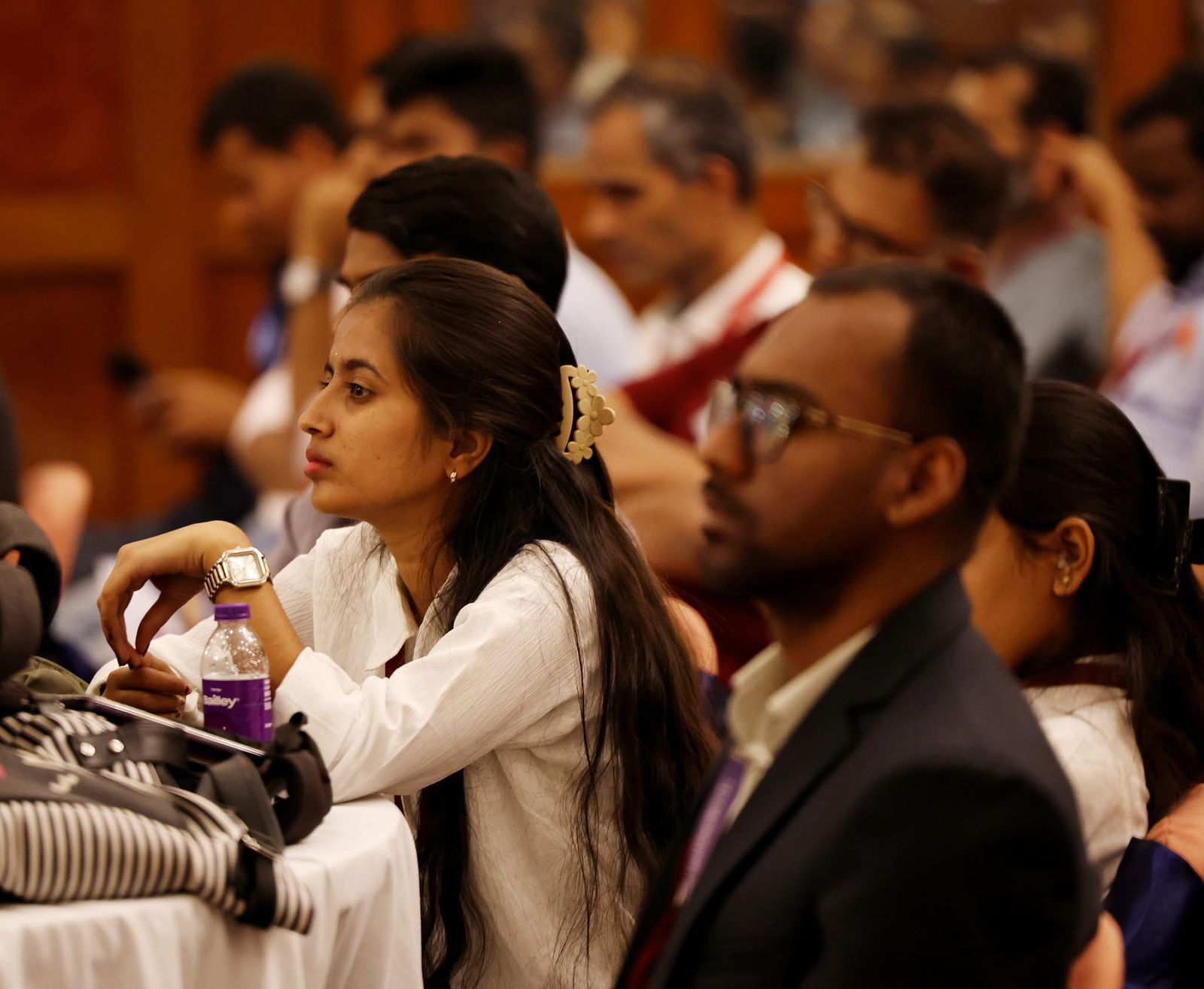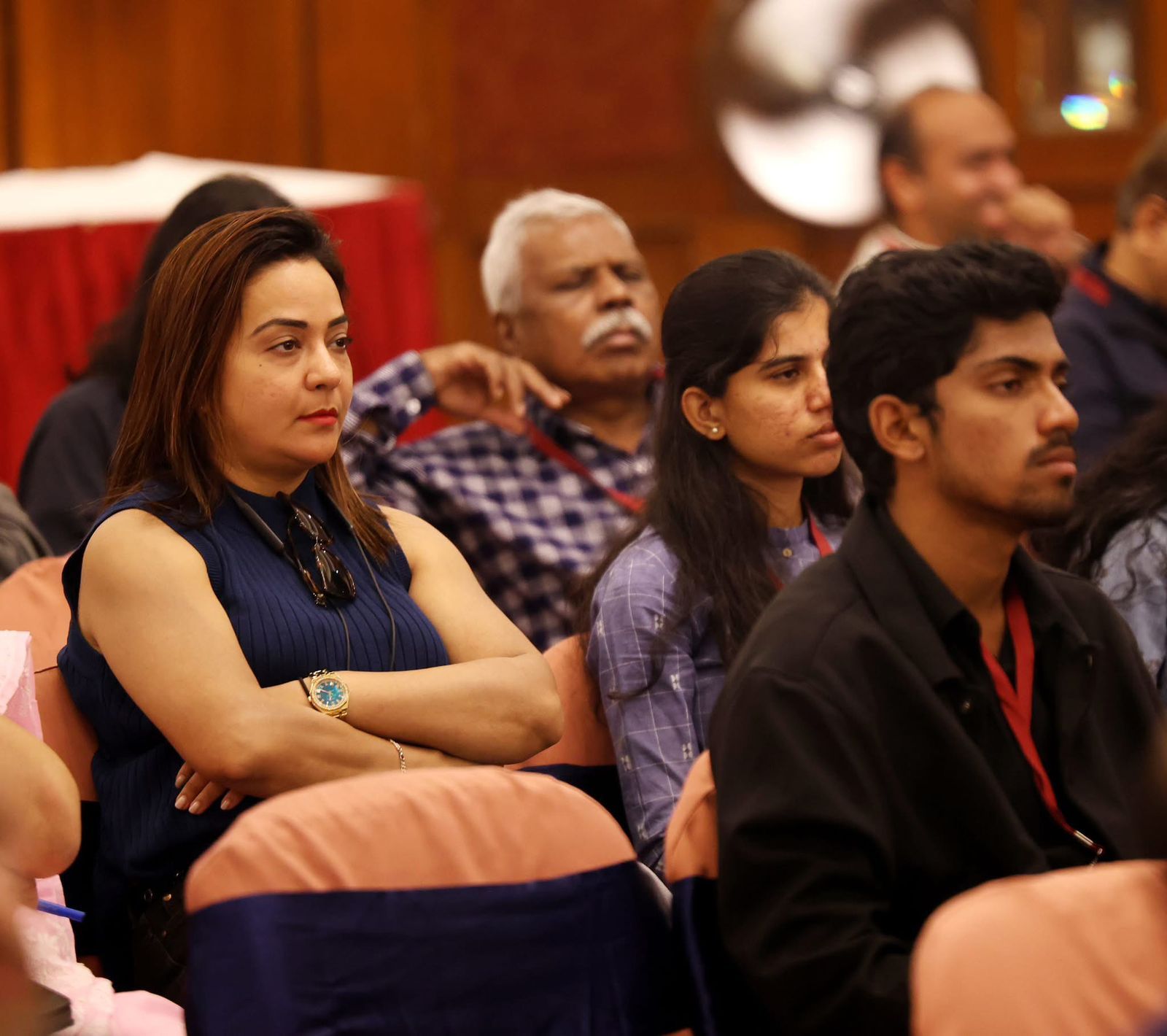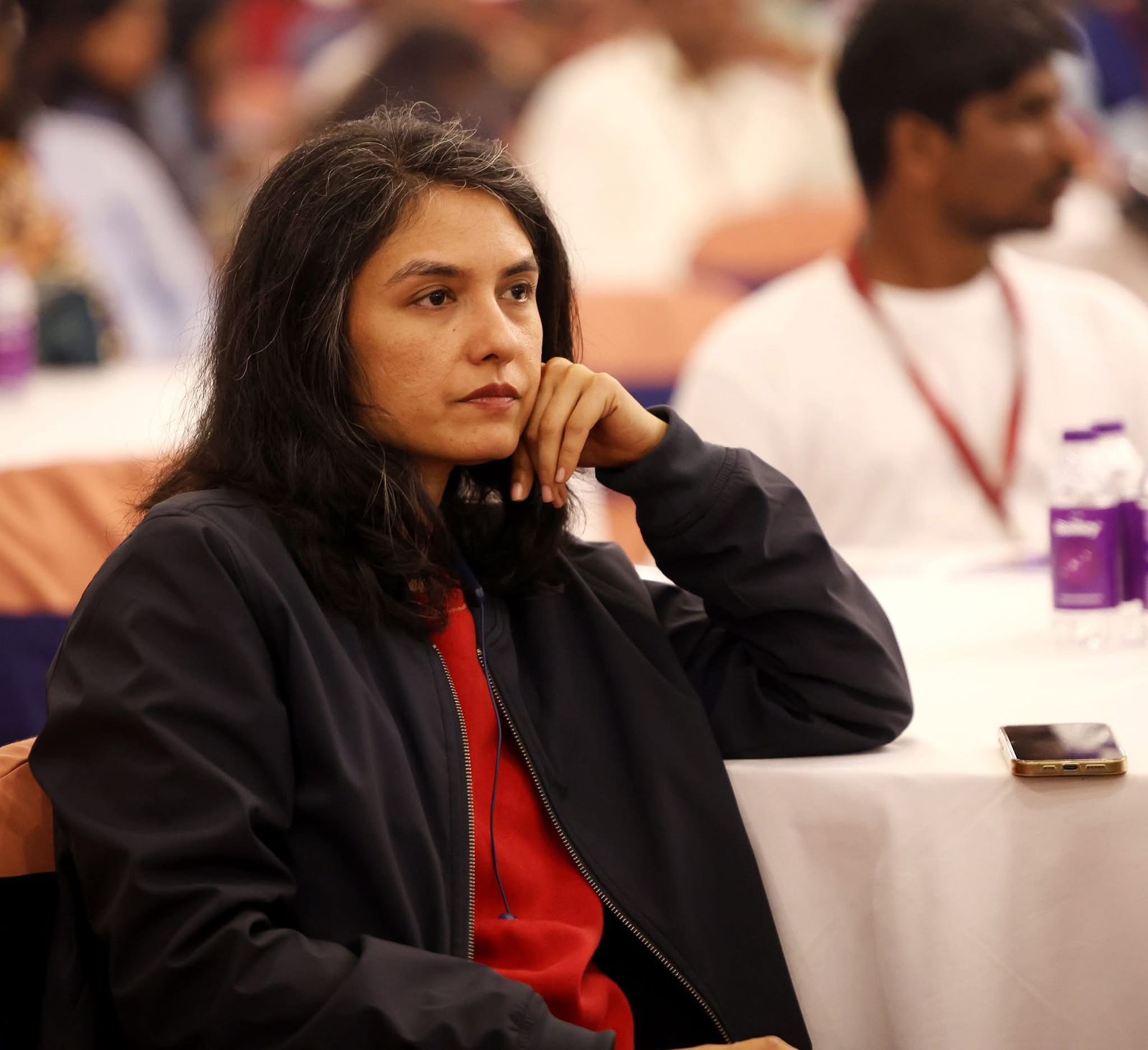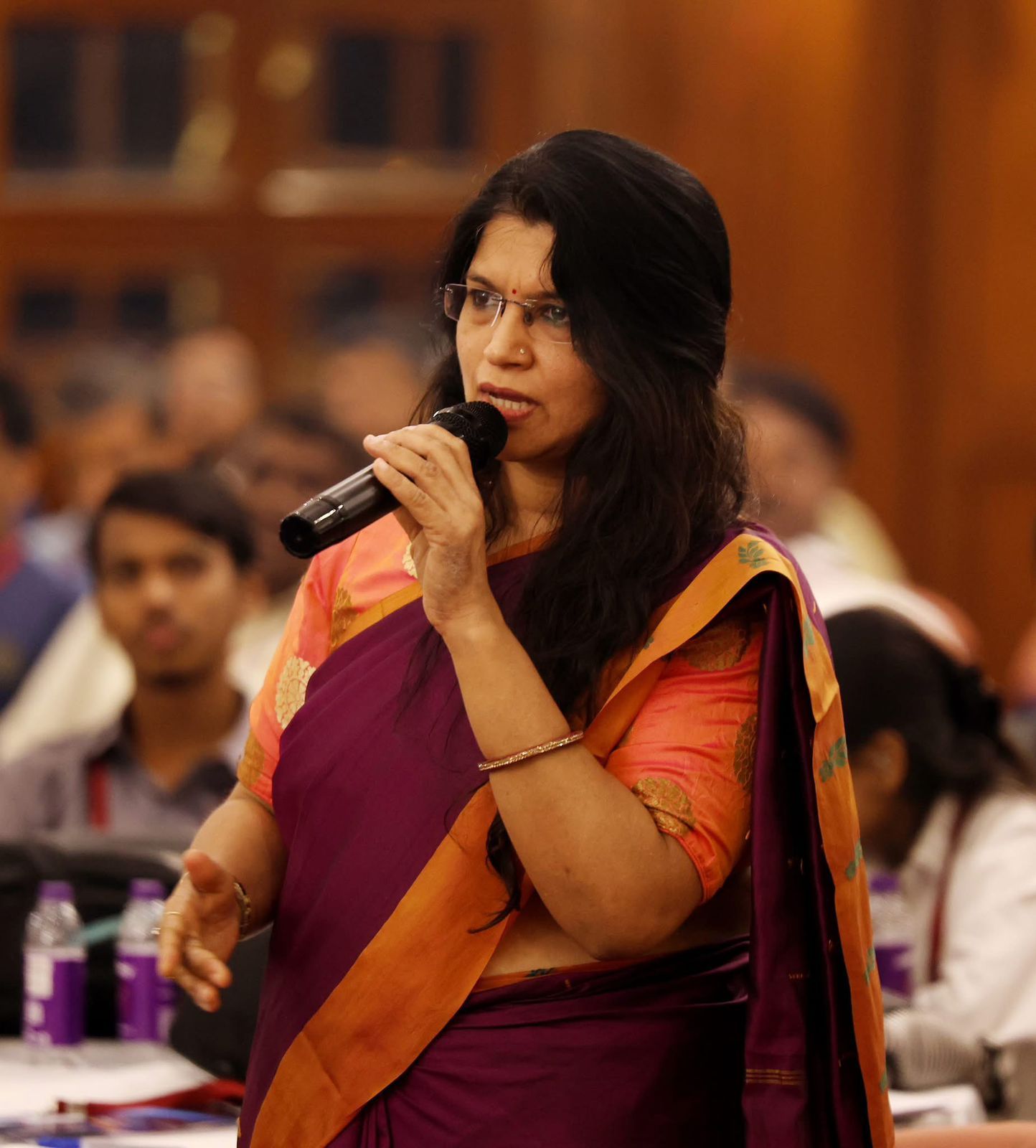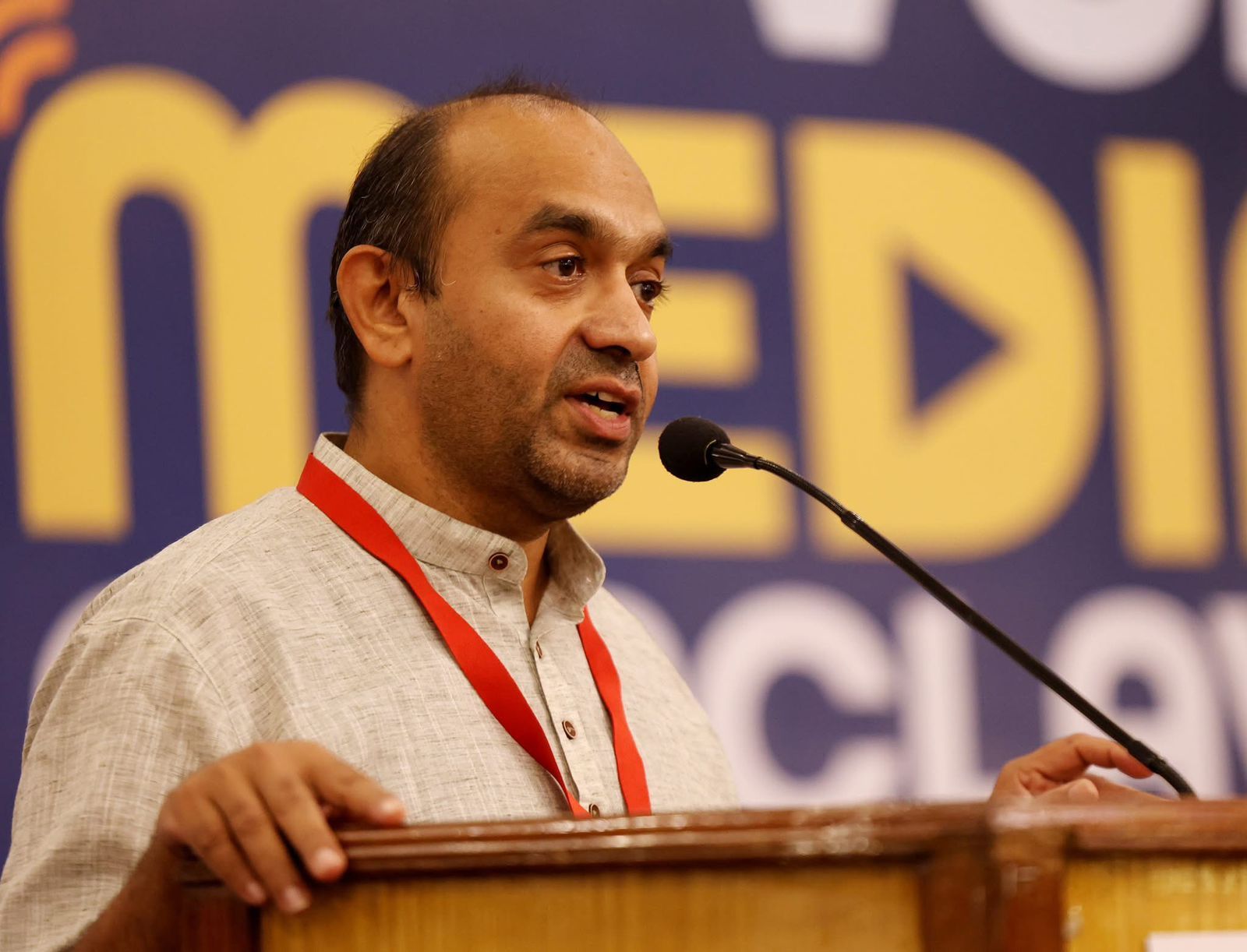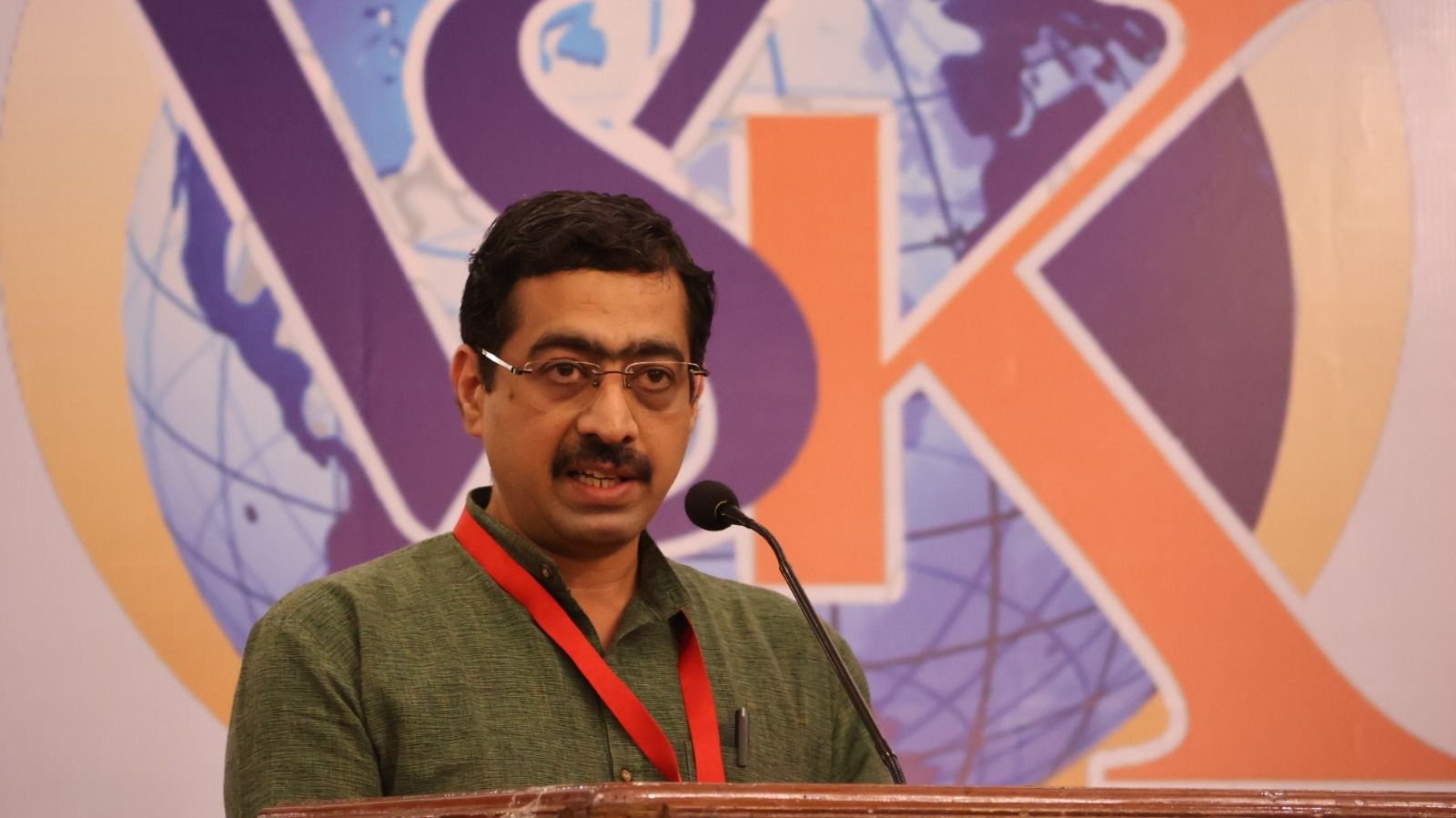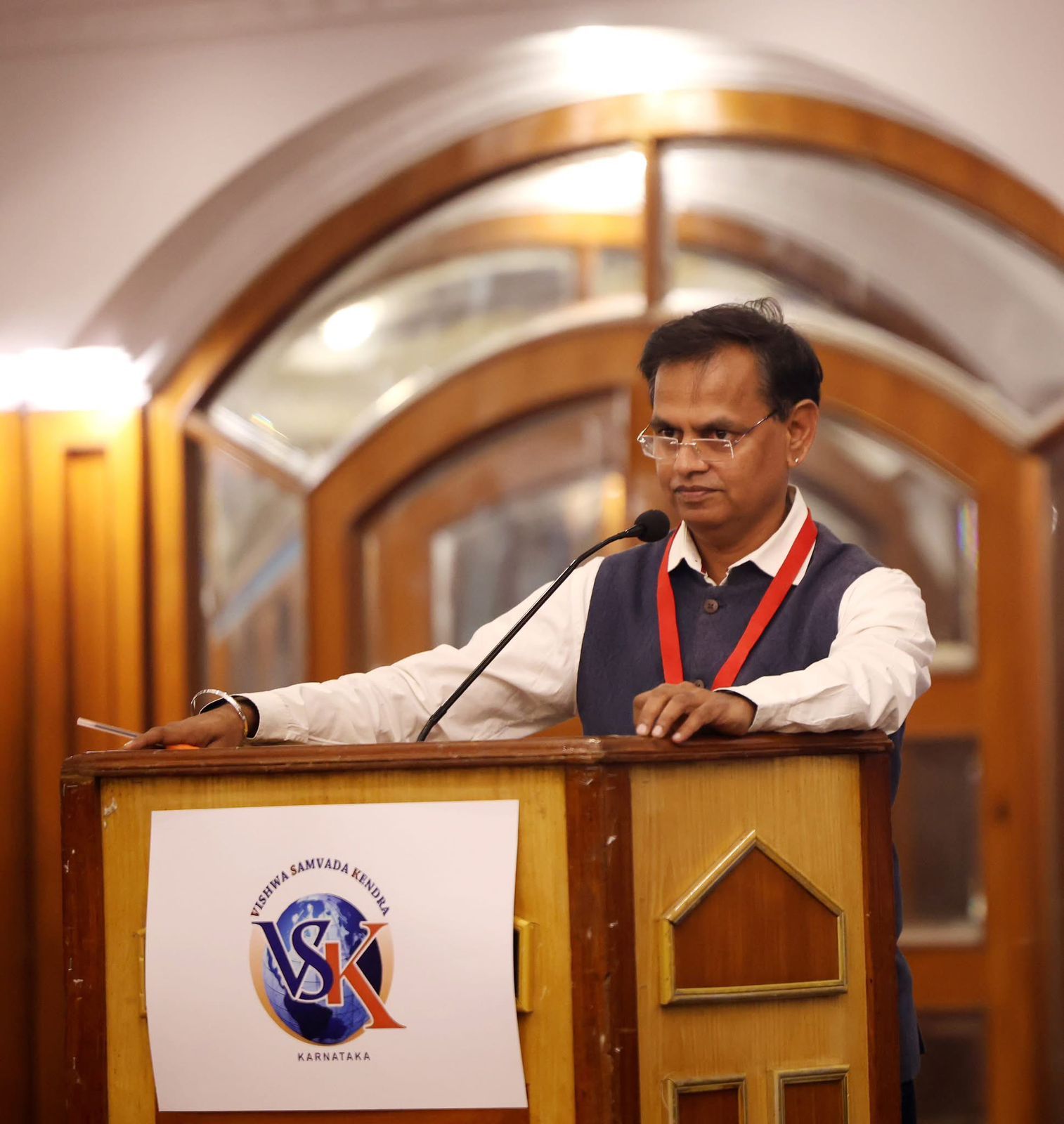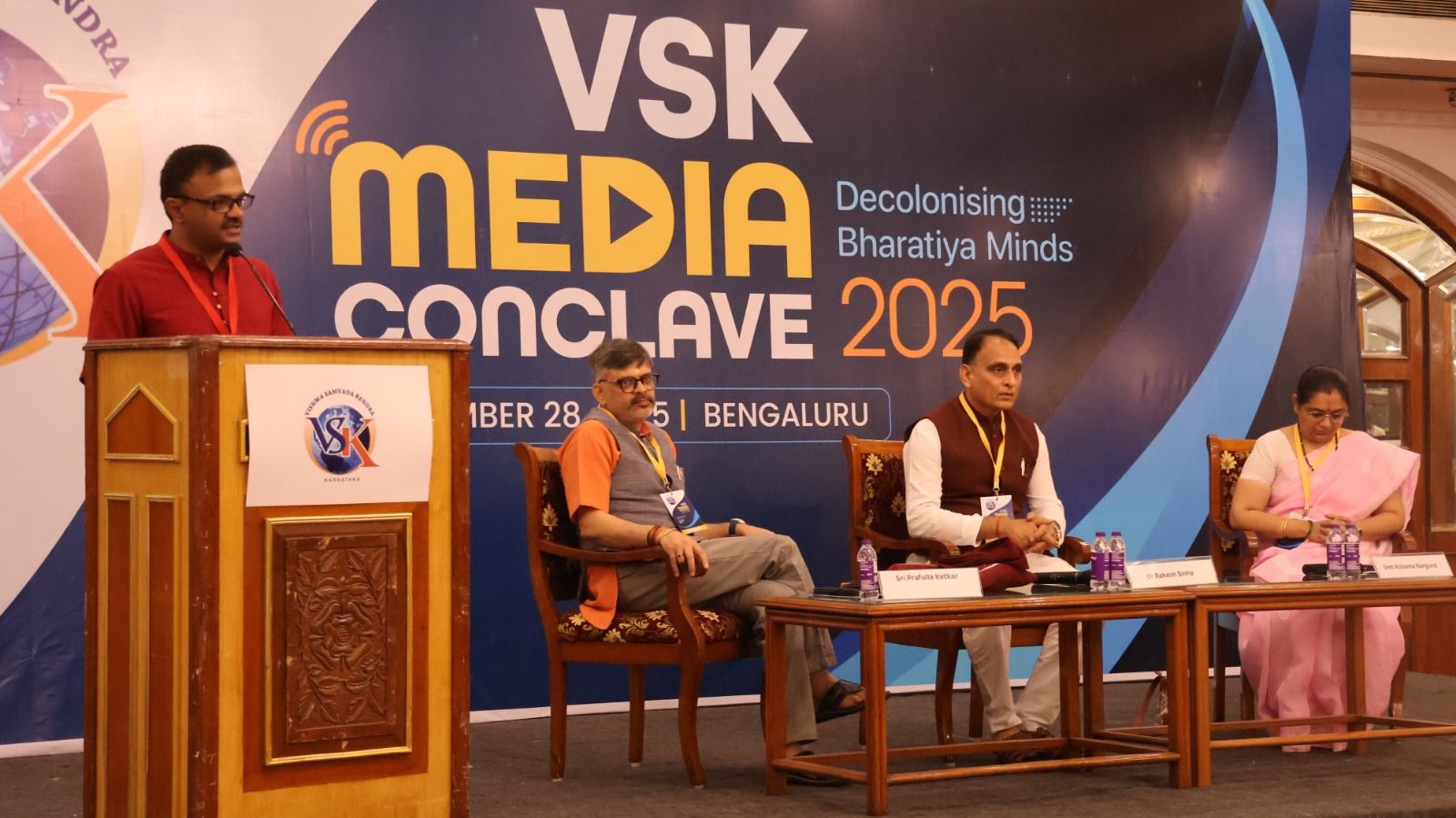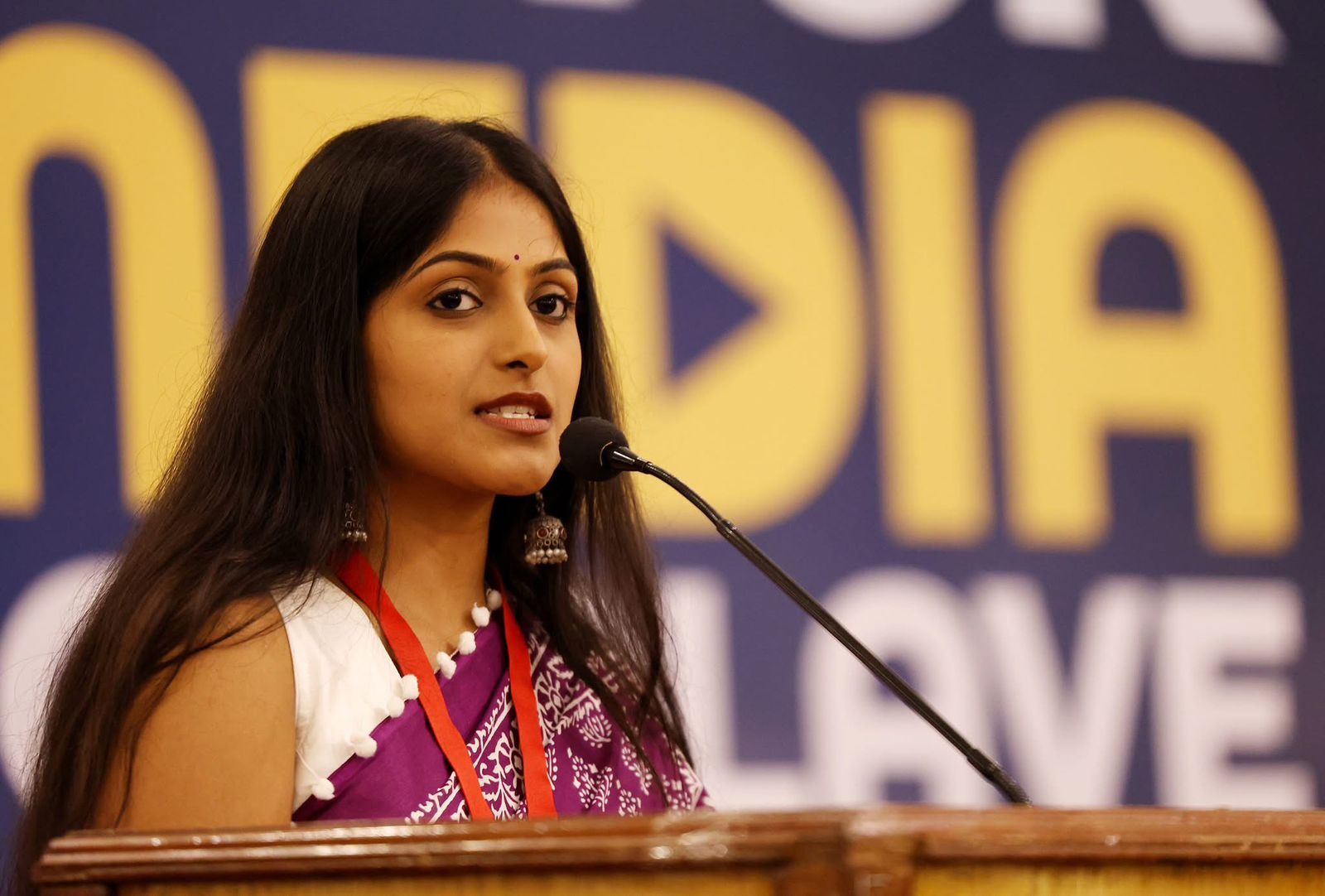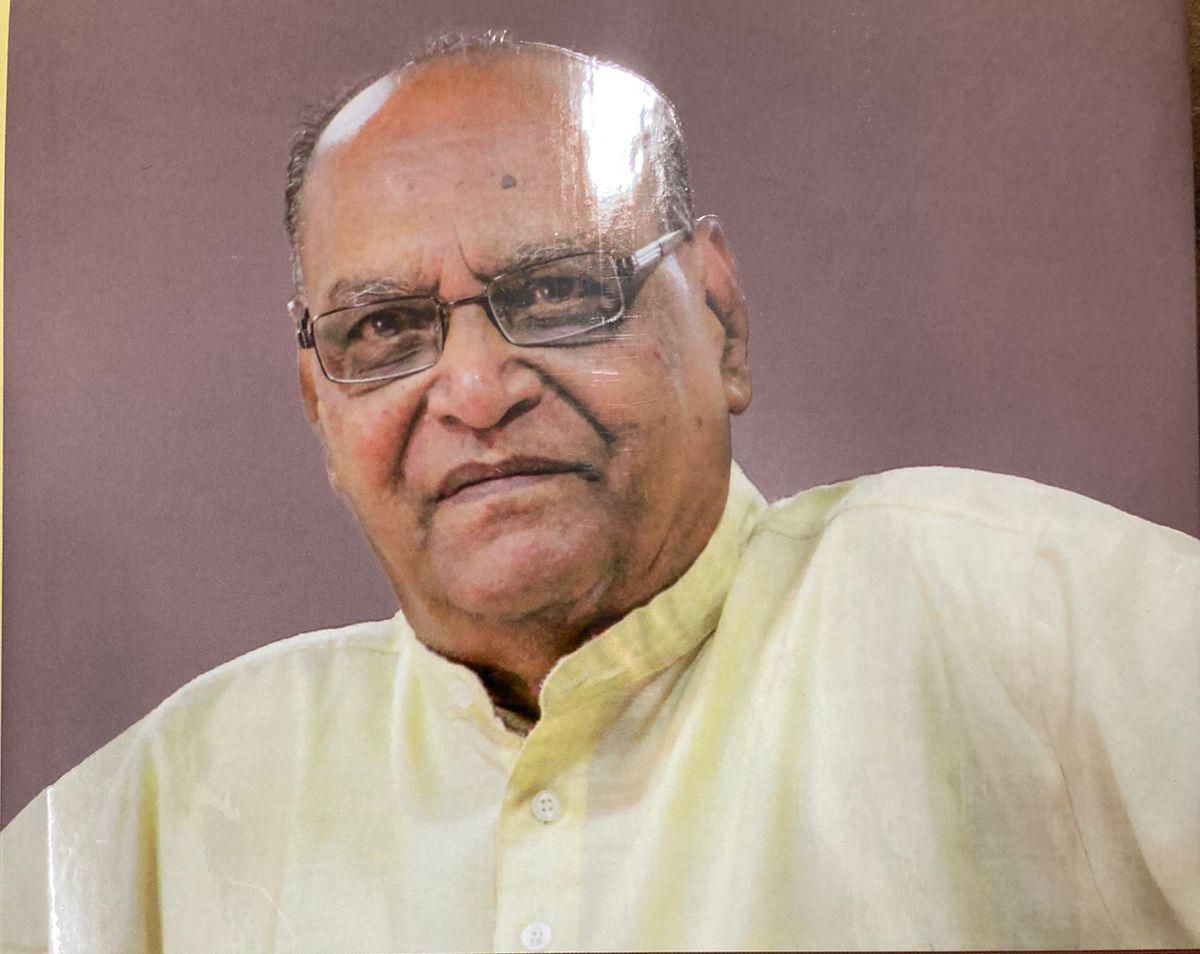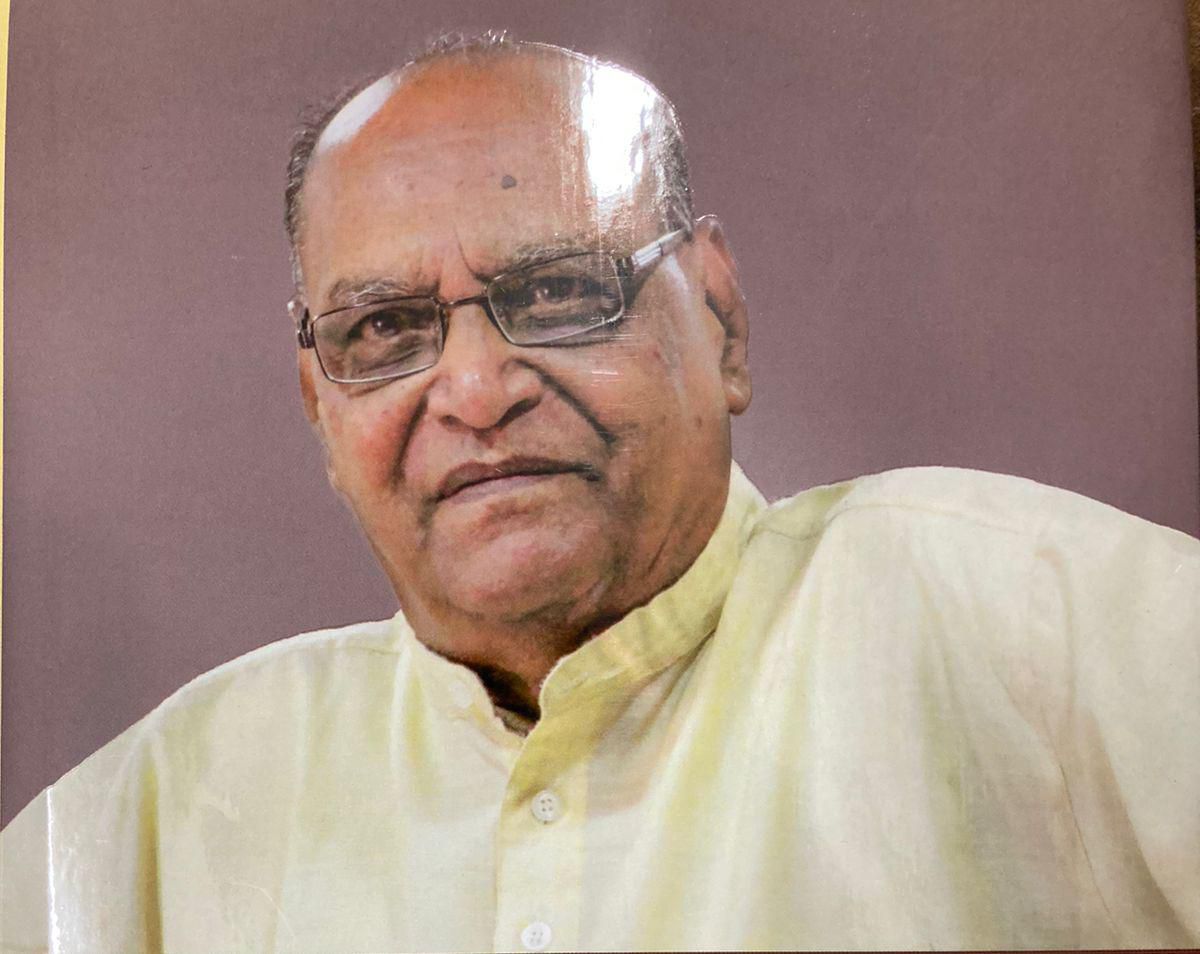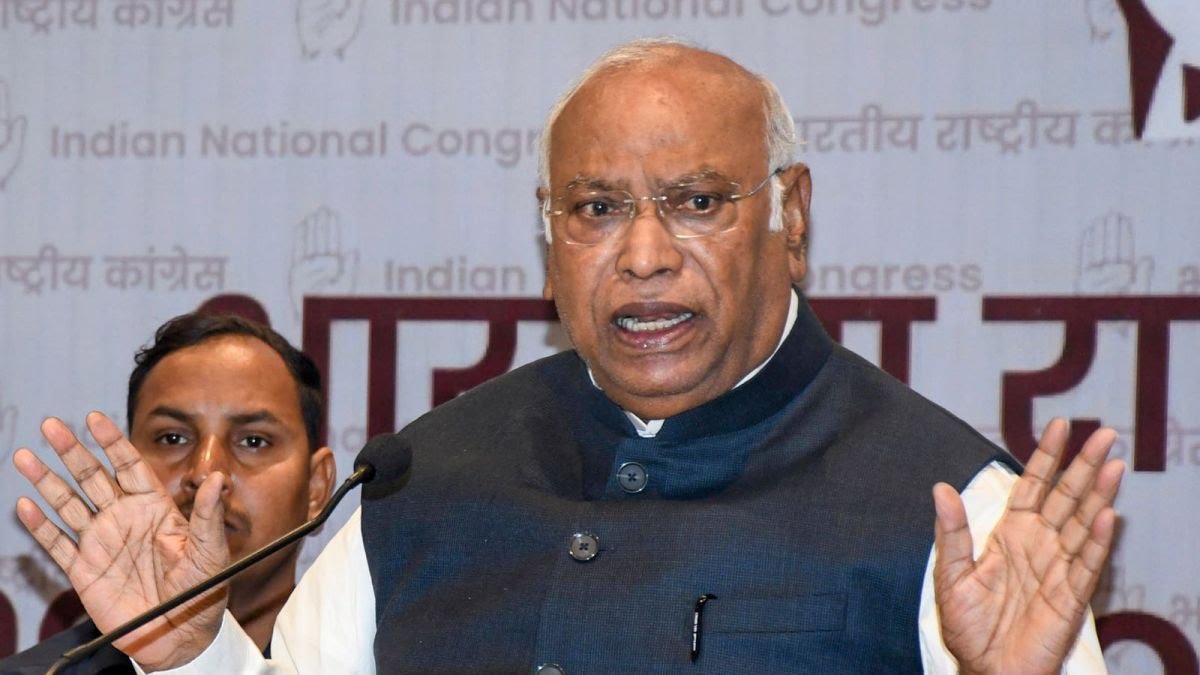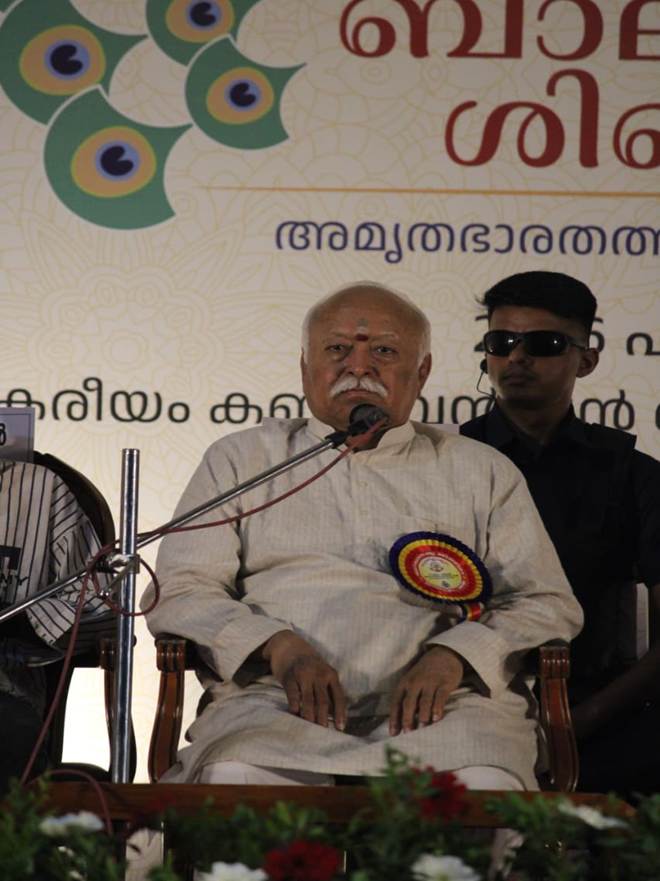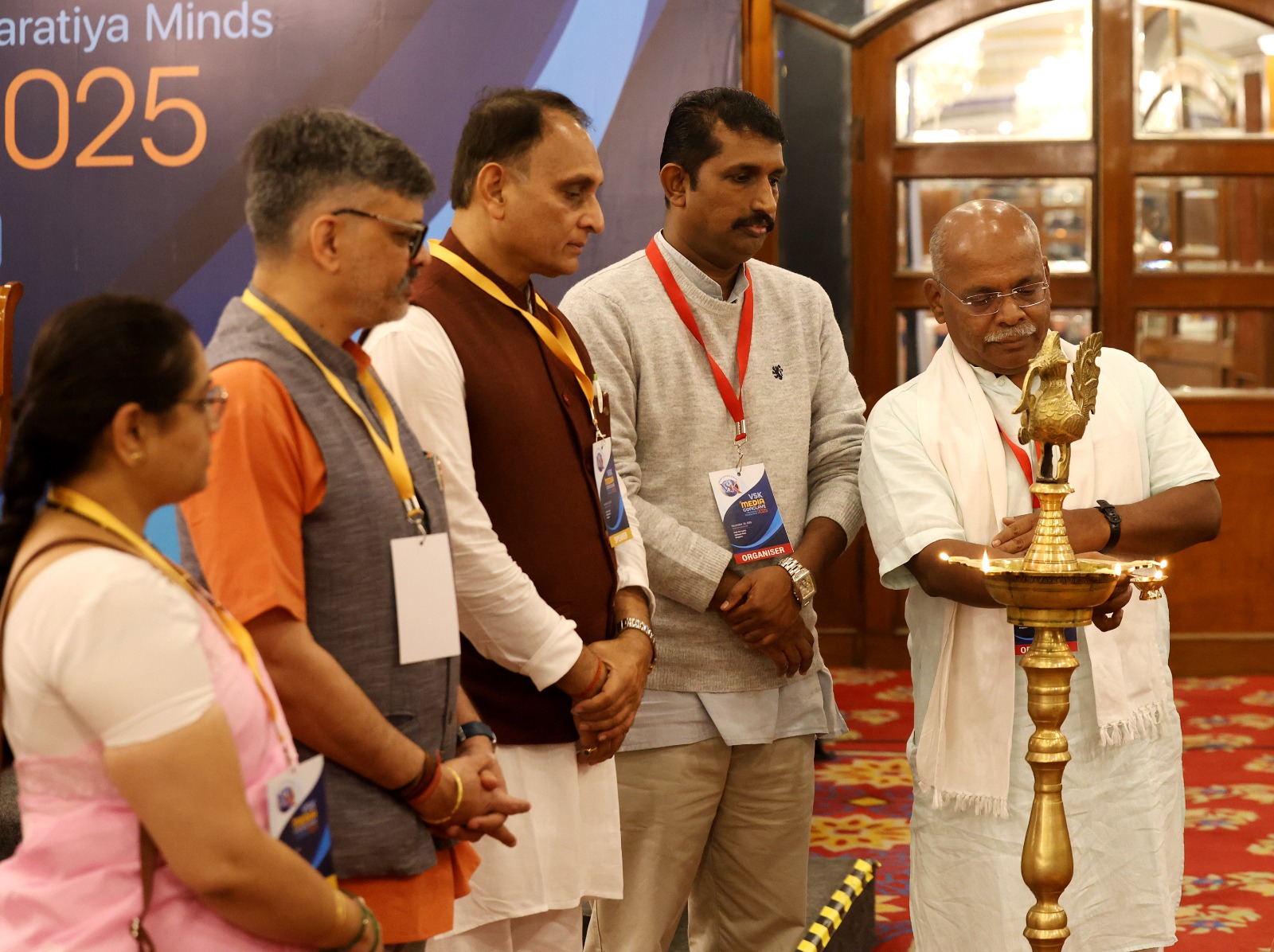
December 28, 2025, Bengaluru: On the occasion of the Centenary Year of Rashtriya Swayamsevak Sangh, Vishwa Samvada Kendra, Karnataka, organised a Media Conclave at The Capitol Hotel. The event brought together journalists, media professionals, columnists and students of journalism. The theme of the conclave was “Decolonising Bharatiya Minds,” highlighting the need to revisit narratives through an indigenous perspective.
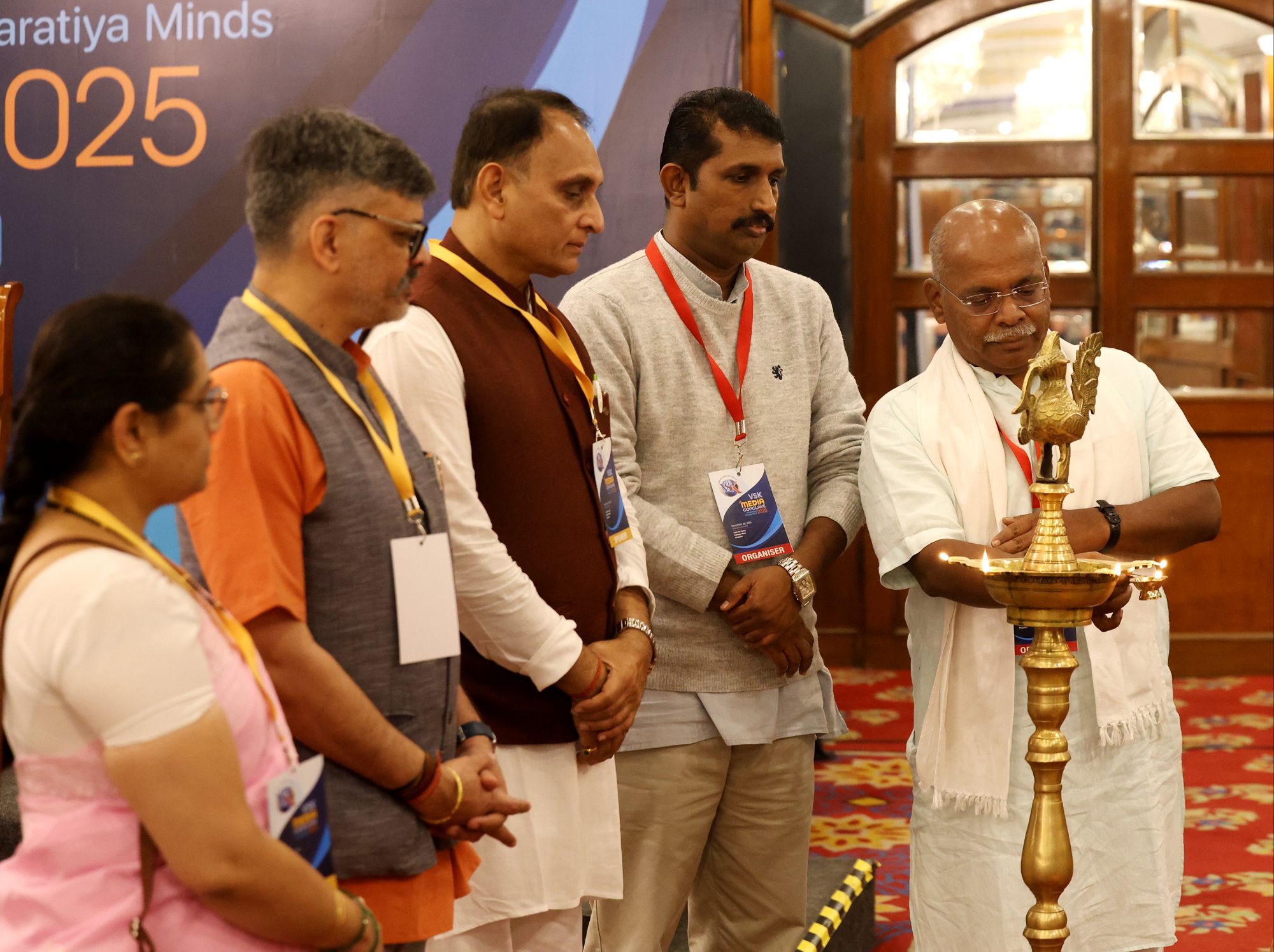
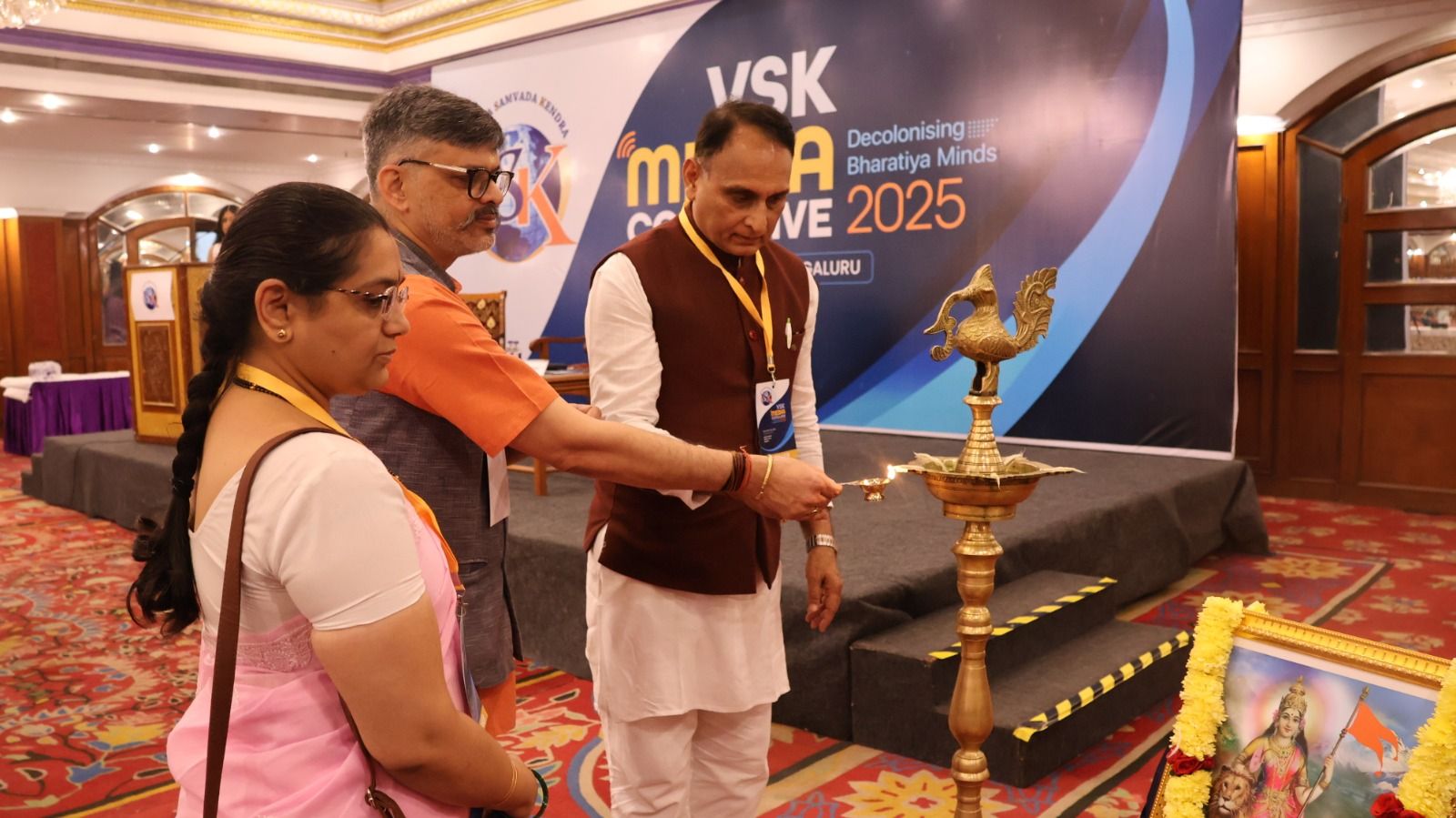
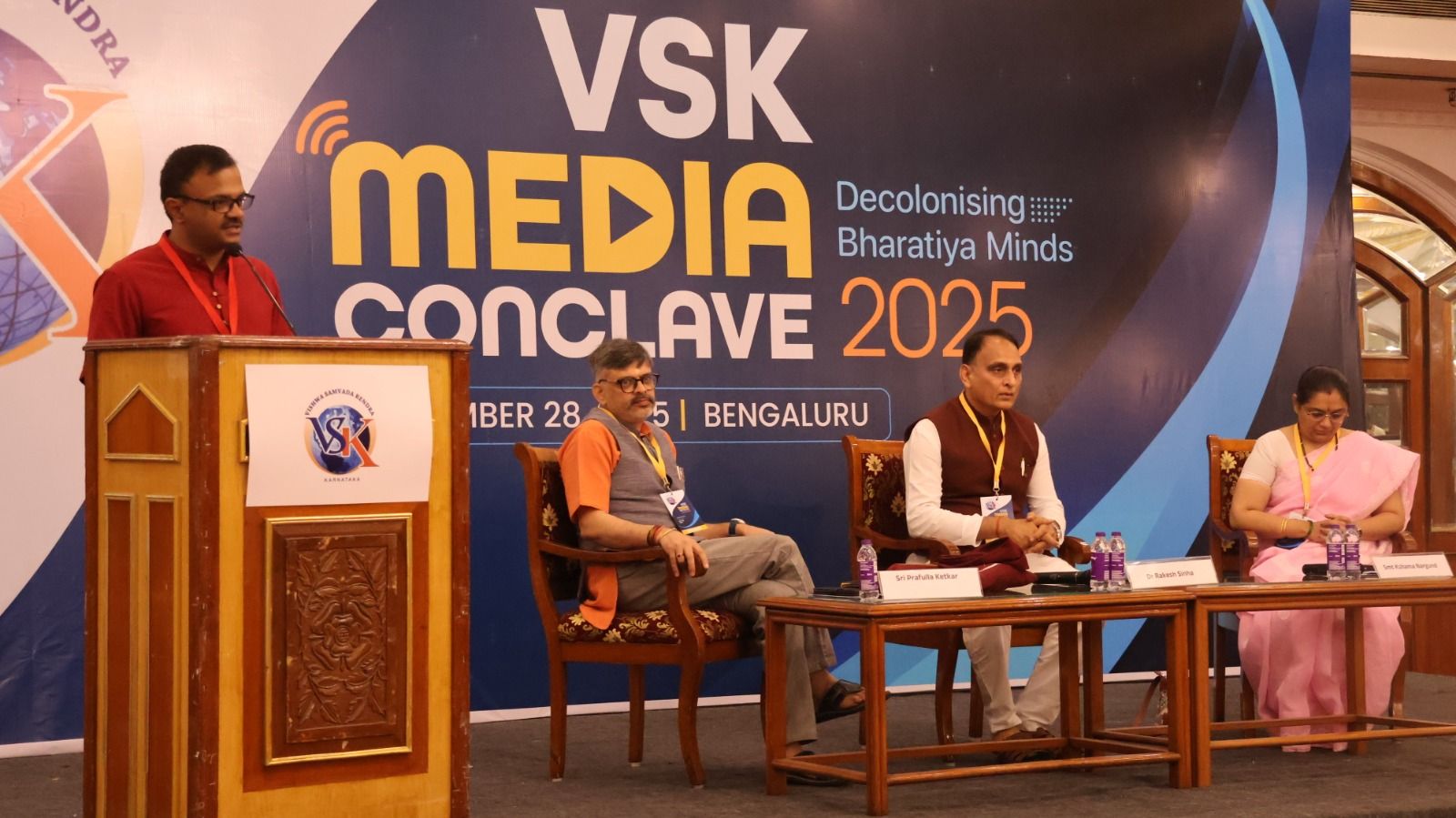
Session 1 – Inaugural Session – Decolonising Bharatiya Minds
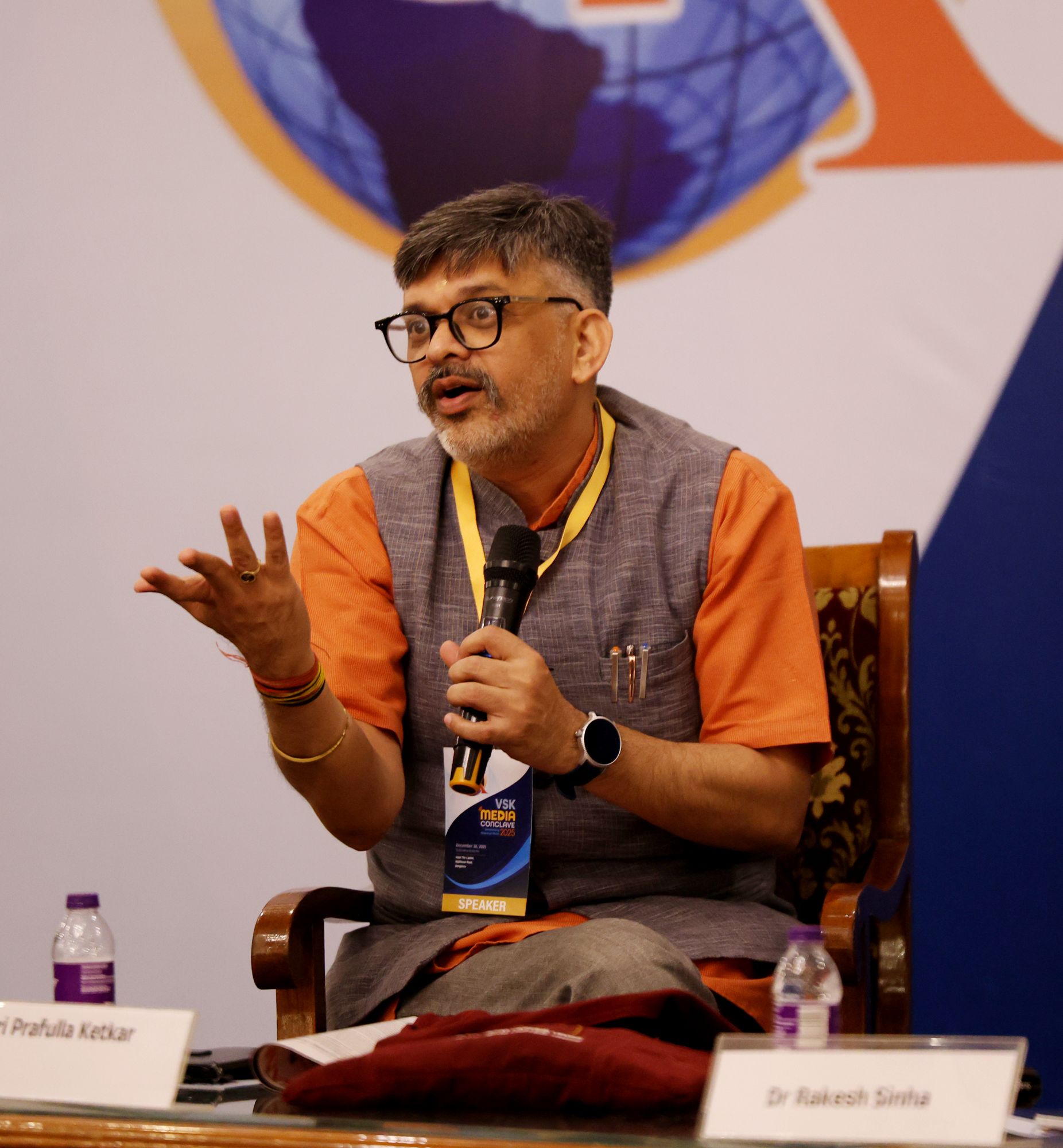
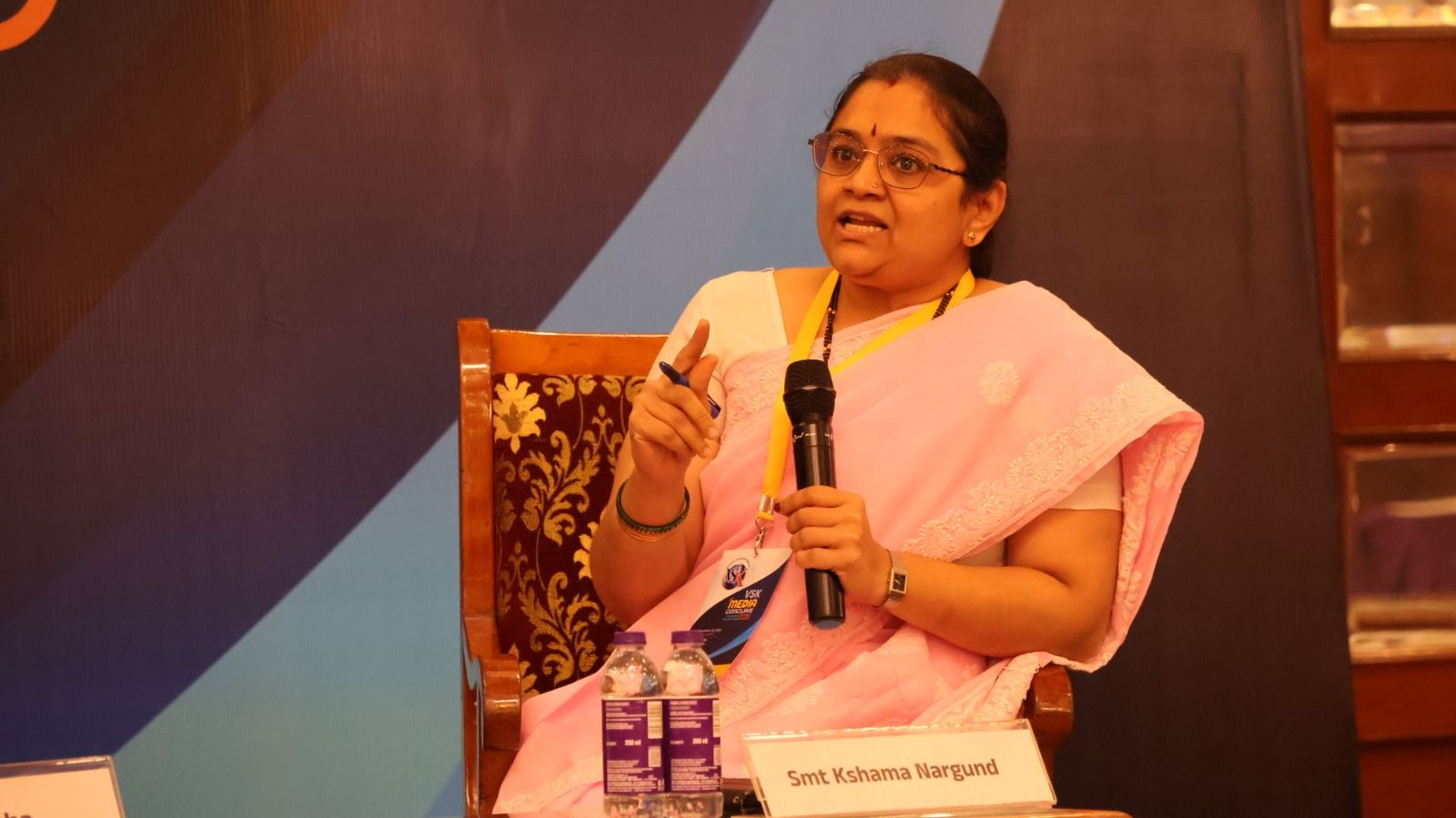
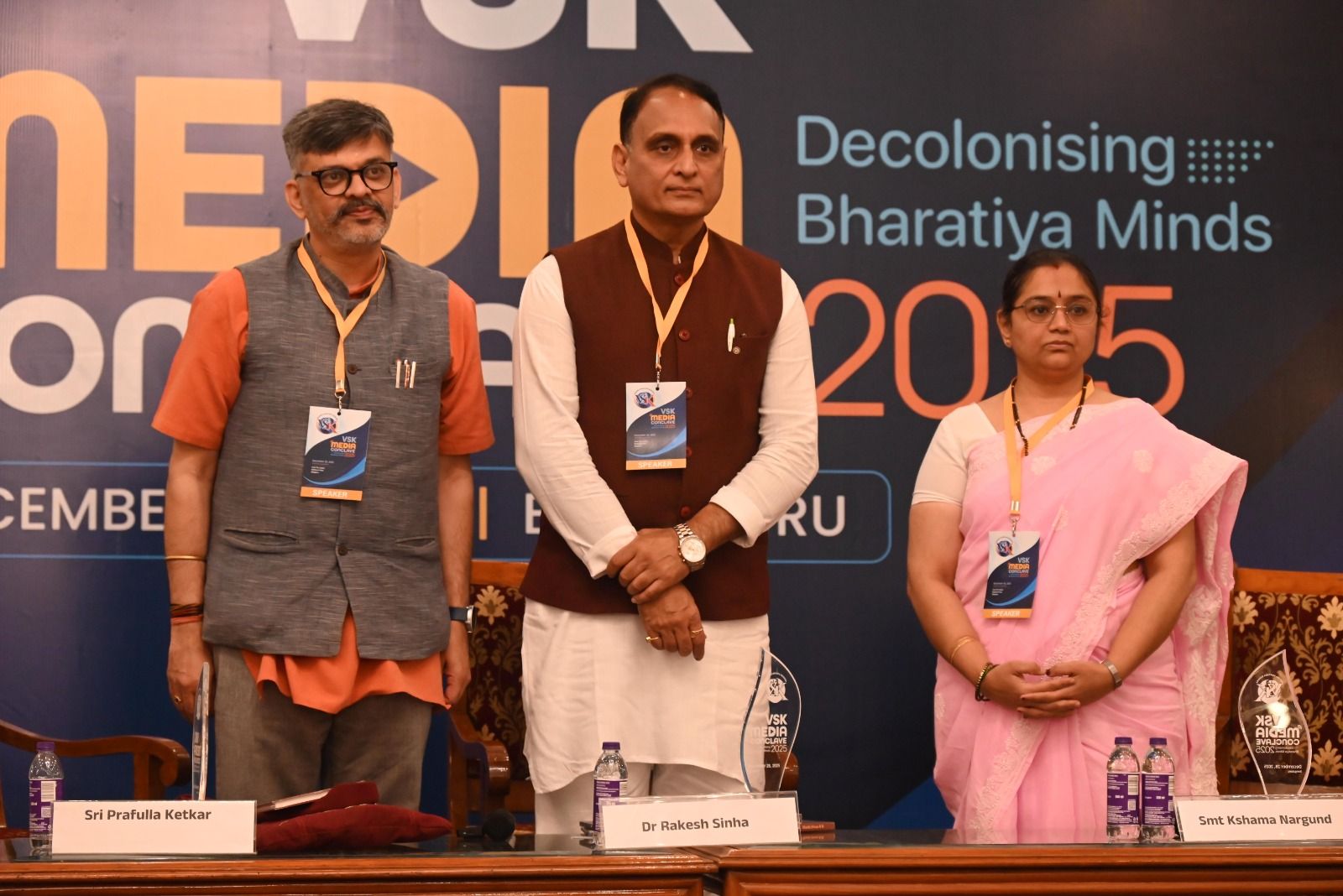
Speakers: Dr Rakesh Sinha, Columnist, Former MP, Rajya Sabha, Prafulla Ketkar, Editor, Organiser, Moderated by Smt Kshama Naragund
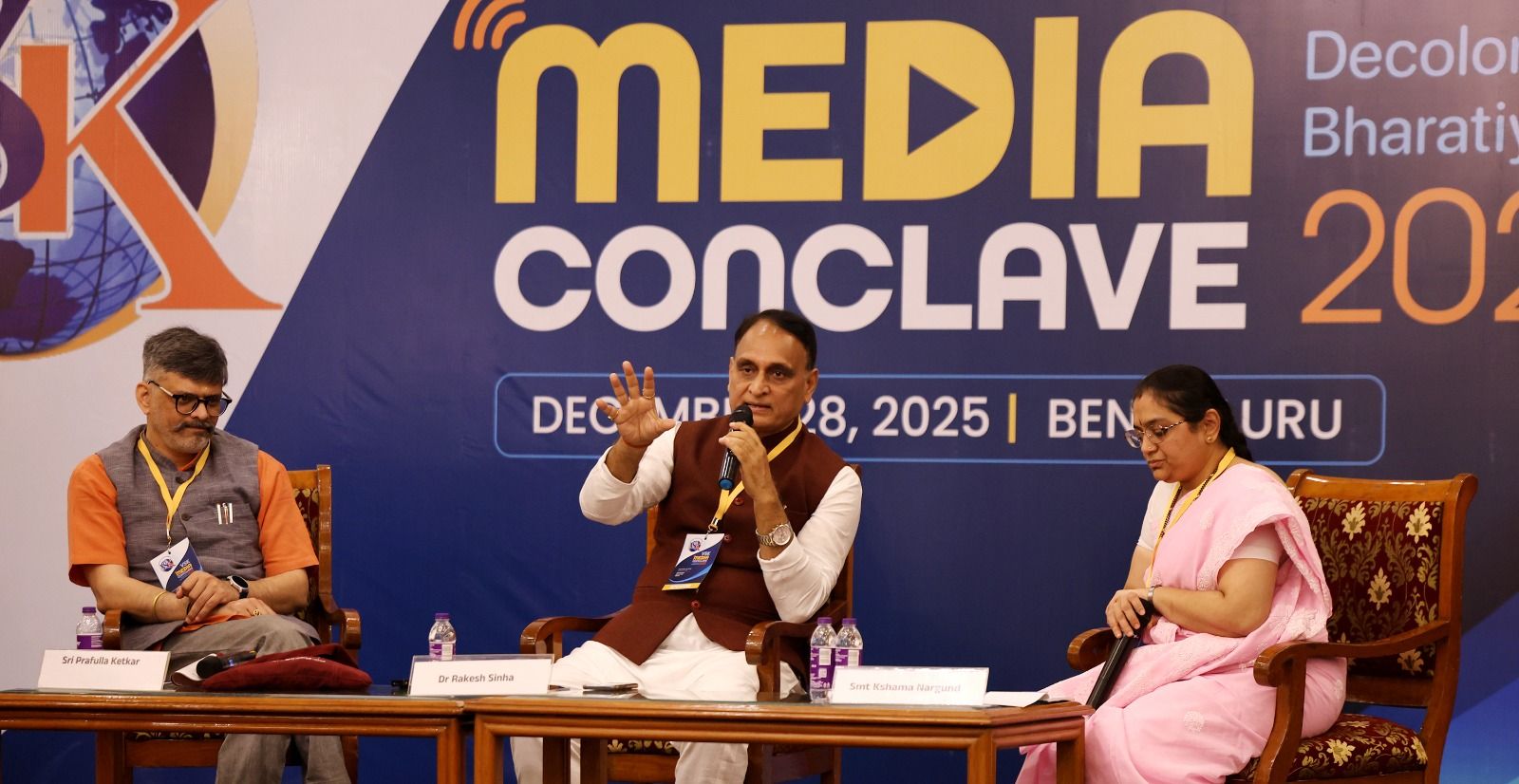
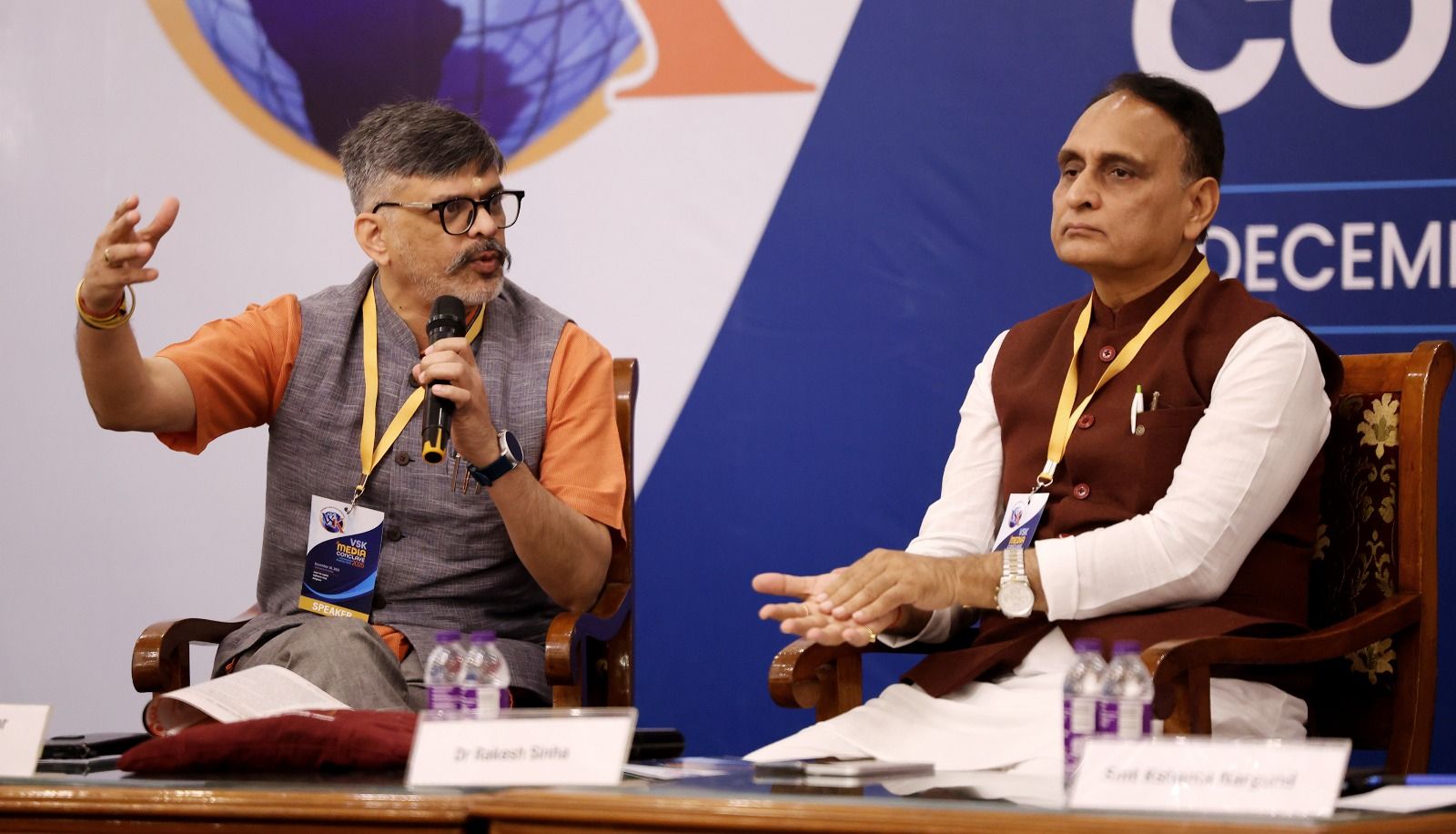
The session framed decolonisation as an intellectual and cultural process, Prafulla Ketkar asserting that Bharat as a civilisation was never truly colonised. He explained that colonial influence primarily shaped a limited urban, English-educated elite, while rural and traditional India retained its indigenous modes of thought. Dr Rakesh Sinha underscored Swaraj in ideas, intellectual self-rule as the path to moving beyond colonial frameworks through a forward-looking, solution-oriented approach rooted in Indian perspectives.
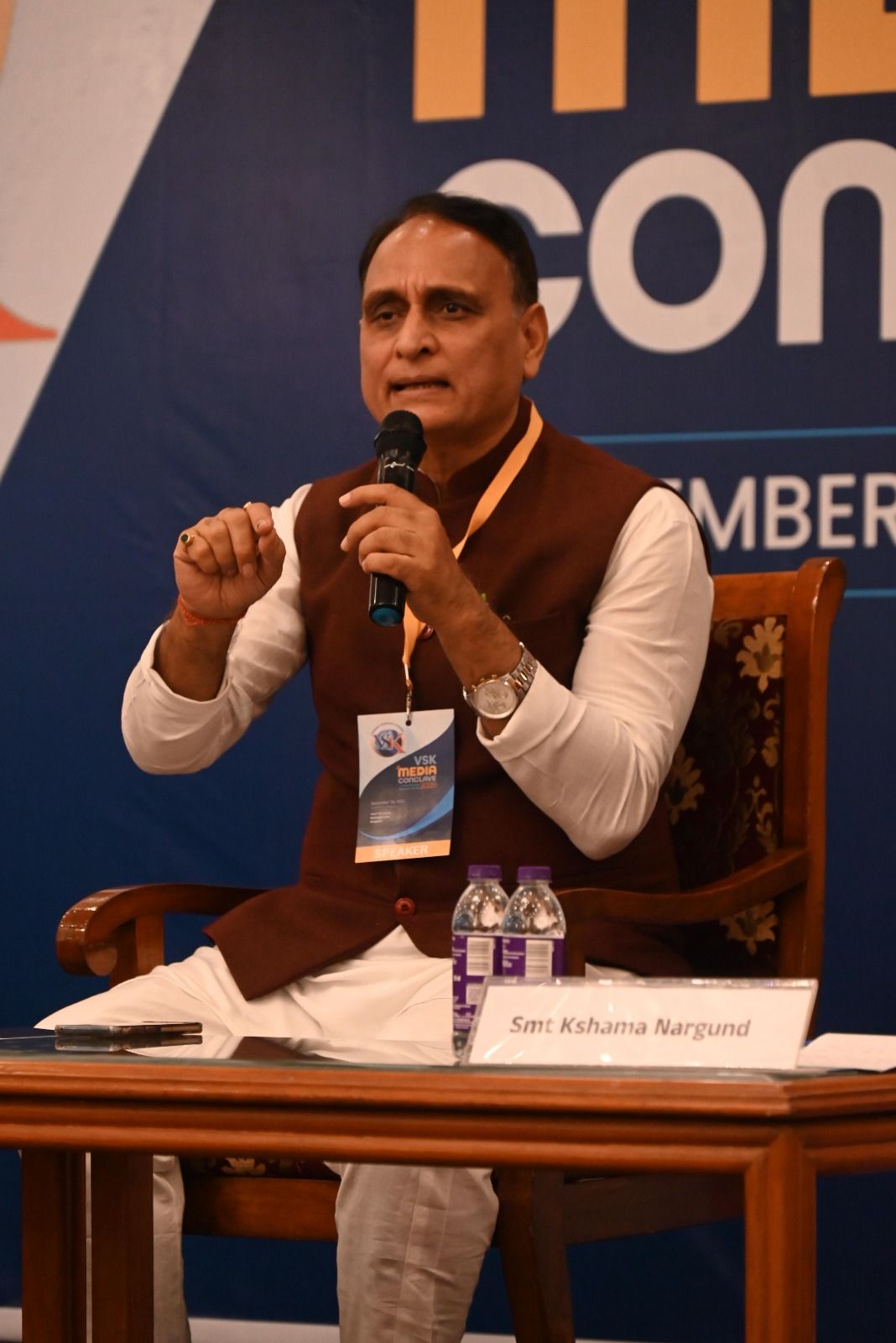
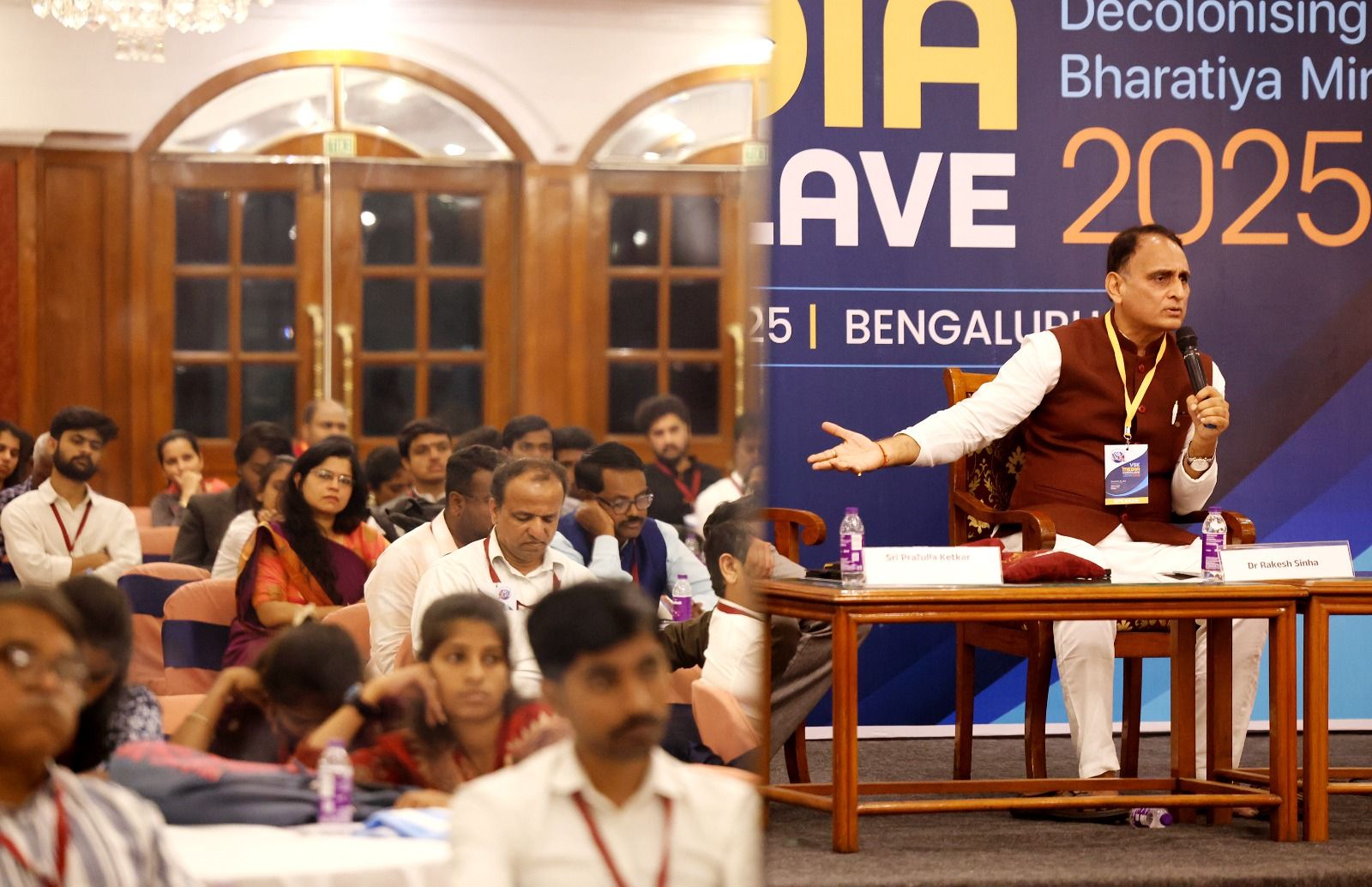
The panel emphasised that media, in a broad Bharatiya sense, must reflect ground realities and counter externally imposed narratives while acting as a bridge between society, academia, and policymakers. English should be employed as a tool to articulate Bharatiya viewpoints globally, alongside strengthening Indian languages and traditions. Speakers highlighted the need for socially committed intellectual engagement and collective responsibility to shape an authentic, civilisationally confident discourse.
Session 2 – Media: Bharatiya Ethos, Constitution, Democracy
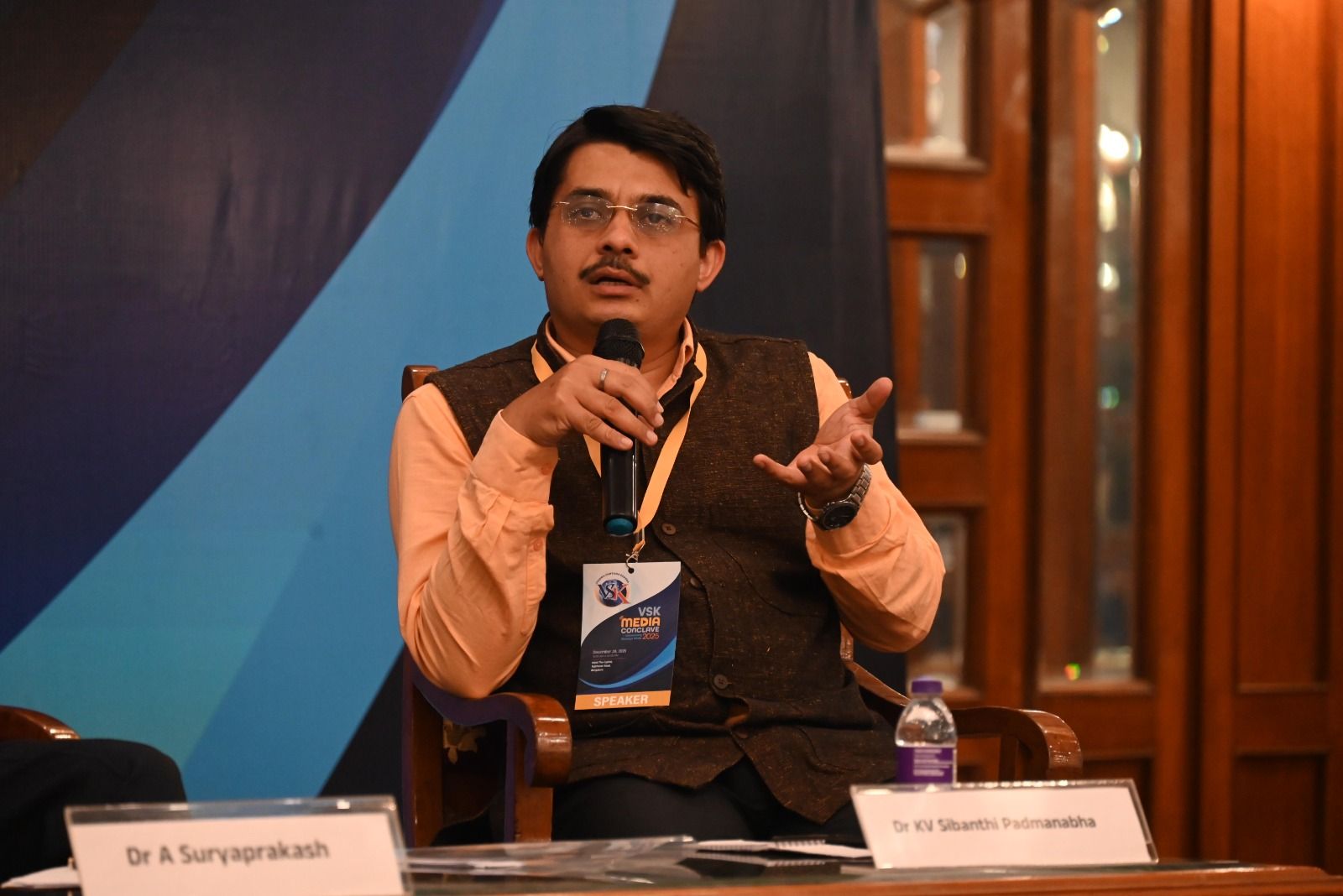
Speakers: Dr A Suryaprakash, Padmabhushan Awardee, Senior Journalist,Former Chairman, Prasar Bharati, Sri Kashyap N Naik Advocate, High Court of Karnataka, Moderated by Dr KV Sibanthi Padmanabha, Department of Journalism & Mass Communication, Tumkur University
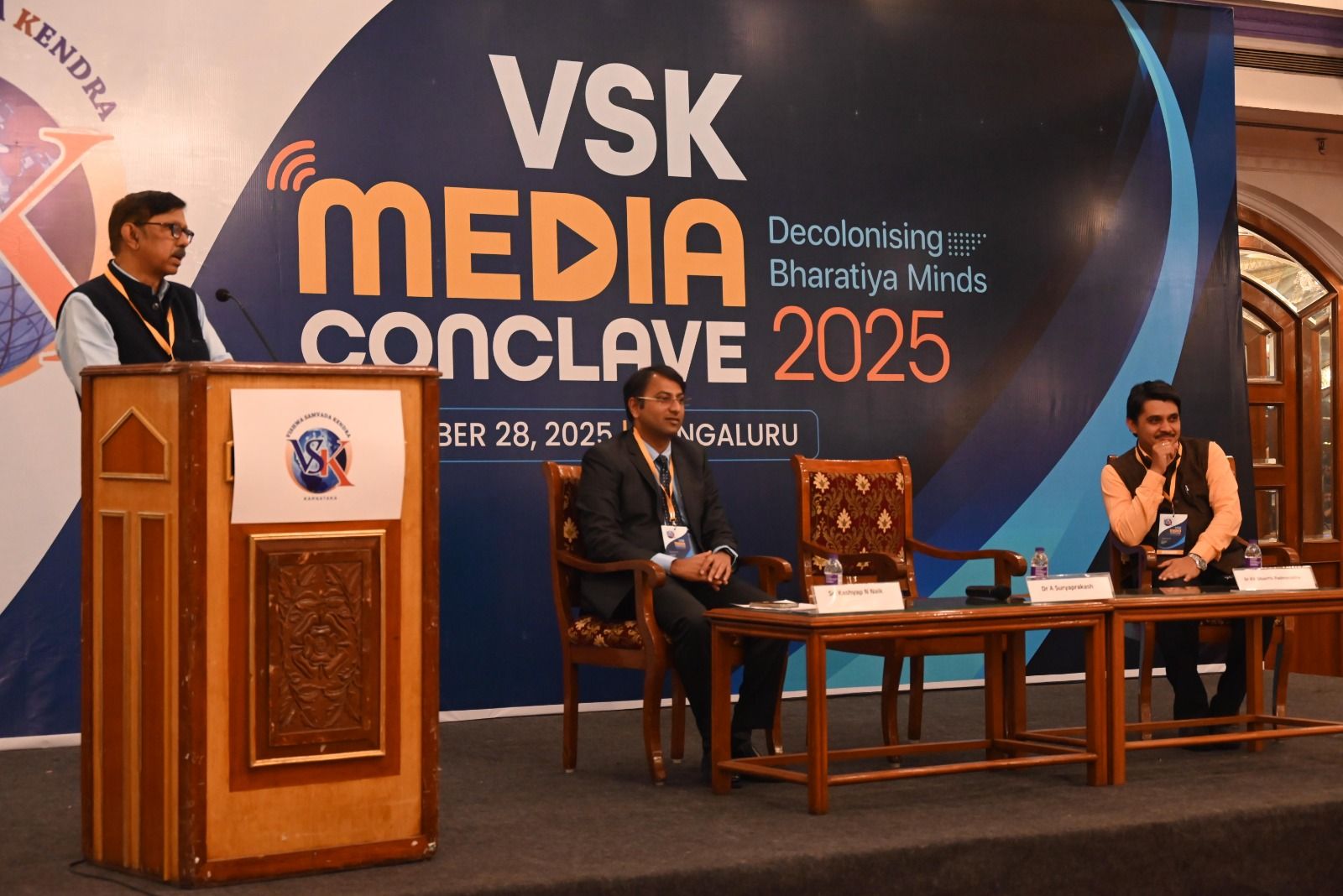
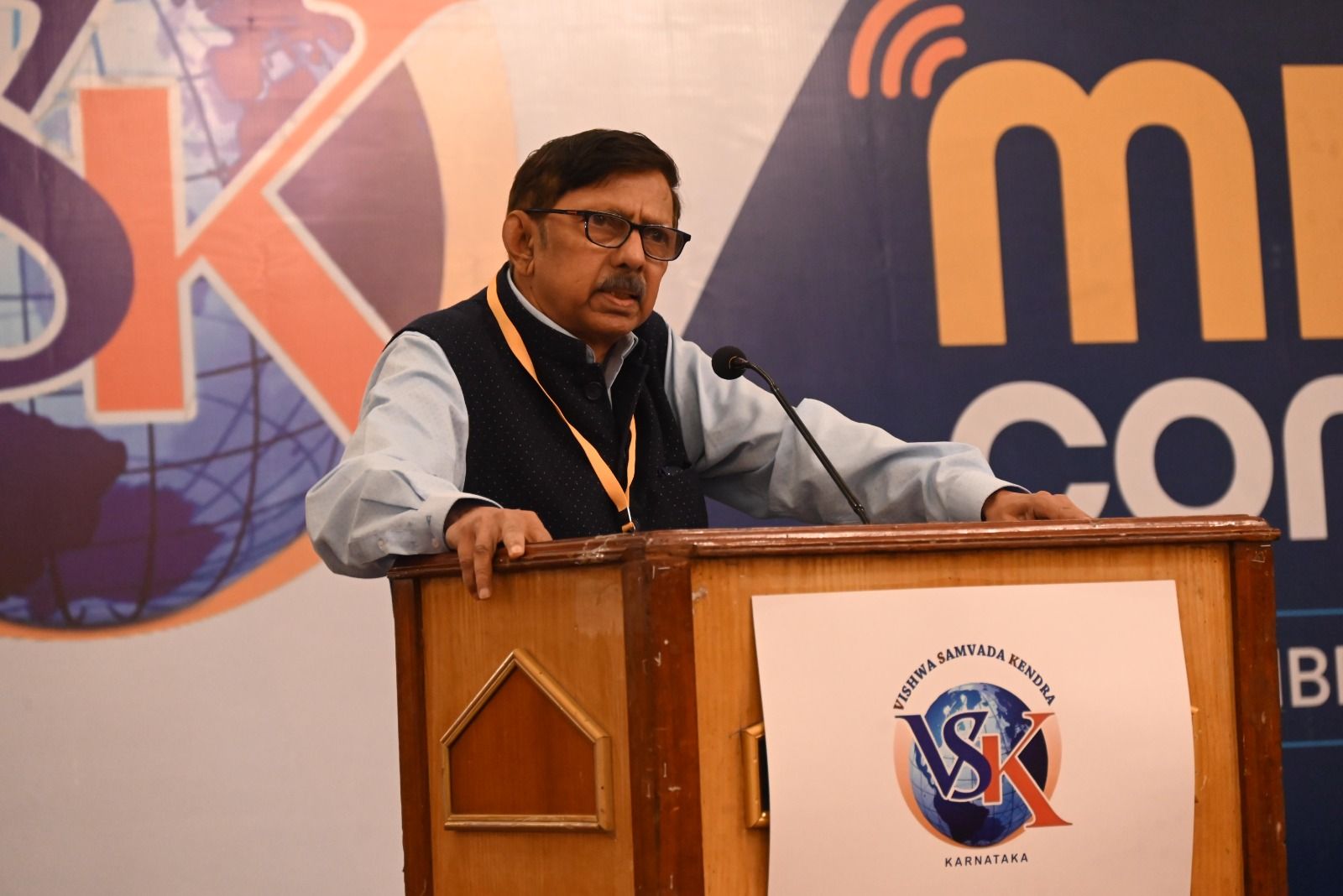
Dr A Suryaprakash asserted that India’s intellectual decolonisation is long overdue, having been delayed after independence by dominant ideological narratives. He noted that this corrective process should have begun in 1947 and expressed satisfaction that society is now addressing it. He then identified key myths taught in schools and colleges, particularly the claim that the British introduced India to democracy, parliamentary practice, the rule of law, and principles of justice.
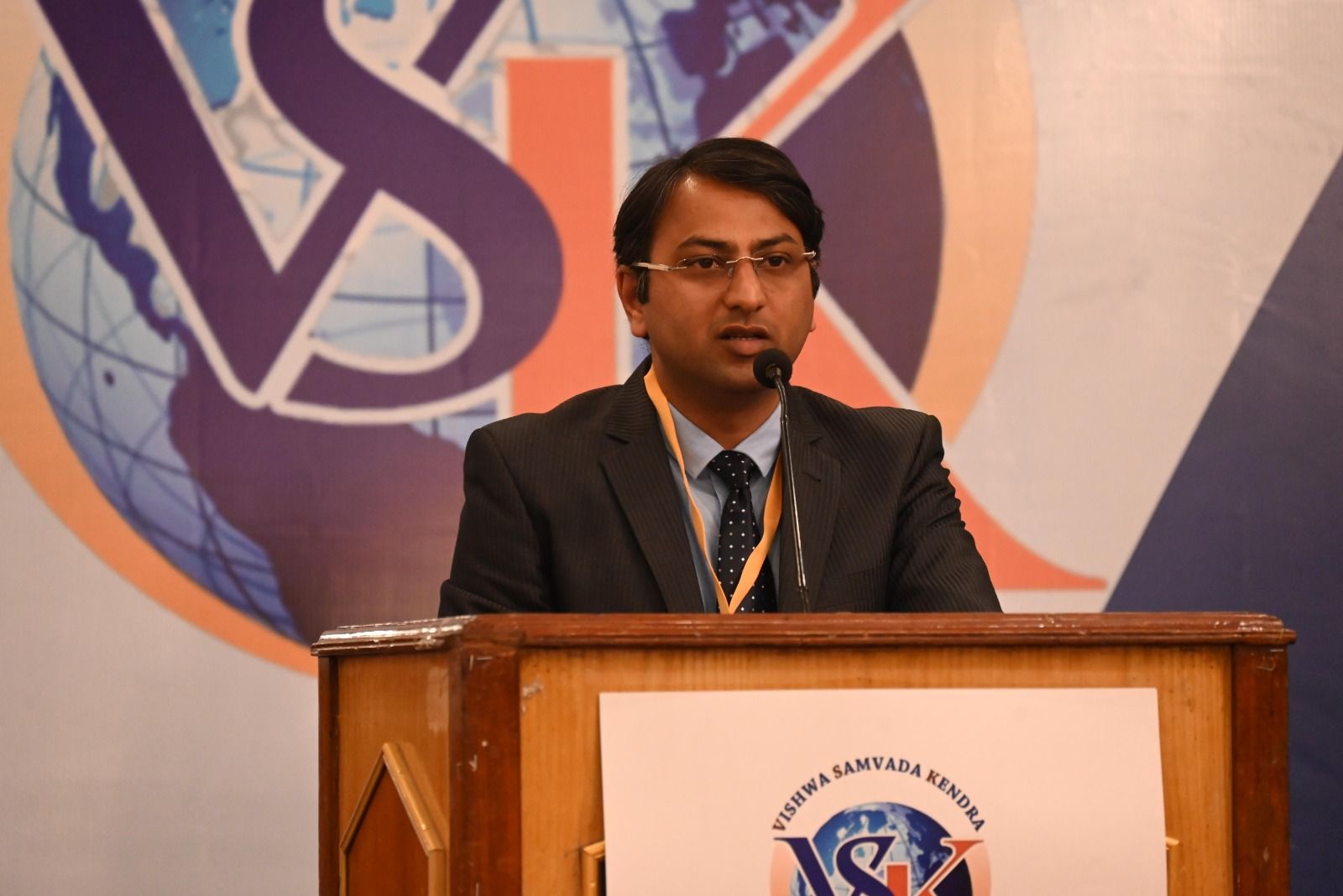
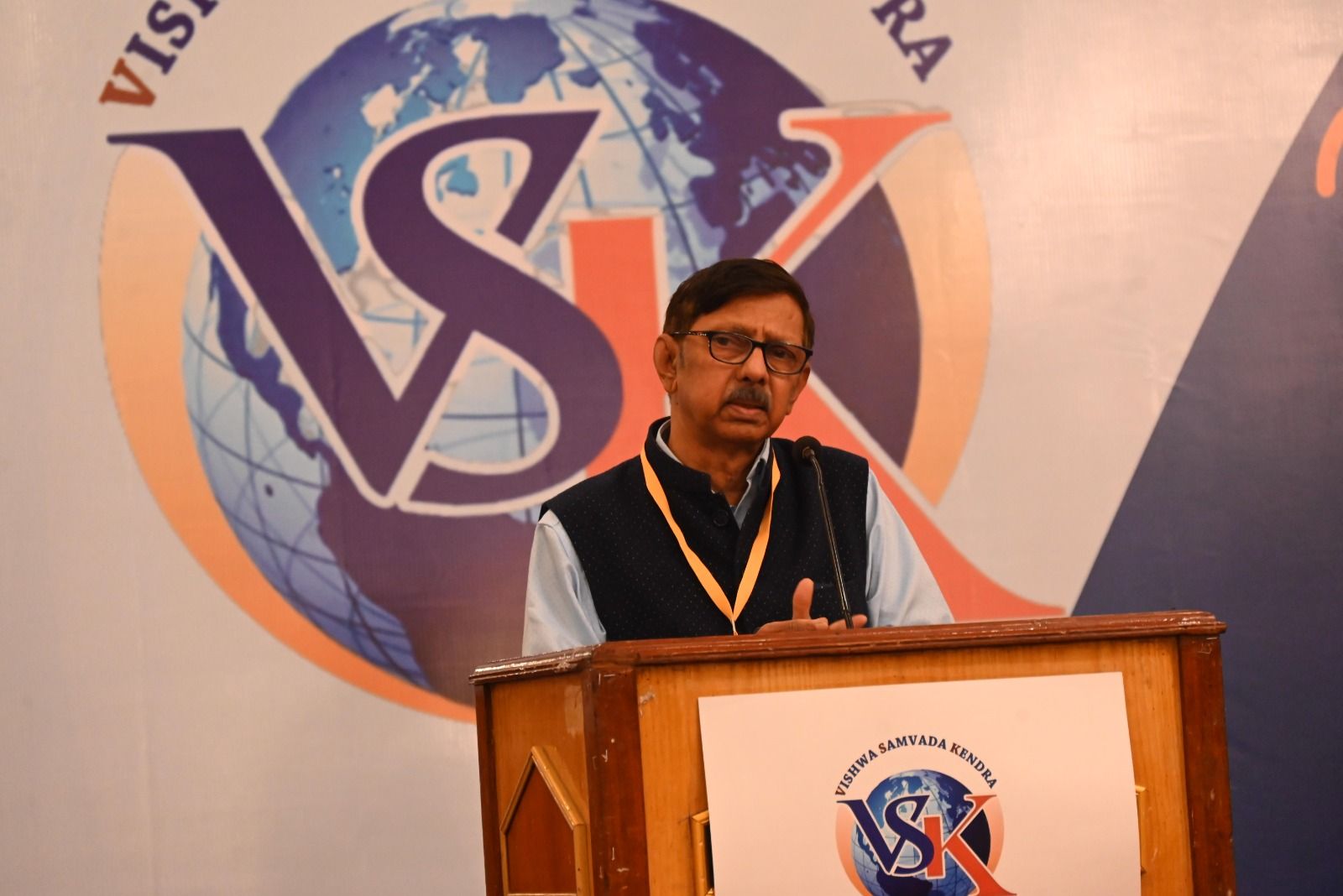
Rejecting these claims, he highlighted that while Britain was still in a primitive, tribal stage, the Indus Valley civilisation had already developed advanced urban planning, sanitation, trade, and administrative systems. India, he asserted, possessed sophisticated civilisational institutions long before British rule, and dismantling such colonial-era myths is essential to restoring intellectual self-confidence and independent thinking.
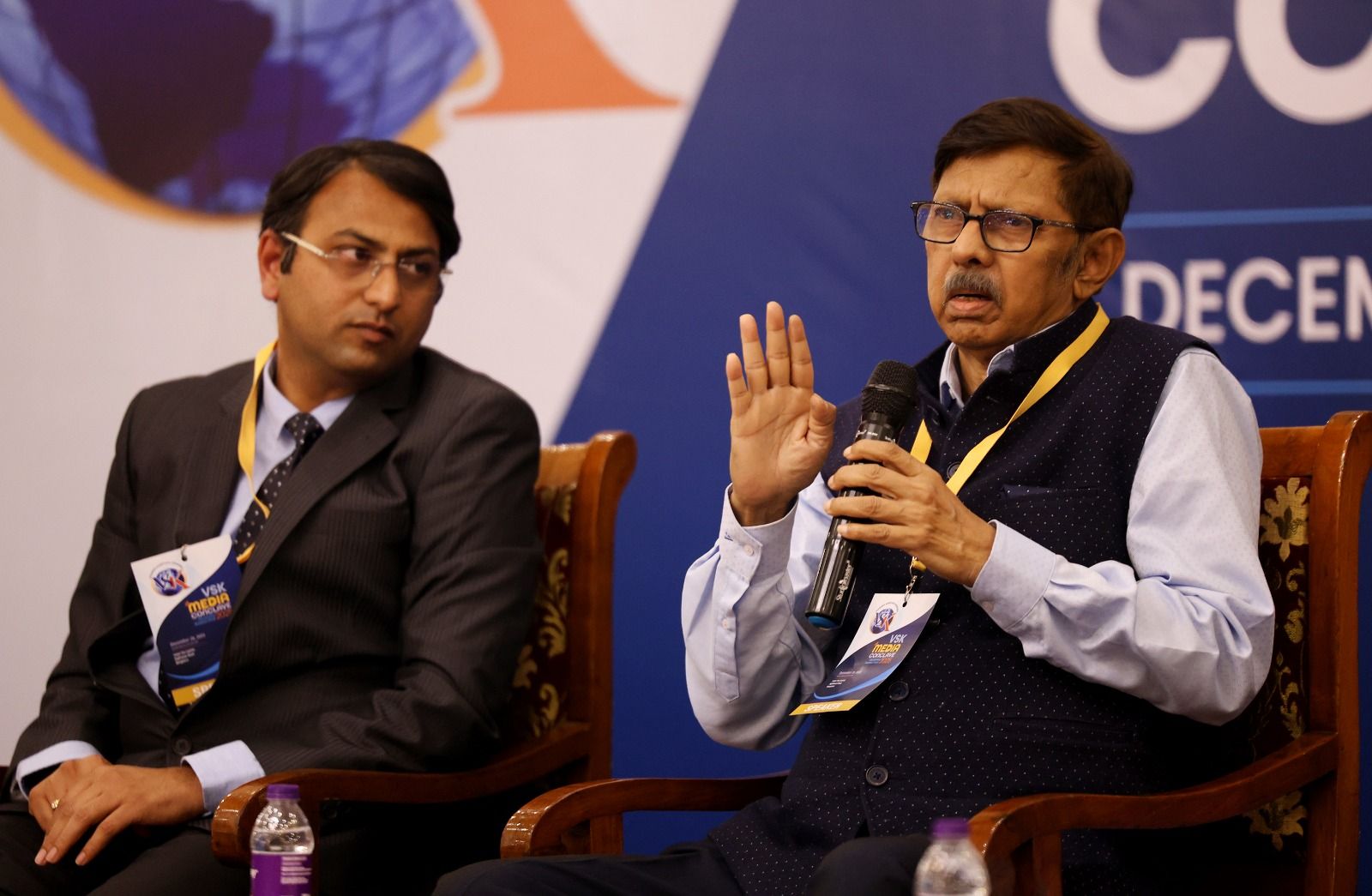
Dr. B. R. Ambedkar, the Licchavi kingdom, and ancient Buddhist Sanghas demonstrate that democratic practices, constitutional principles and collective governance existed in India long before British rule. The speaker said these examples clearly challenge the myth that the British introduced India to democracy, the rule of law, or representative institutions, and instead highlight India’s long-standing civilisational traditions of participatory governance and social organisation.
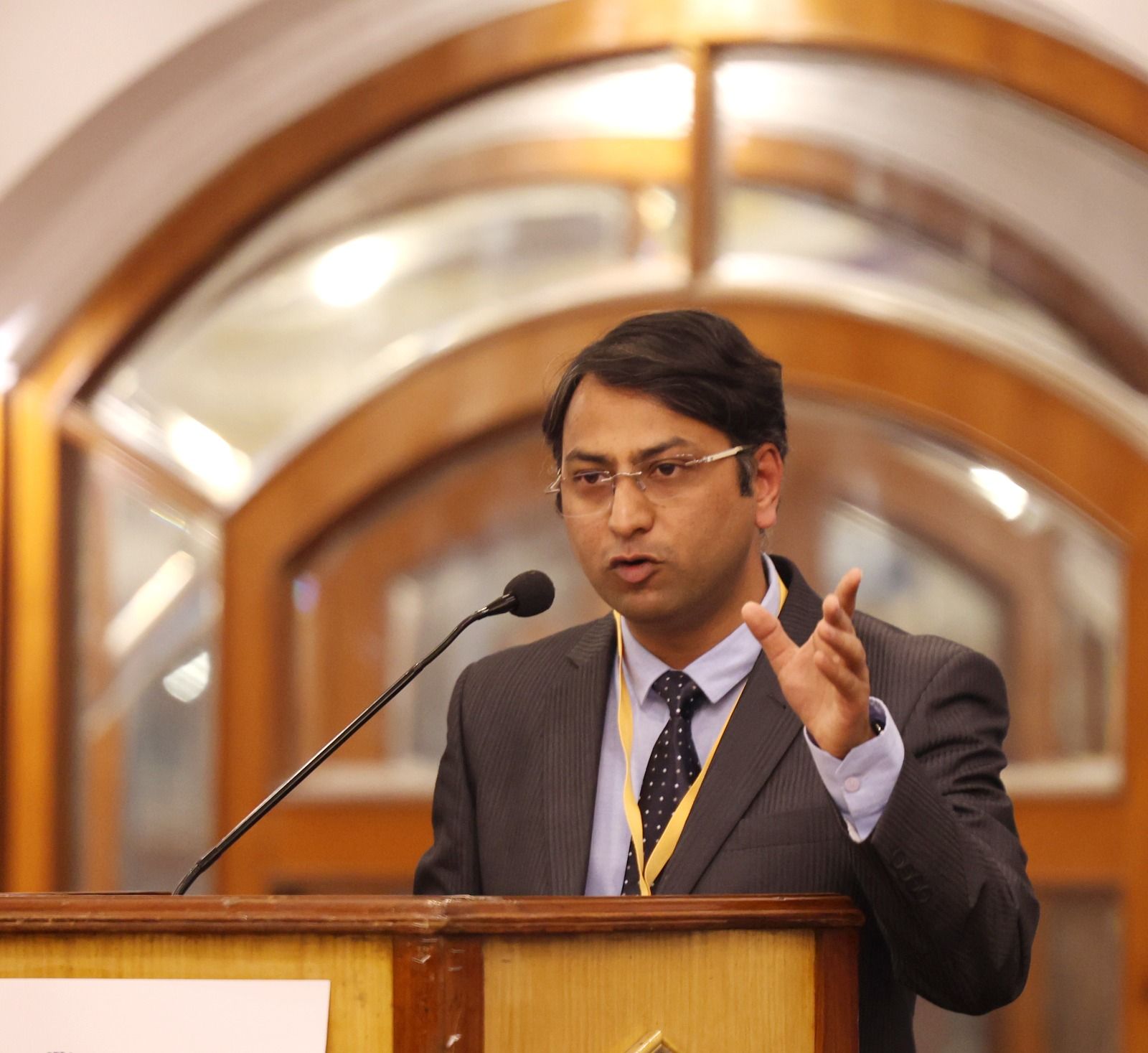
Shri Kashyap explained ethos as the defining spirit of a community and said India’s ethos is rooted in Dharma, which sustains individuals, society, and the state. Unlike the Western rights-centric, top-down model, India follows a duty-conscious, bottom-up approach where individual conduct shapes the larger social order, balancing inner responsibility with external regulation.
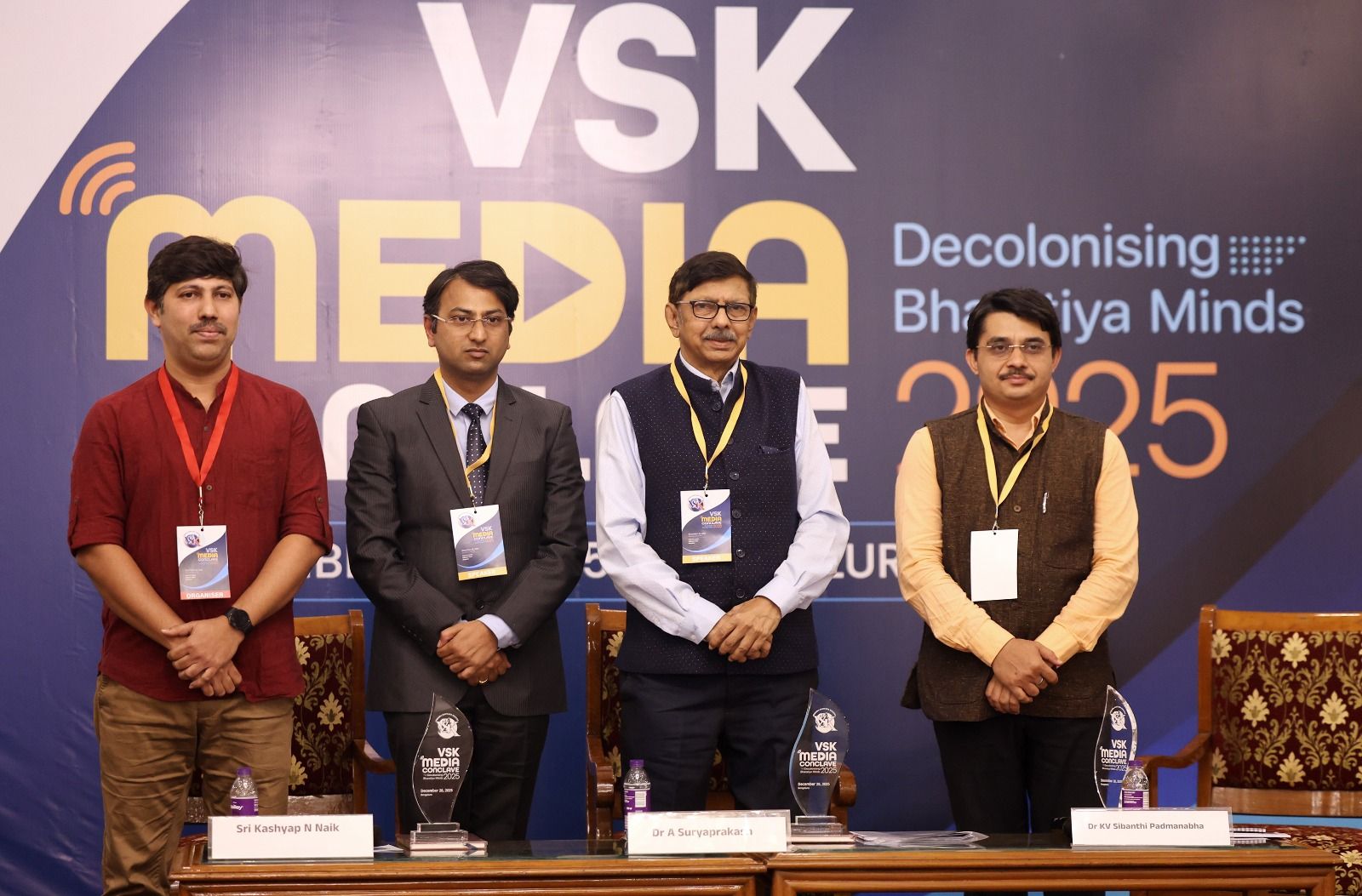
He noted that constitutional values such as justice, liberty, equality, fraternity, and rule of law existed in India’s civilisational traditions long before modern constitutions. These traditions supported intellectual freedom, plural thought, merit-based opportunity, and accountability of rulers. The speaker concluded that Bharatiya ethos aligns naturally with constitutional democracy and strengthens it by grounding governance and media ethics in responsibility and truth.
Session 3 – Media and War of Narratives
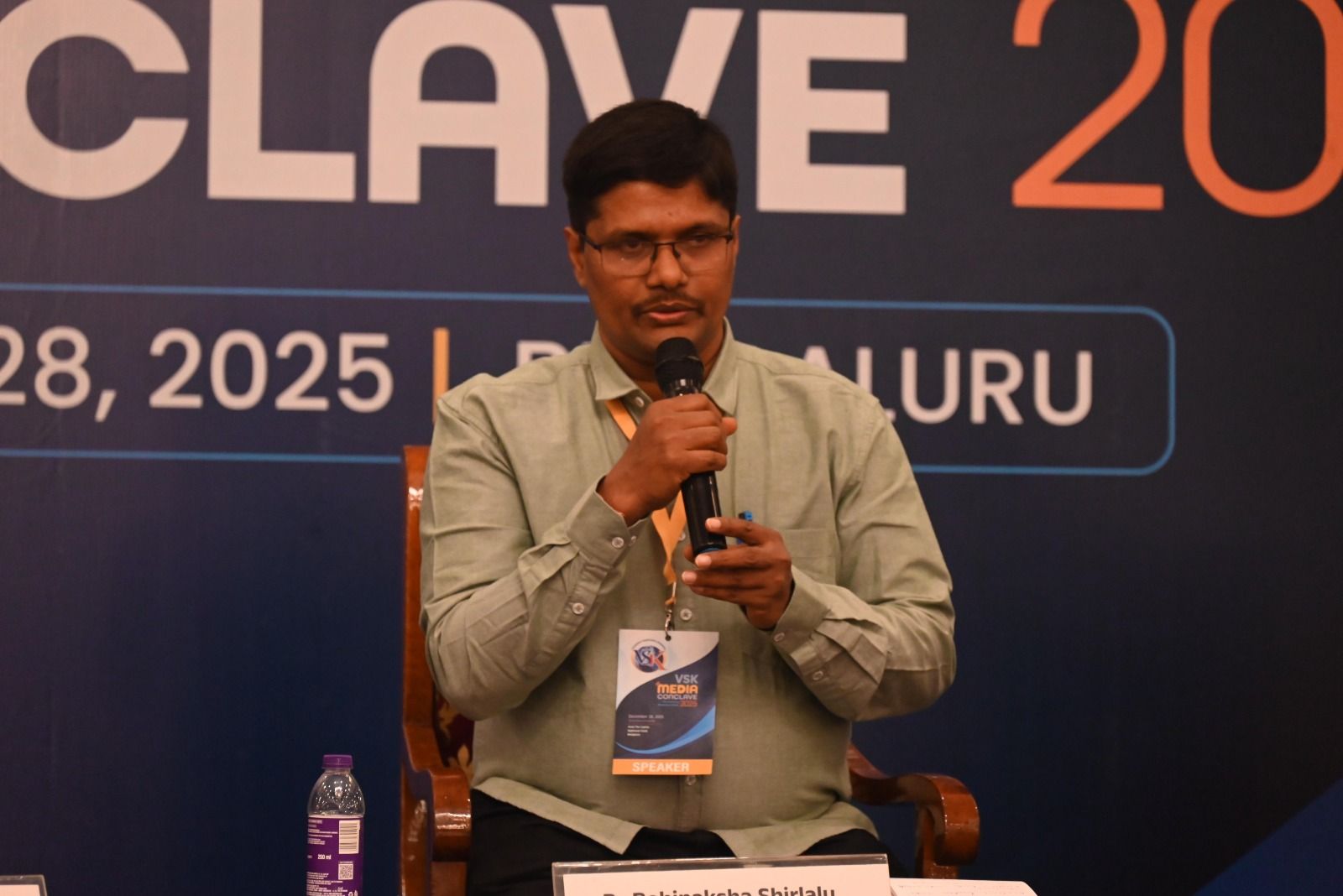
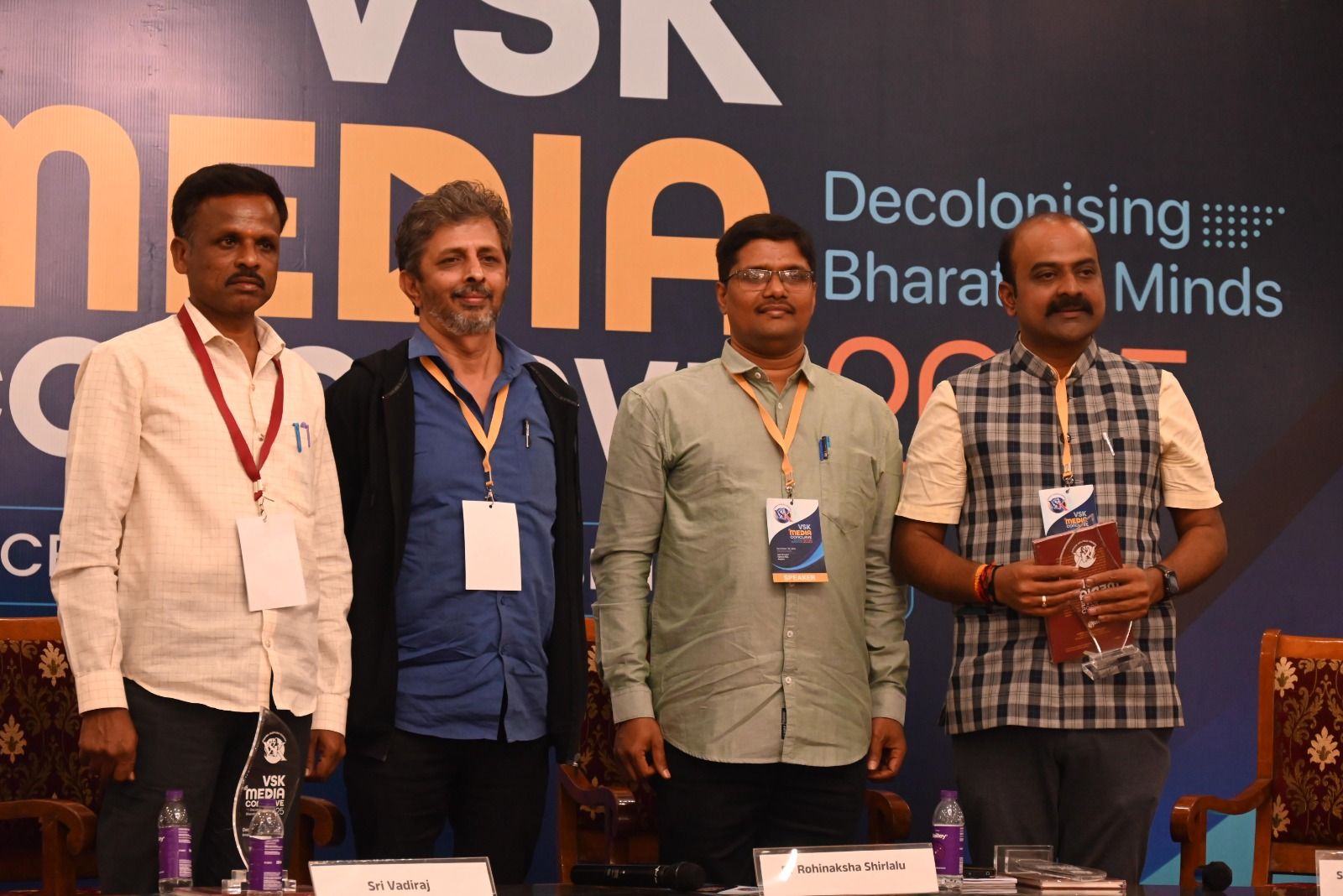
Speakers: Sri Ajit Hanumakkanavar, Editor, Asianet Suvarna News, Sri Vadiraj, Social Activist & Thinker, Moderated by Dr. Rohinaksha Shirlalu, Asst professor, Central University, Kalaburagi
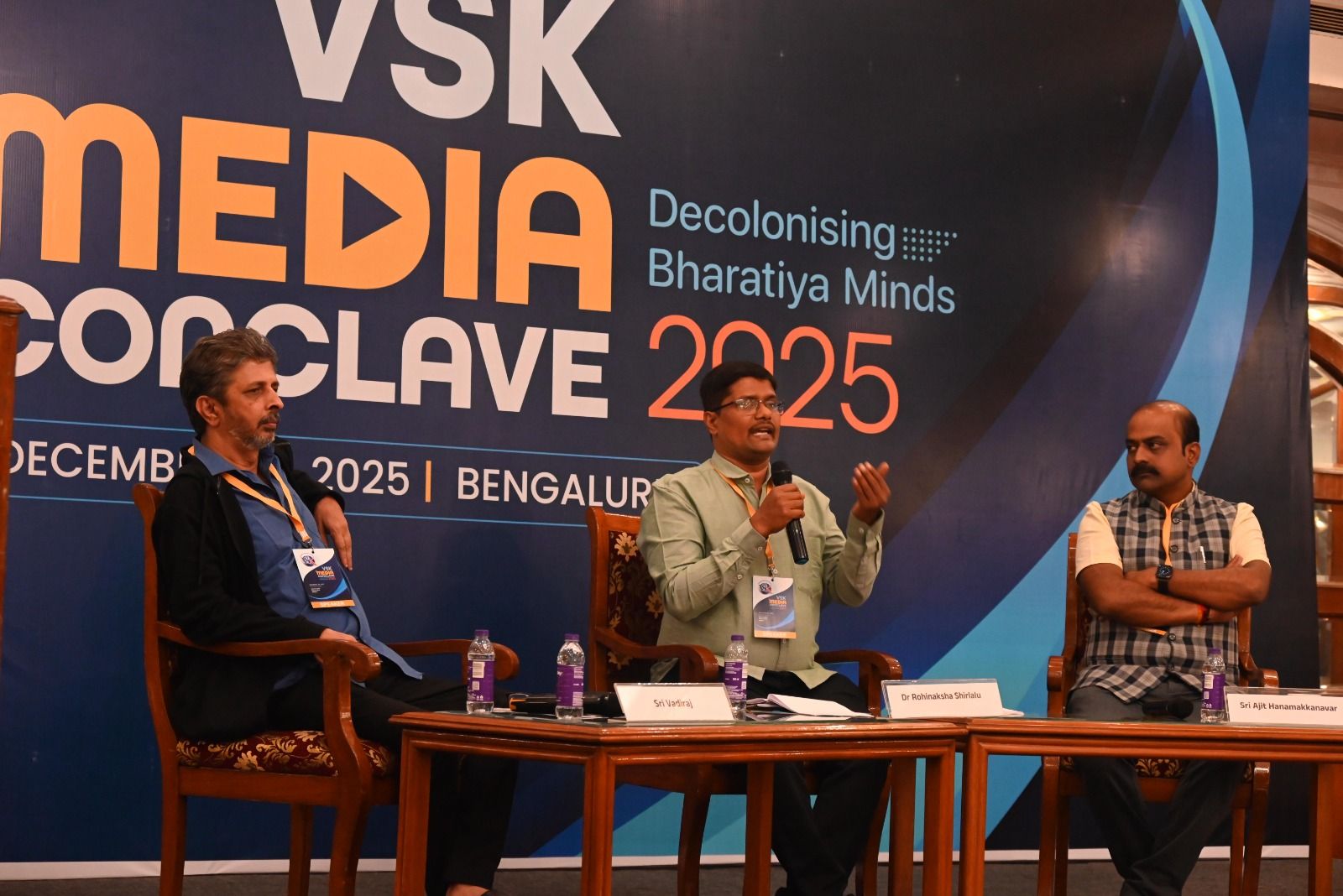
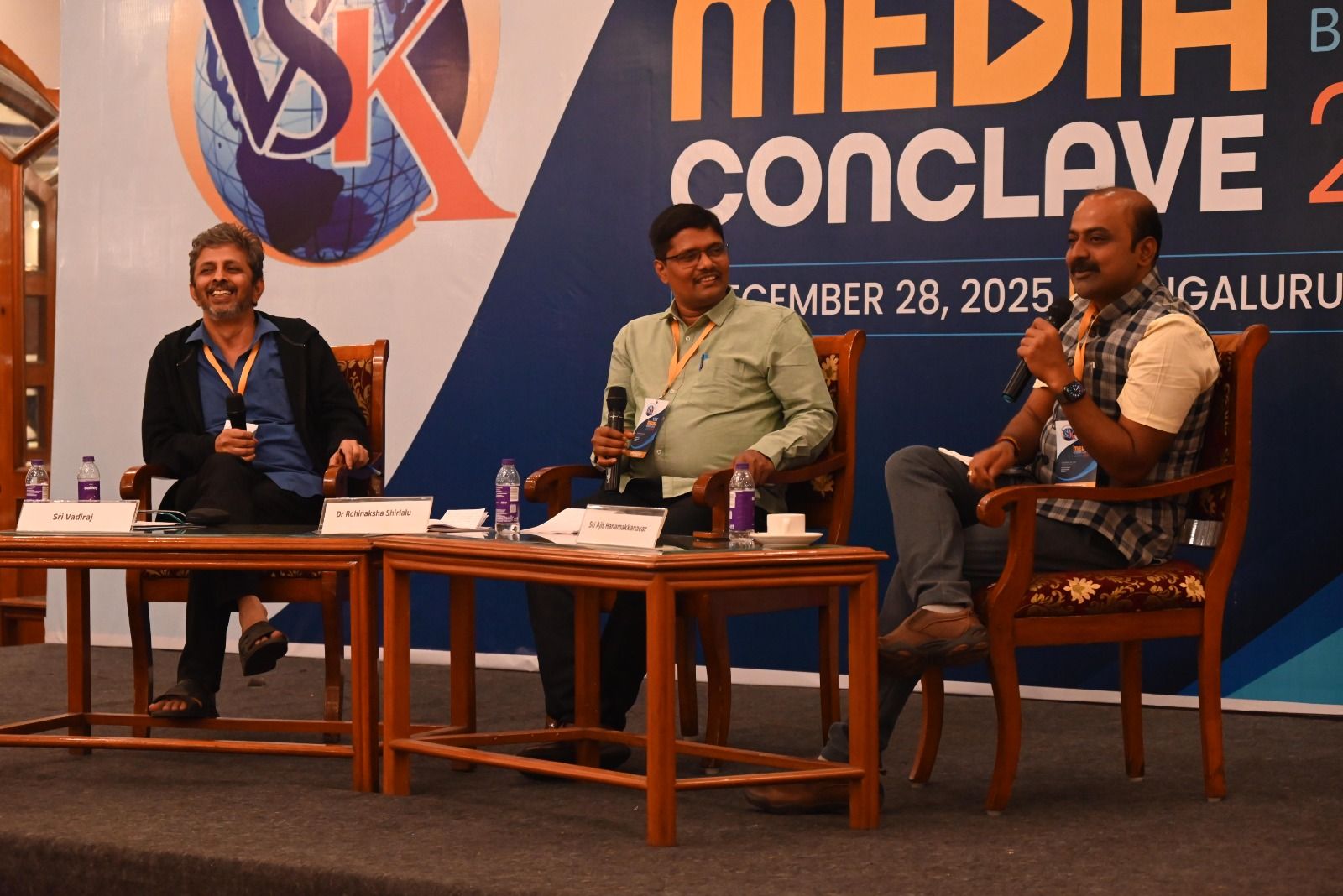
Ajit Hanumakkanavar at the War of Narratives session said that discovering facts is no longer difficult, as research and access to information can effectively counter false or misleading narratives. Vadiraj observed that while journalists and advocates played a significant role in the freedom struggle, post-independence media concentration led to narrative monopolies. The rise of the internet has since reduced this dominance, making factual verification and wider dissemination of information easier.
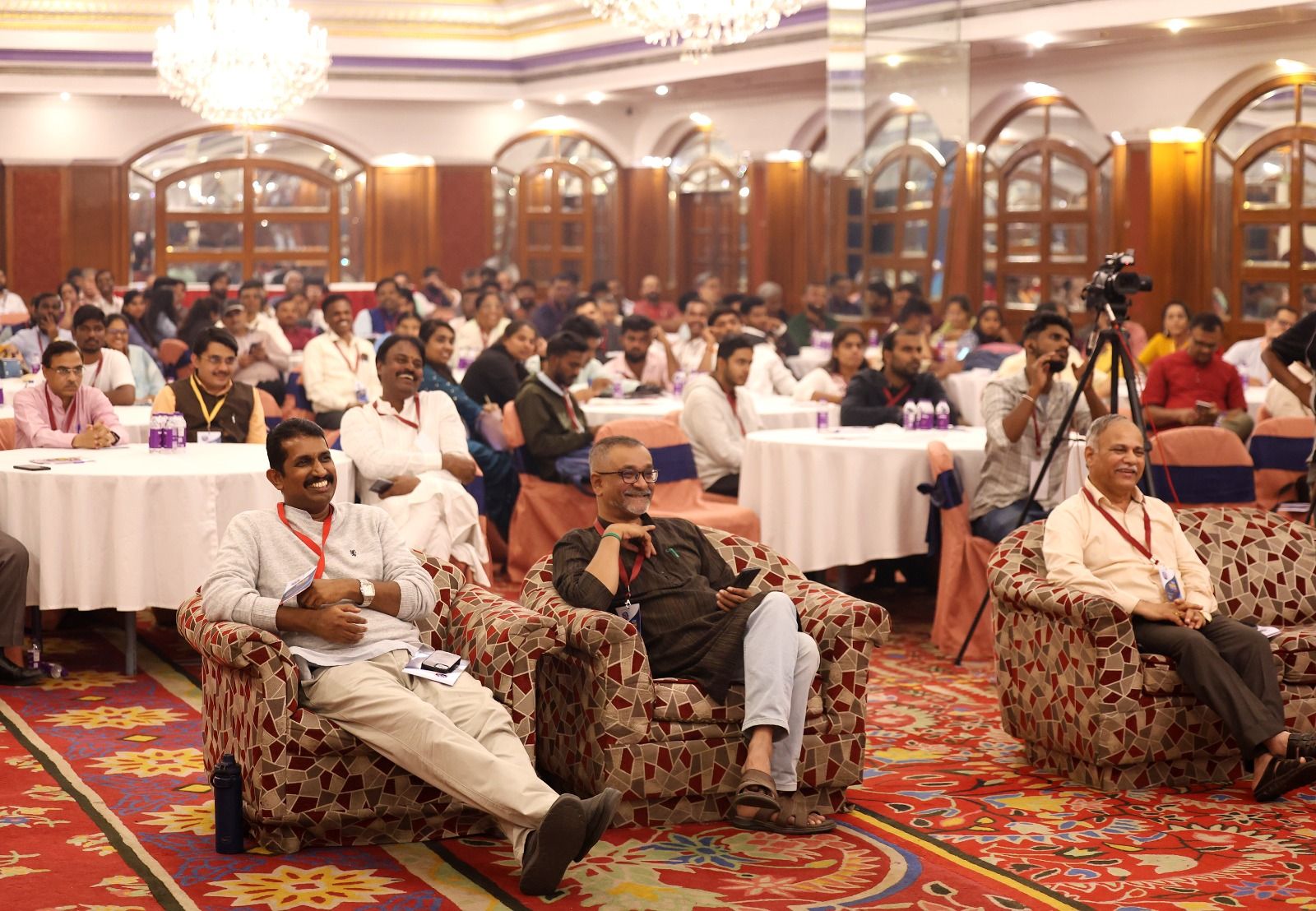
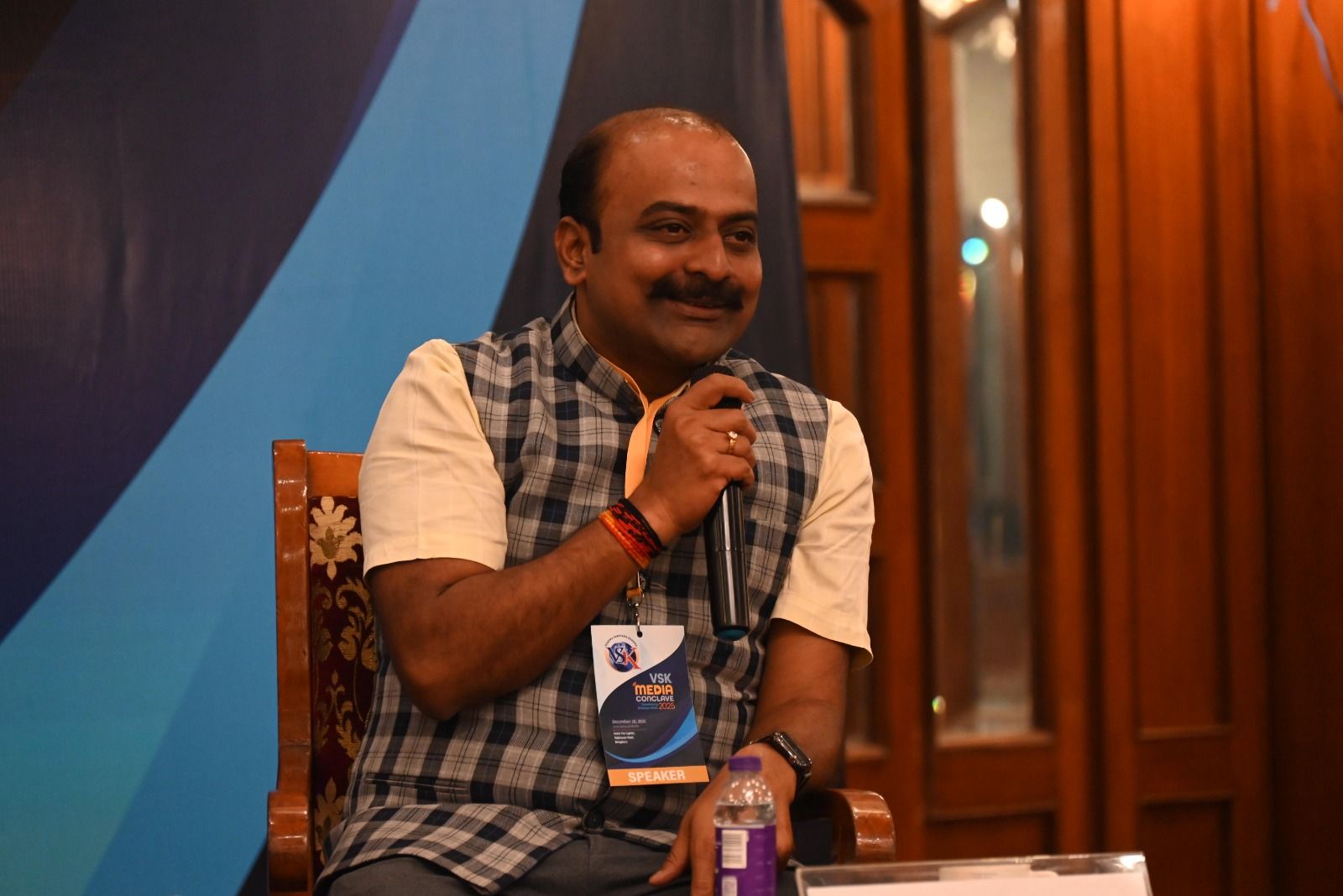
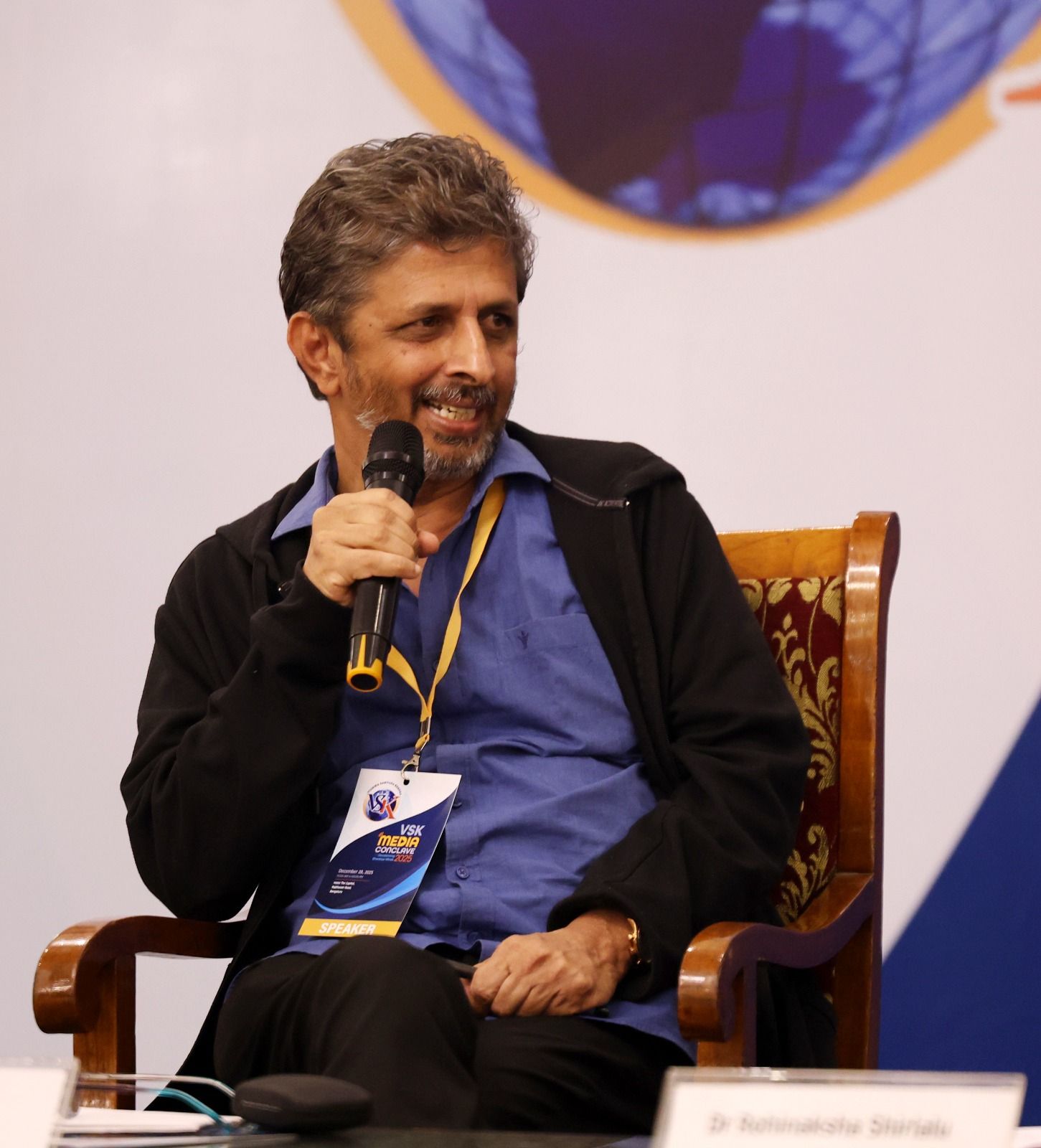
During the discussion Ajit Hanumakkanavar noted that narratives around caste, education, regional identity, language, religion and history persist in society but can be addressed through proper dissemination of knowledge, education, urbanisation, and responsible media practices. Vadiraj also pointed out that many narratives surrounding historical figures arise from misinterpretation of their ideas, and that caste dominance and lack of access to education have been key contributors to the spread of such narratives.
Session 4 Media: Pursuit of Truth, Catalysing Social Transformation
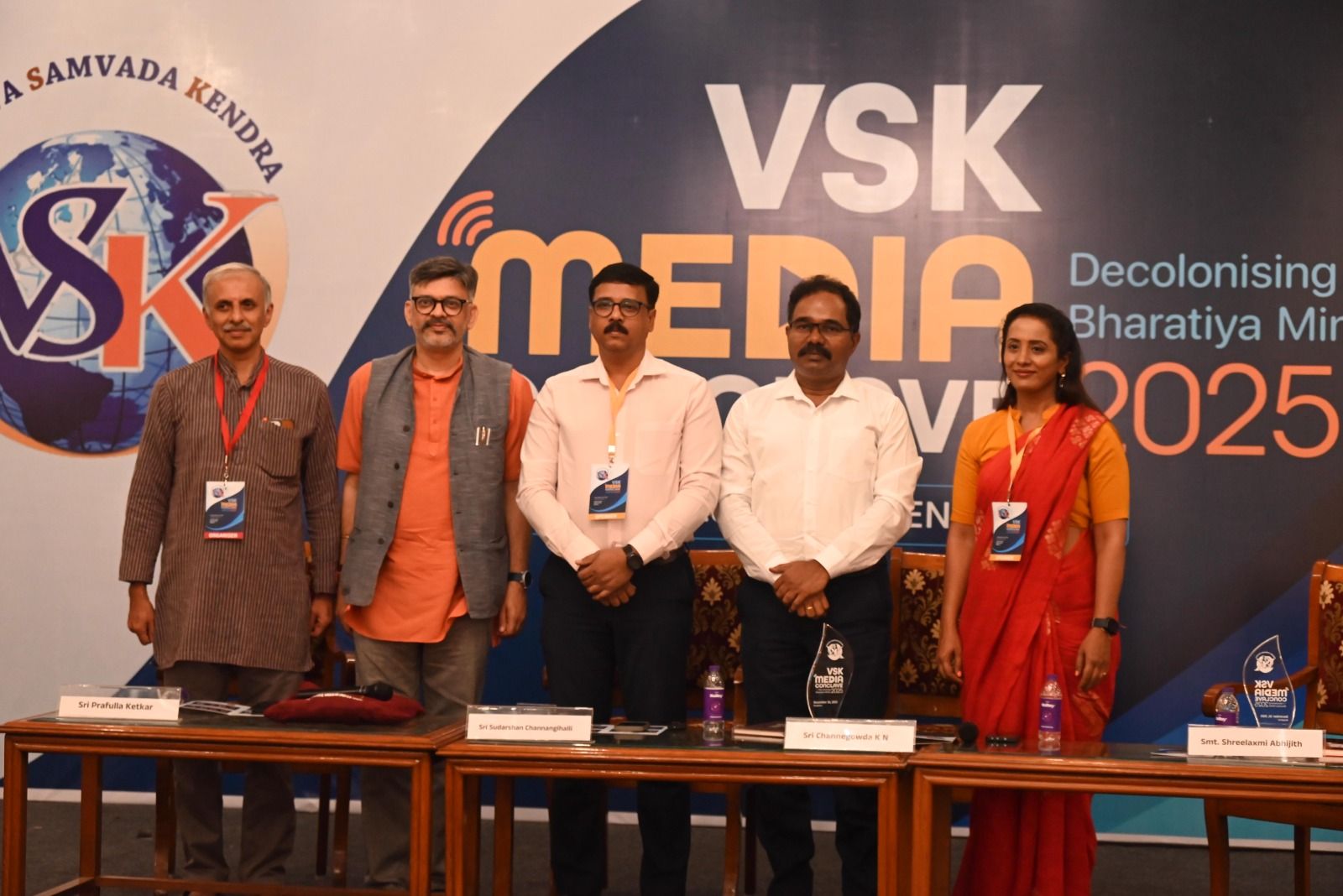
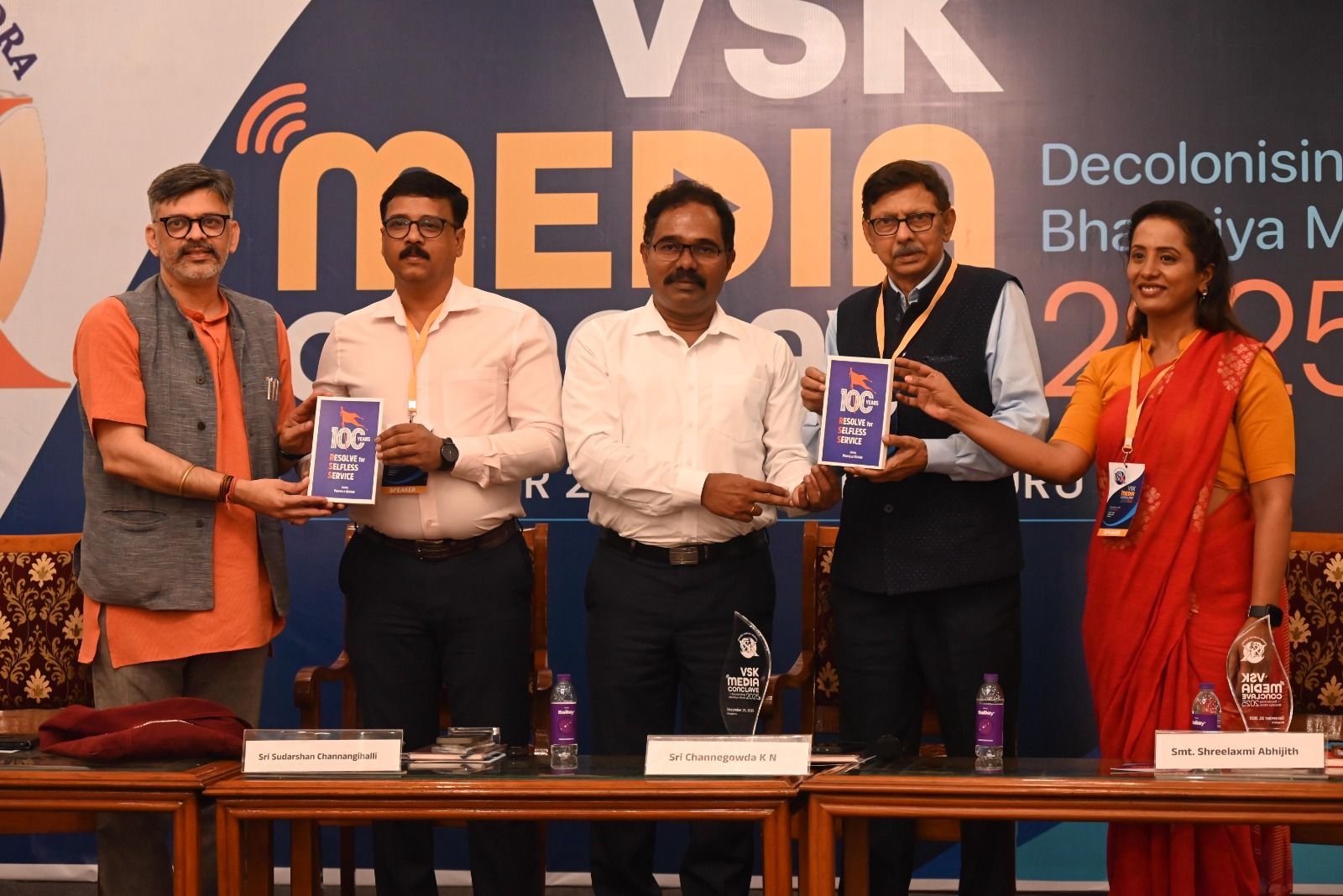
Speakers: Sri Sudarshan. Channangihalli. Editor, Vijaya Karnataka, Sri Channegowda K N Editor, Vijayavani, Prafulla Ketkar, Editor, Organiser, Moderated by Smt. Shreelaxmi Abhijith, Asst. News Editor Republic Kannada
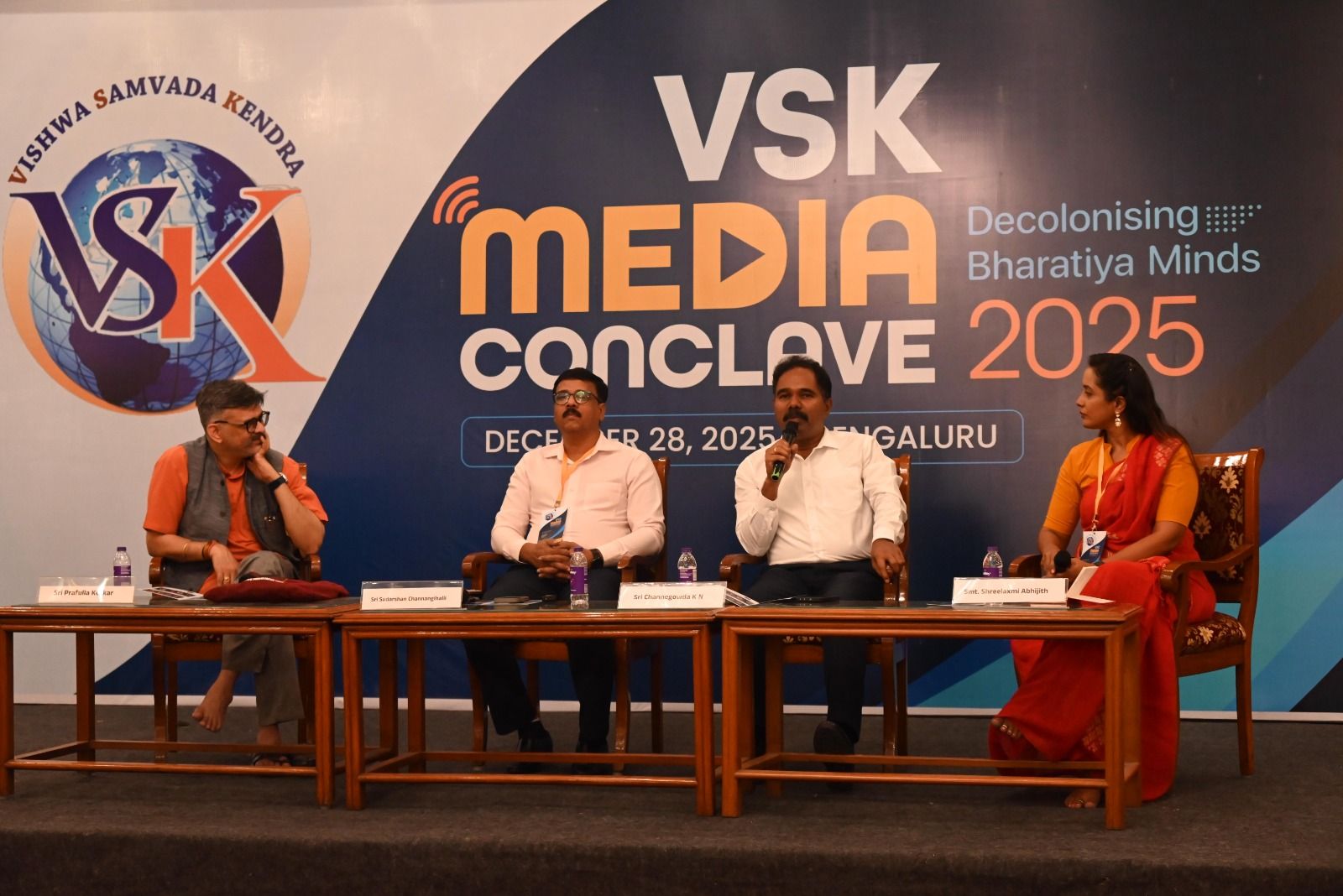
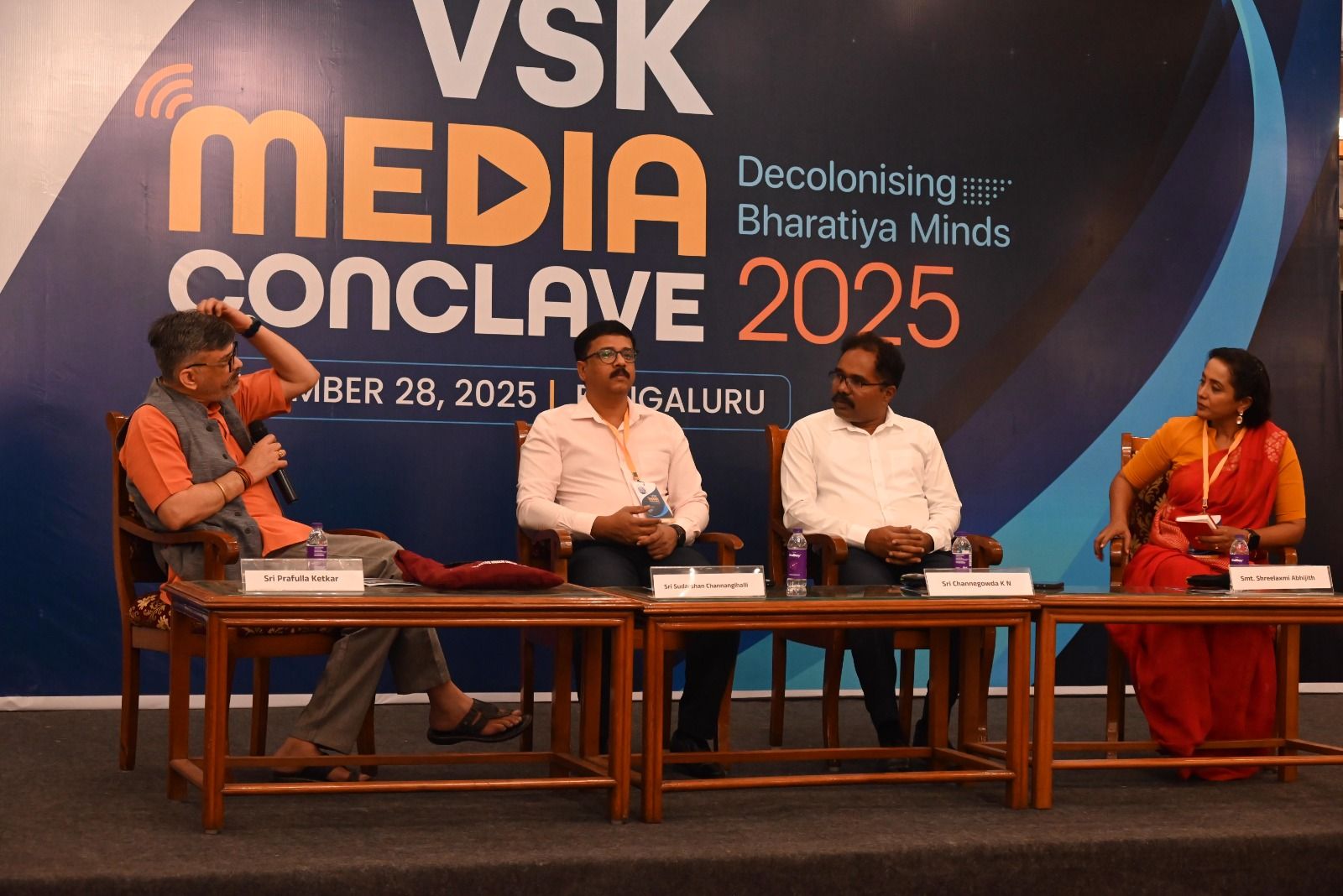
The discussion focused on decolonising the mind as a delayed but essential process of reclaiming Bharatiya identity and narrative control. Sudarshan and Channegowda argued that debates on decolonisation are ultimately about who defines truth and identity for Indian society. They criticised the inherited Western notion of “objective” media, noting that post-independence gatekeeping created fear around expressing civilisational perspectives. True intellectual freedom, they said, lies in transparency of viewpoint, confidence in one’s identity, and honesty rather than pretending neutrality.
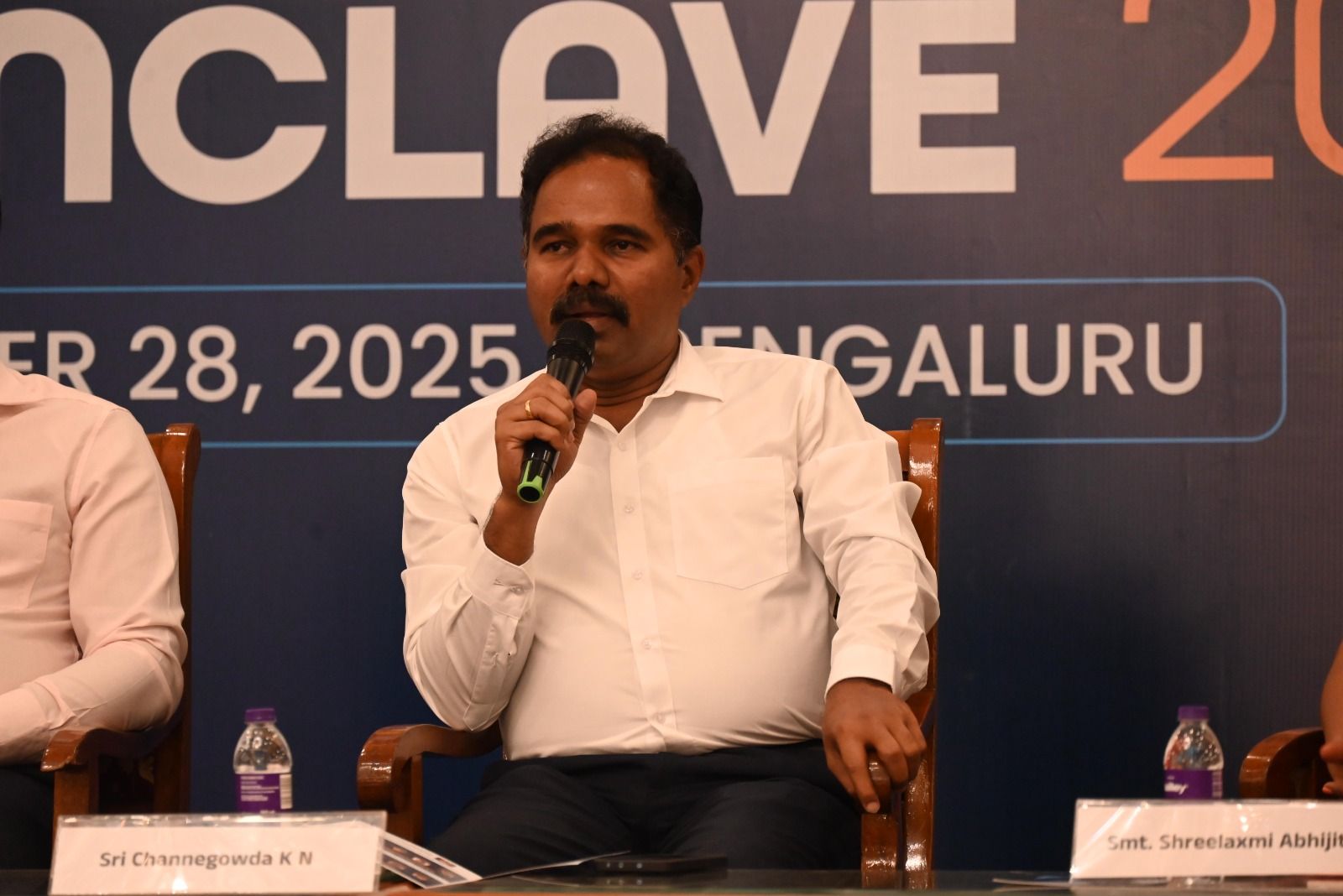
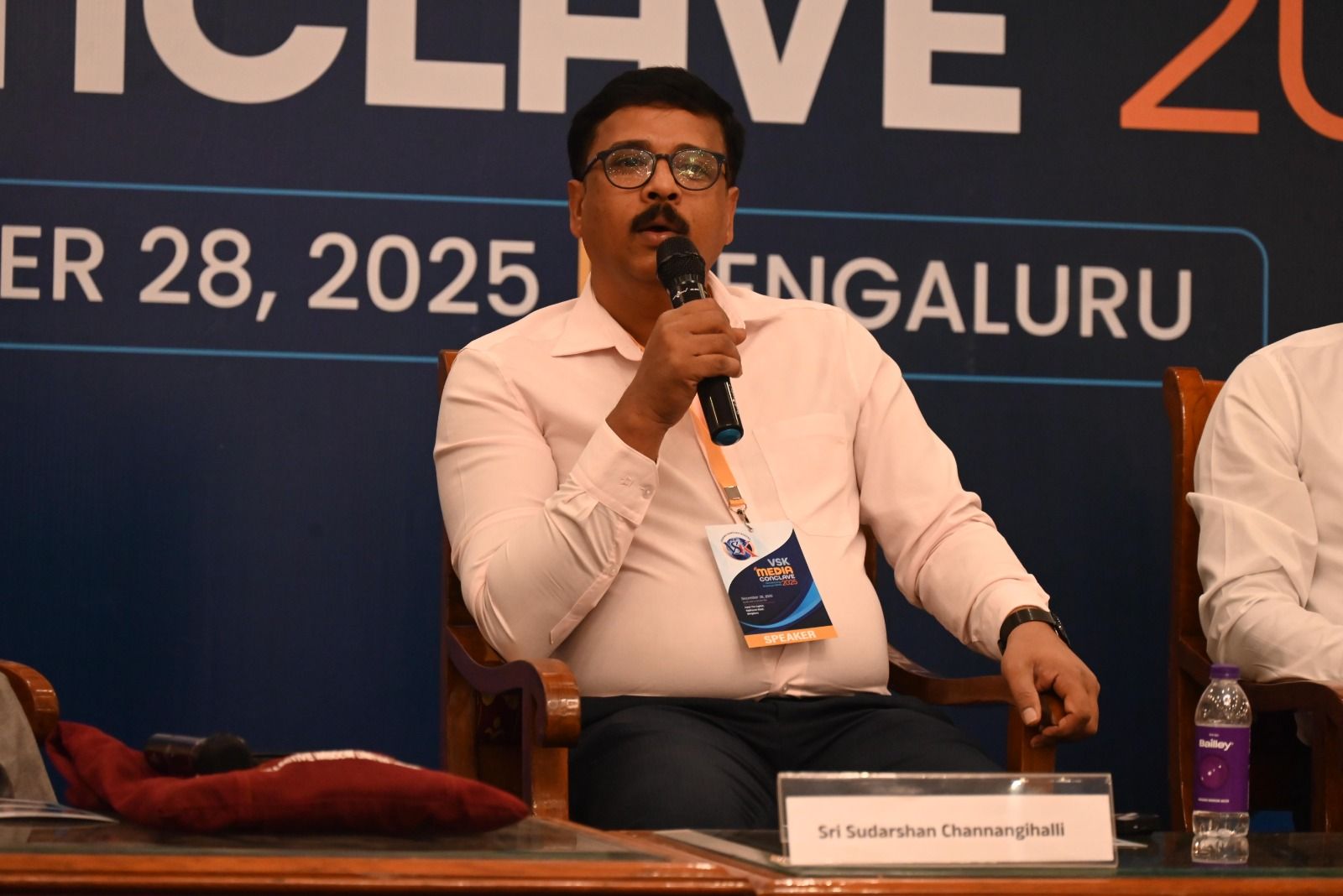
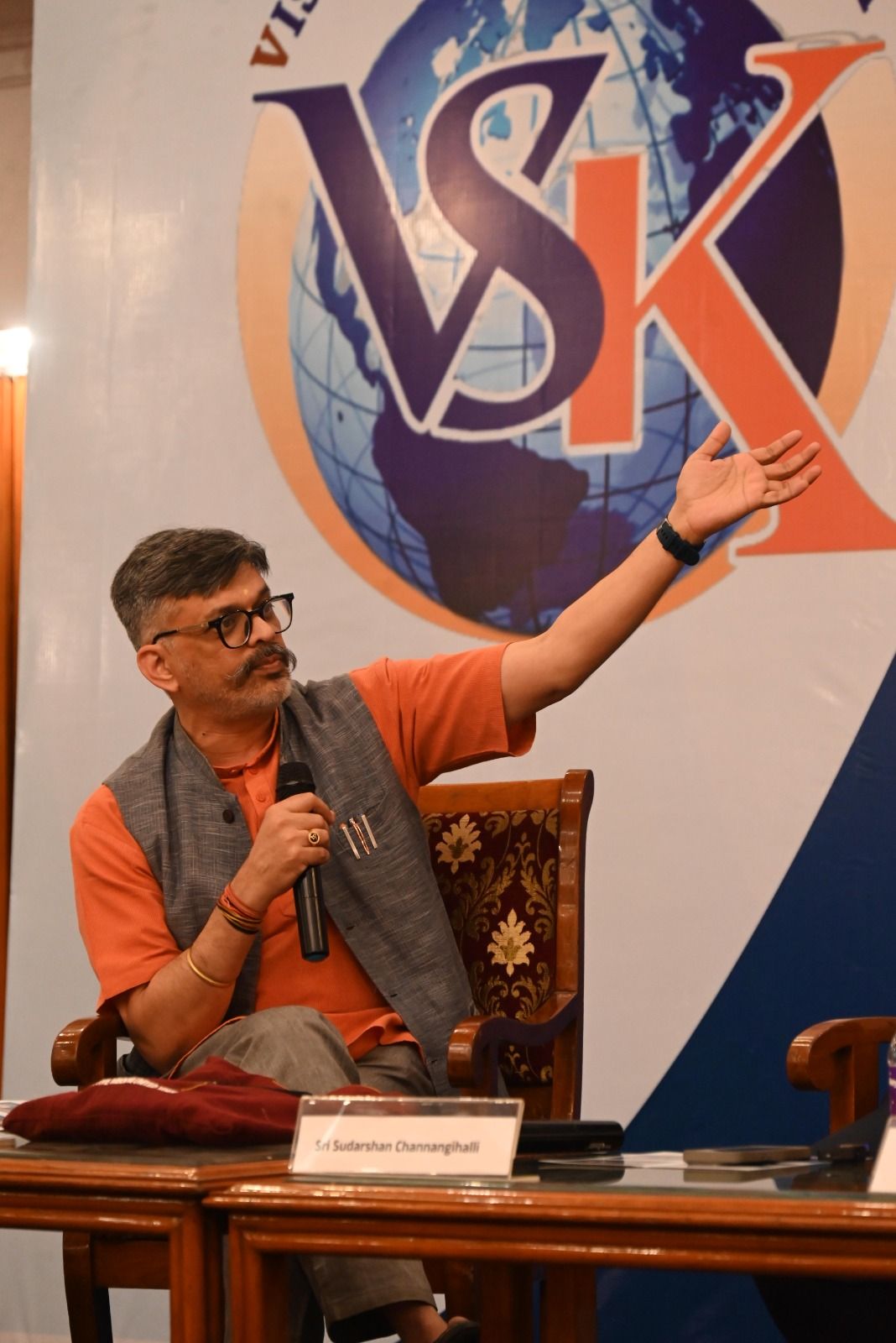
The speakers also highlighted historical censorship, selective narratives, and ongoing distortions in media and academia. They stressed that while facts must remain sacrosanct, perspectives are inevitable, and media’s real role is to inform citizens through verification and context. Prafulla Ketkar emphasised on strengthening Indian-language media, developing indigenous terminology, and reforming journalism education to prioritise what constitutes news, how it is verified, and why it is published, with decolonisation seen as a long-term process aimed at truth and social transformation.
Valedictory Address
In his concluding remarks, Dr. A. Suryaprakash said that colonial and English-centric education alienated generations from India’s own history, epics, and civilisational icons while privileging Western narratives. He stressed the need to reform school and college curricula to restore cultural self-awareness and to teach constitutional values liberty, equality, and fraternity not as borrowed ideas but as principles rooted in India’s civilisational ethos and articulated by Dr. Ambedkar.
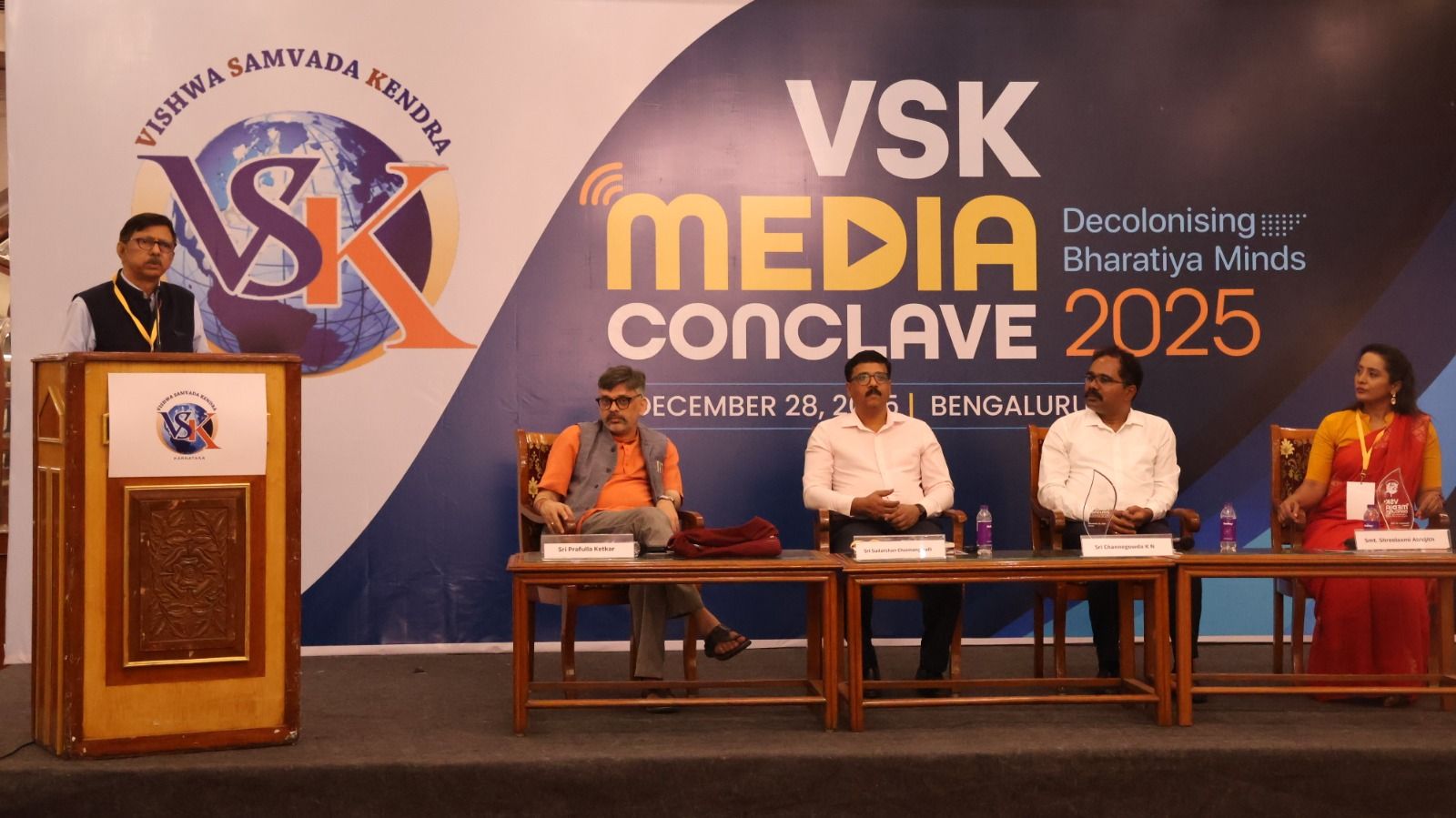
He highlighted the strength and longevity of the Indian Constitution, noting its wide-ranging fundamental rights, protection of minorities, and secular democratic character despite India being a Hindu-majority society. The Constitution’s survival far beyond the global average, he said, reflects deep civilisational values of pluralism and tolerance. Dr. Suryaprakash concluded that decolonising the Indian mind requires curricular reform, constitutional pride, and reconnecting modern India with its civilisational foundations.