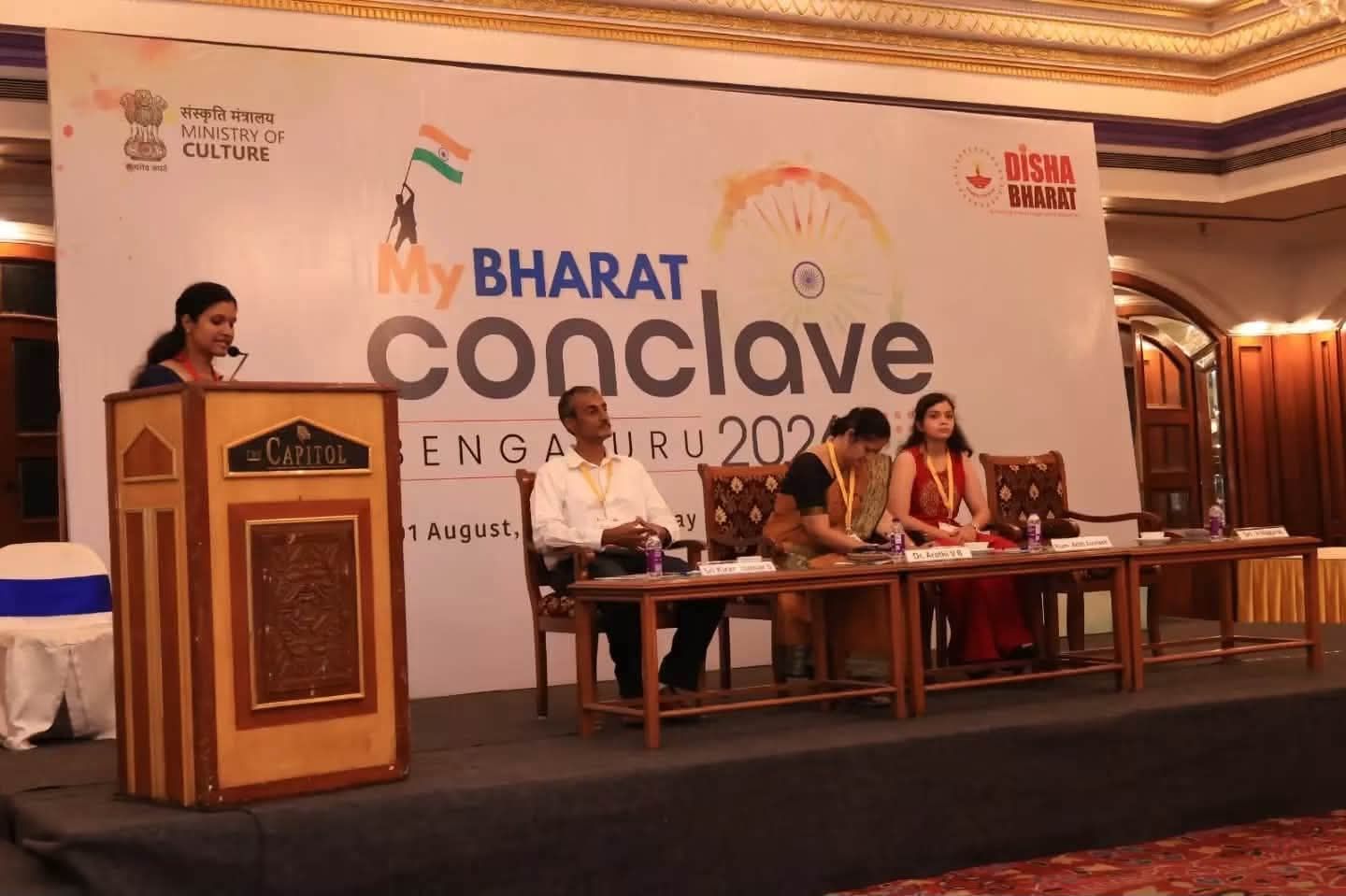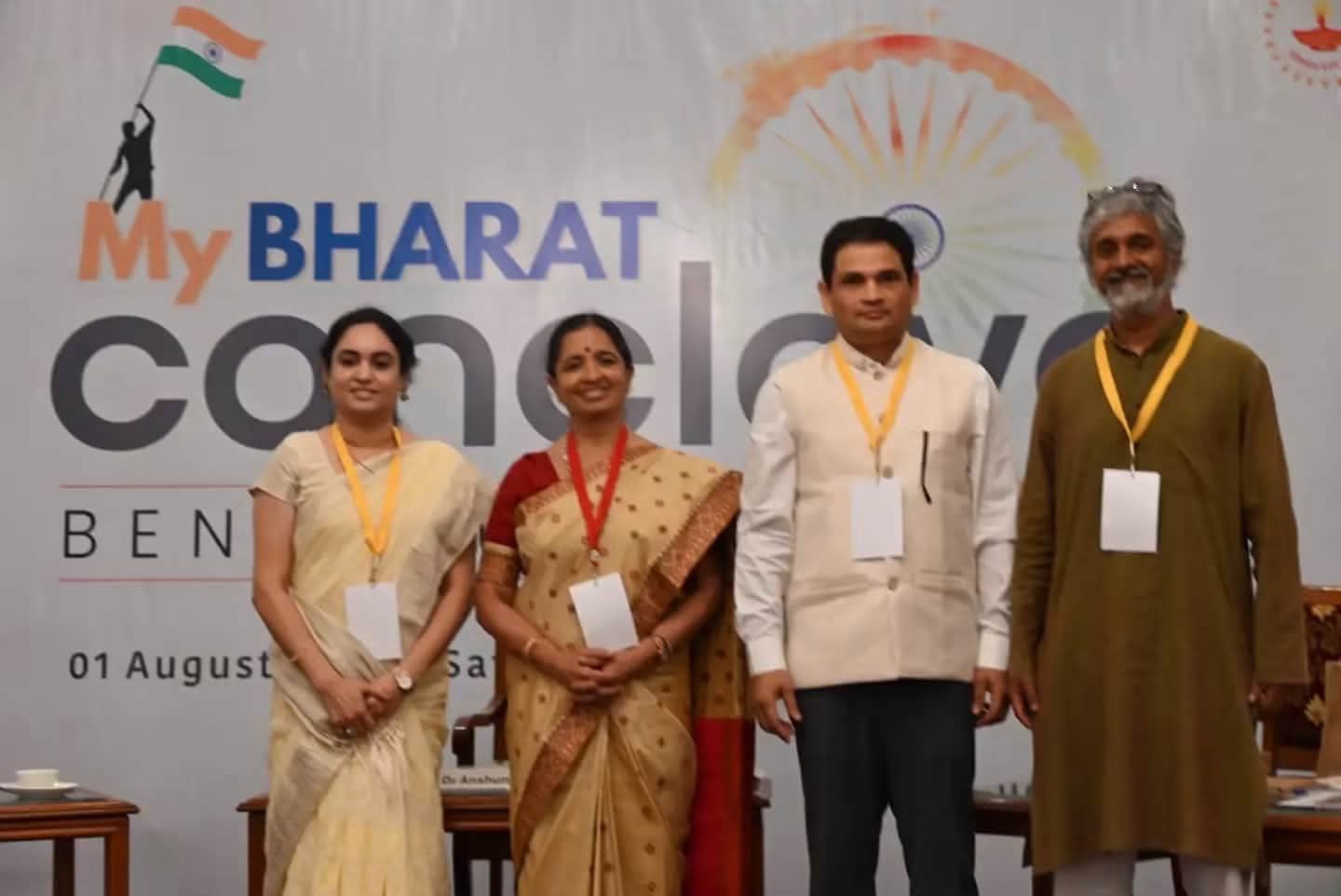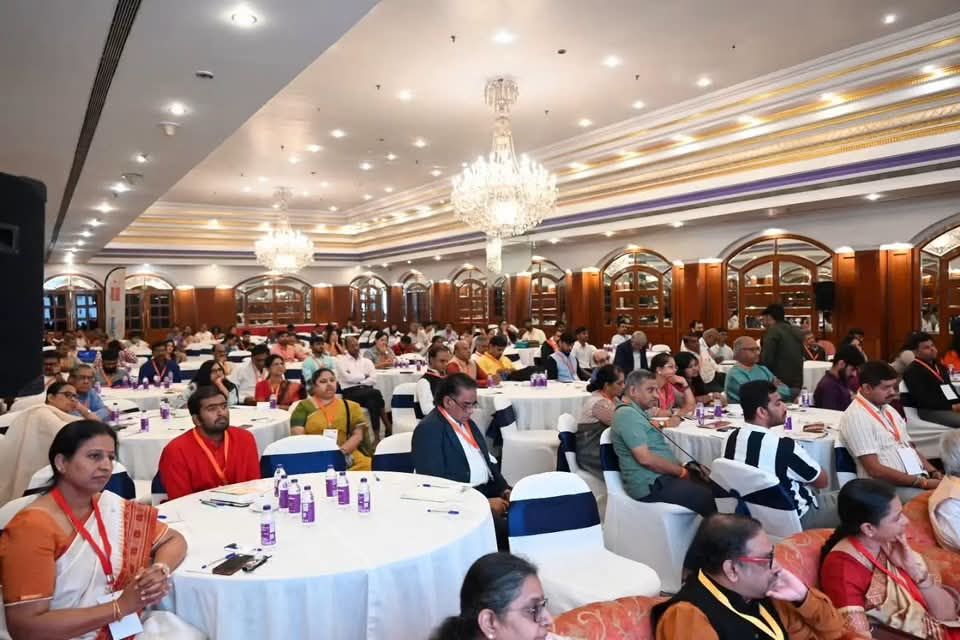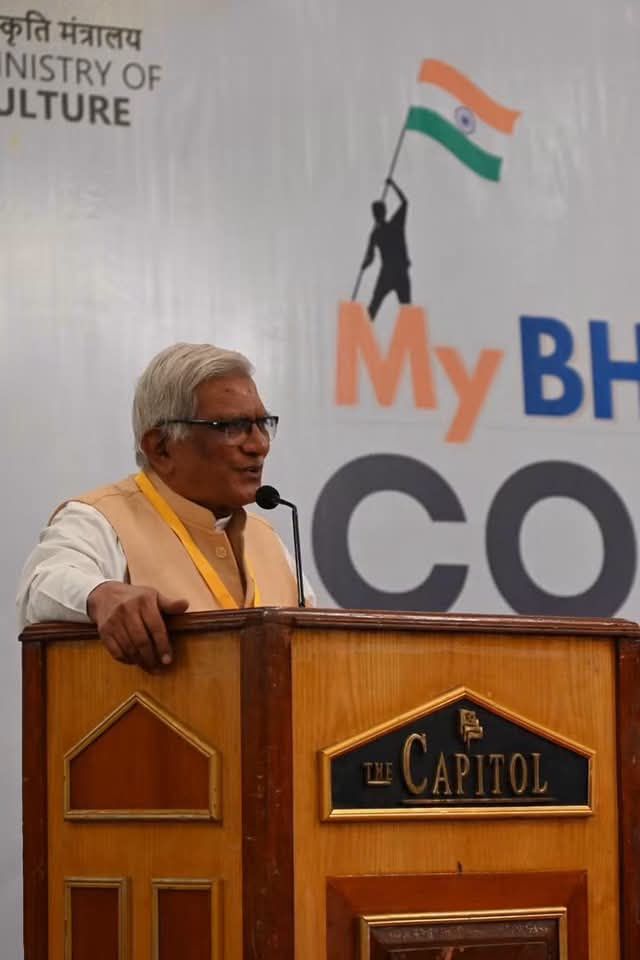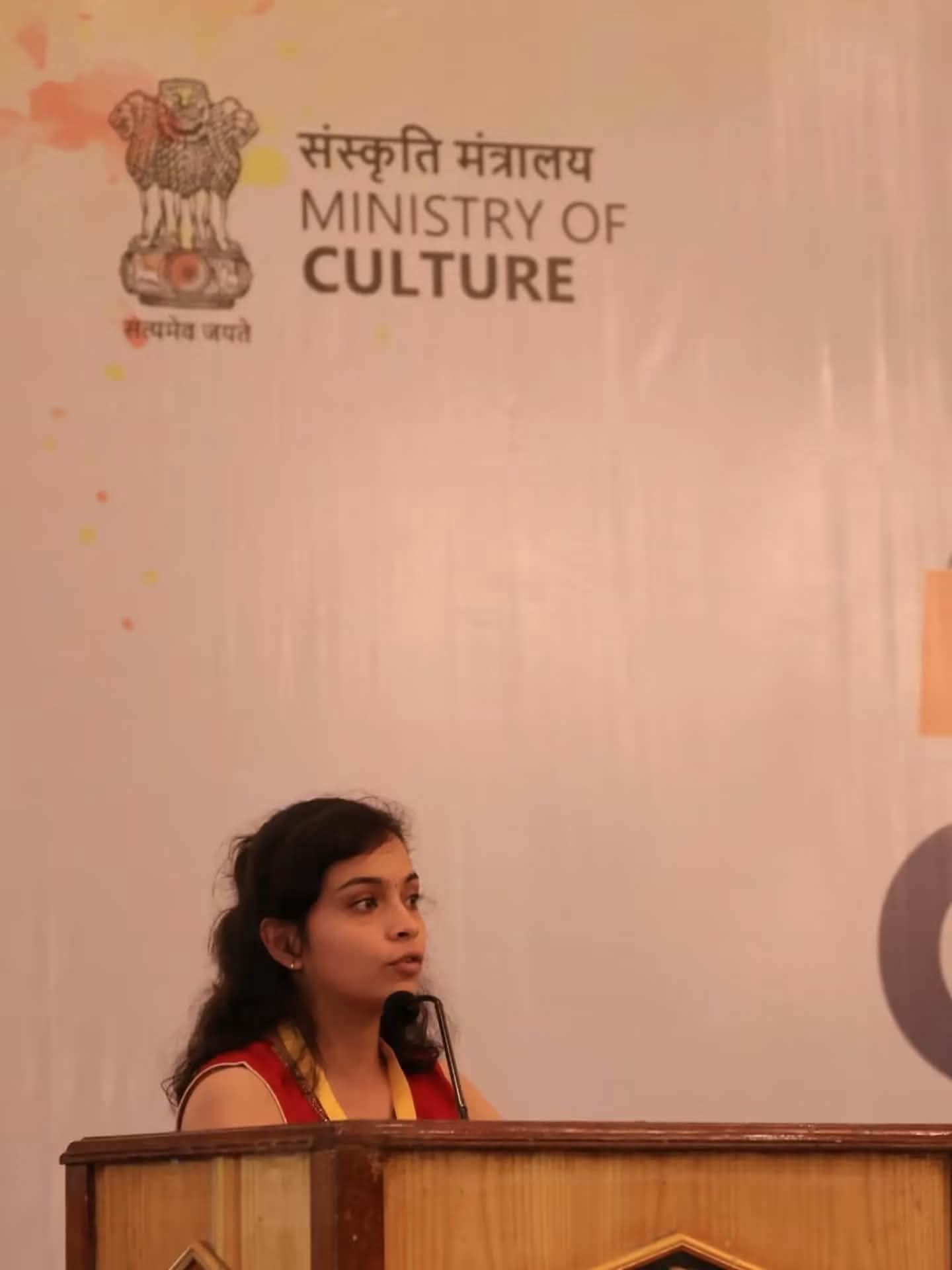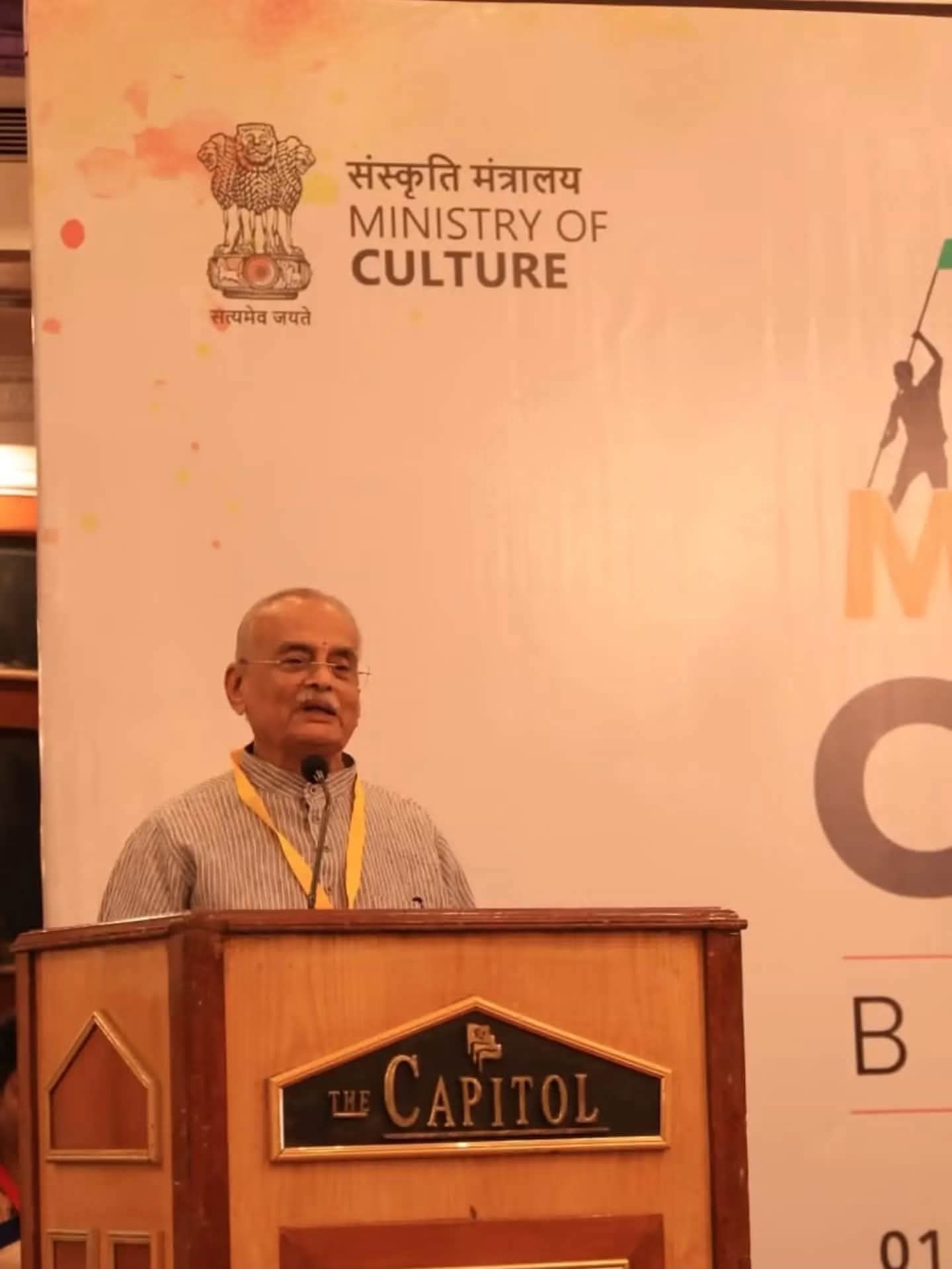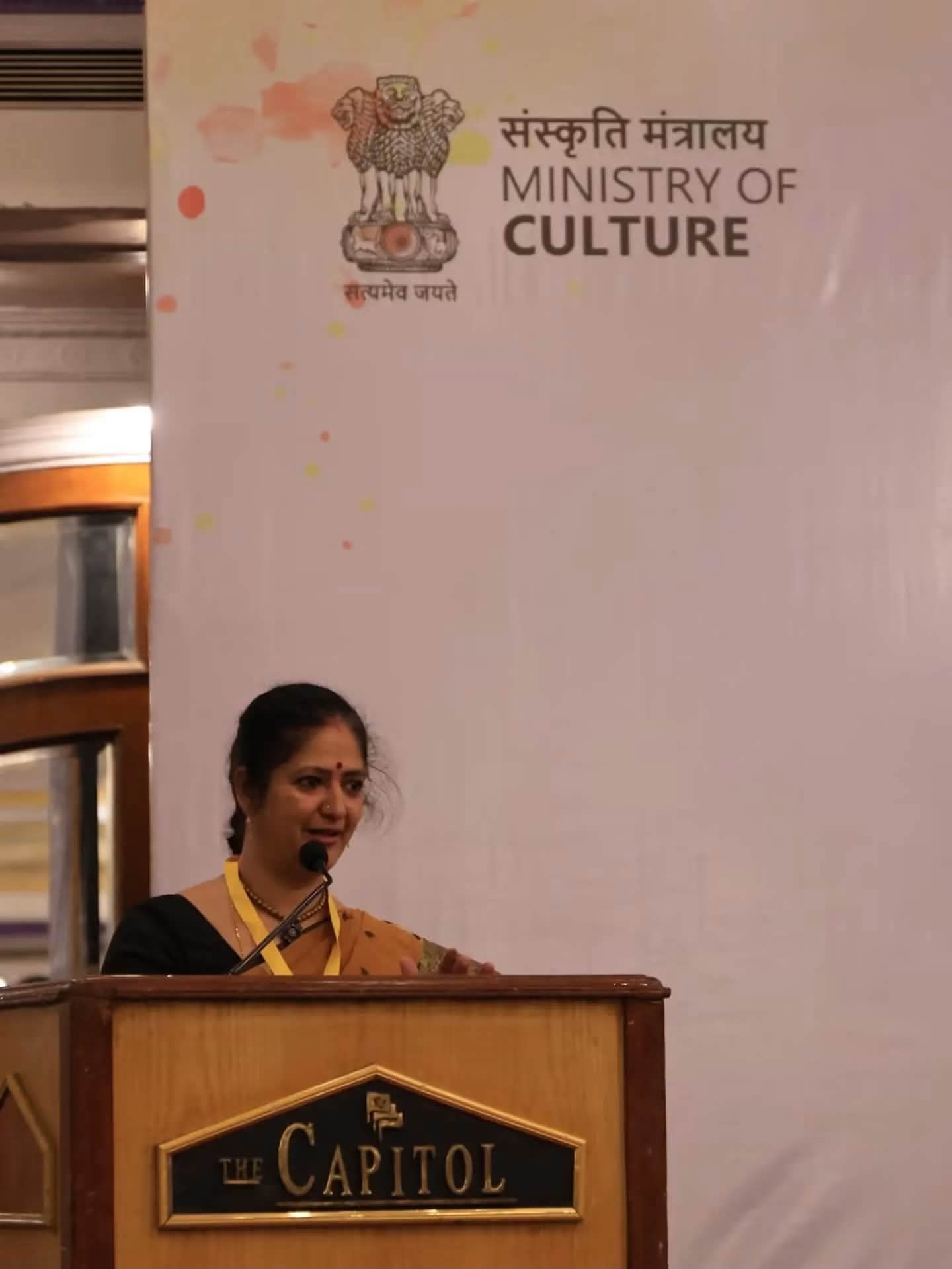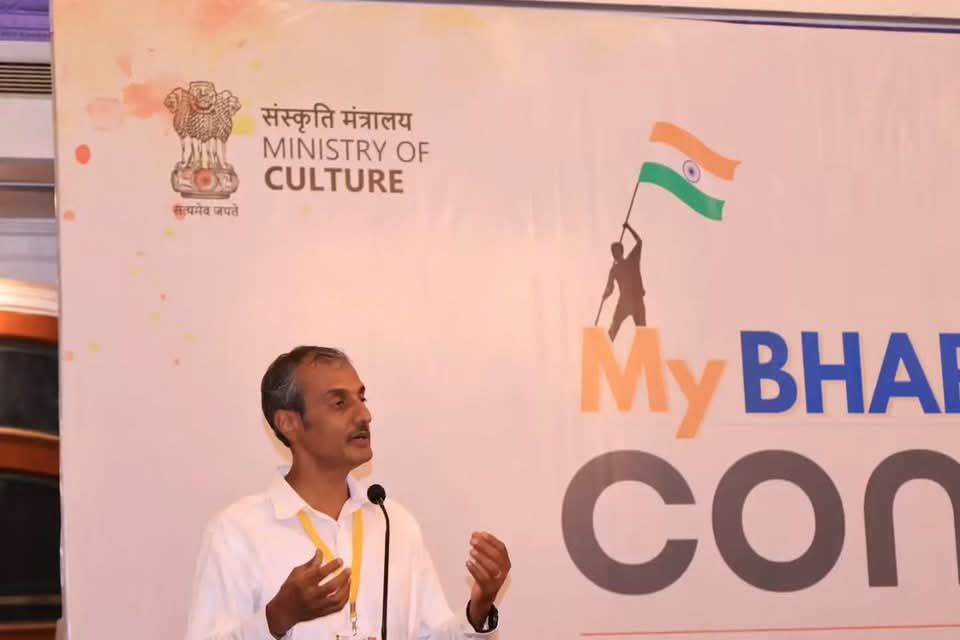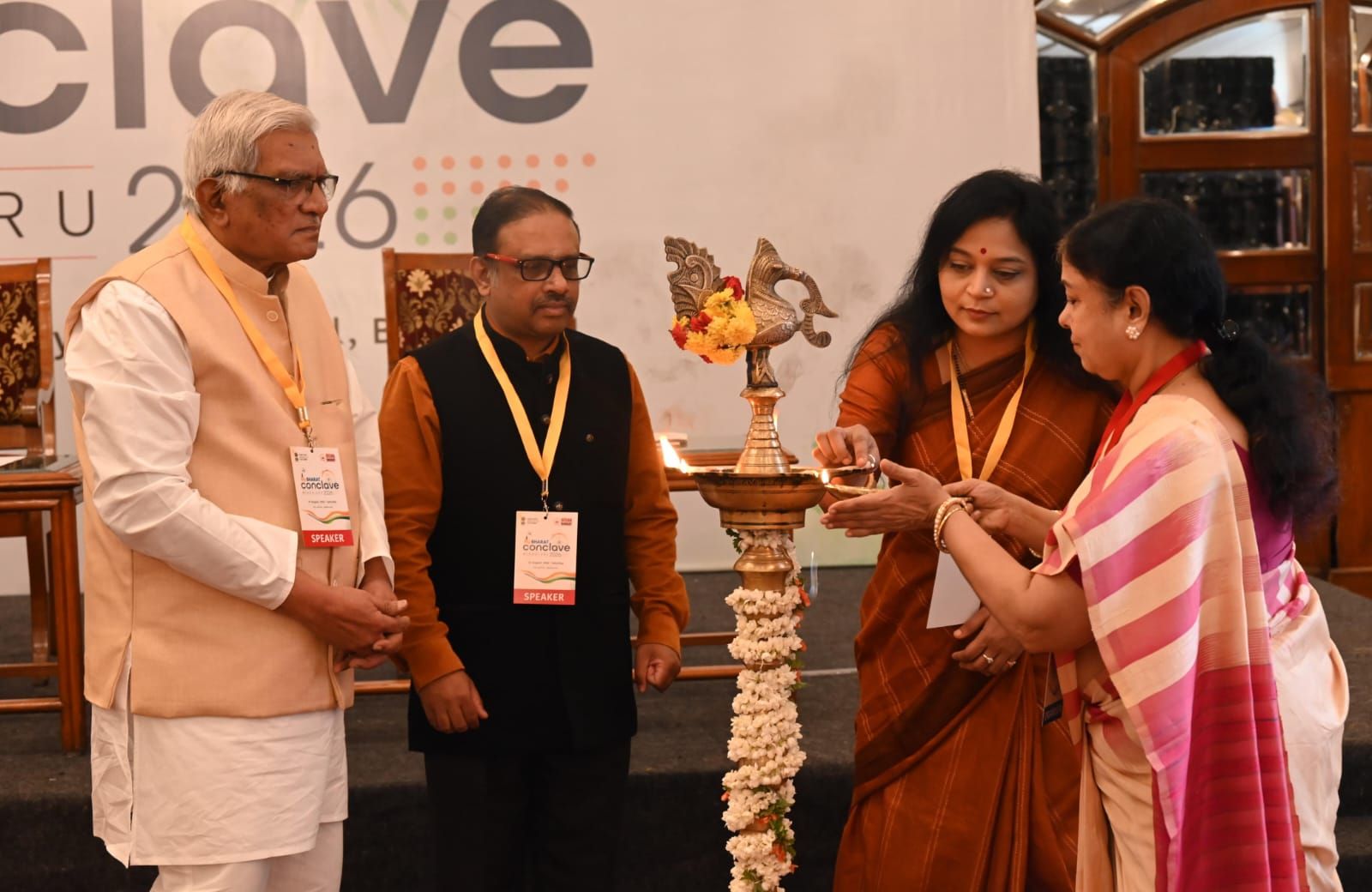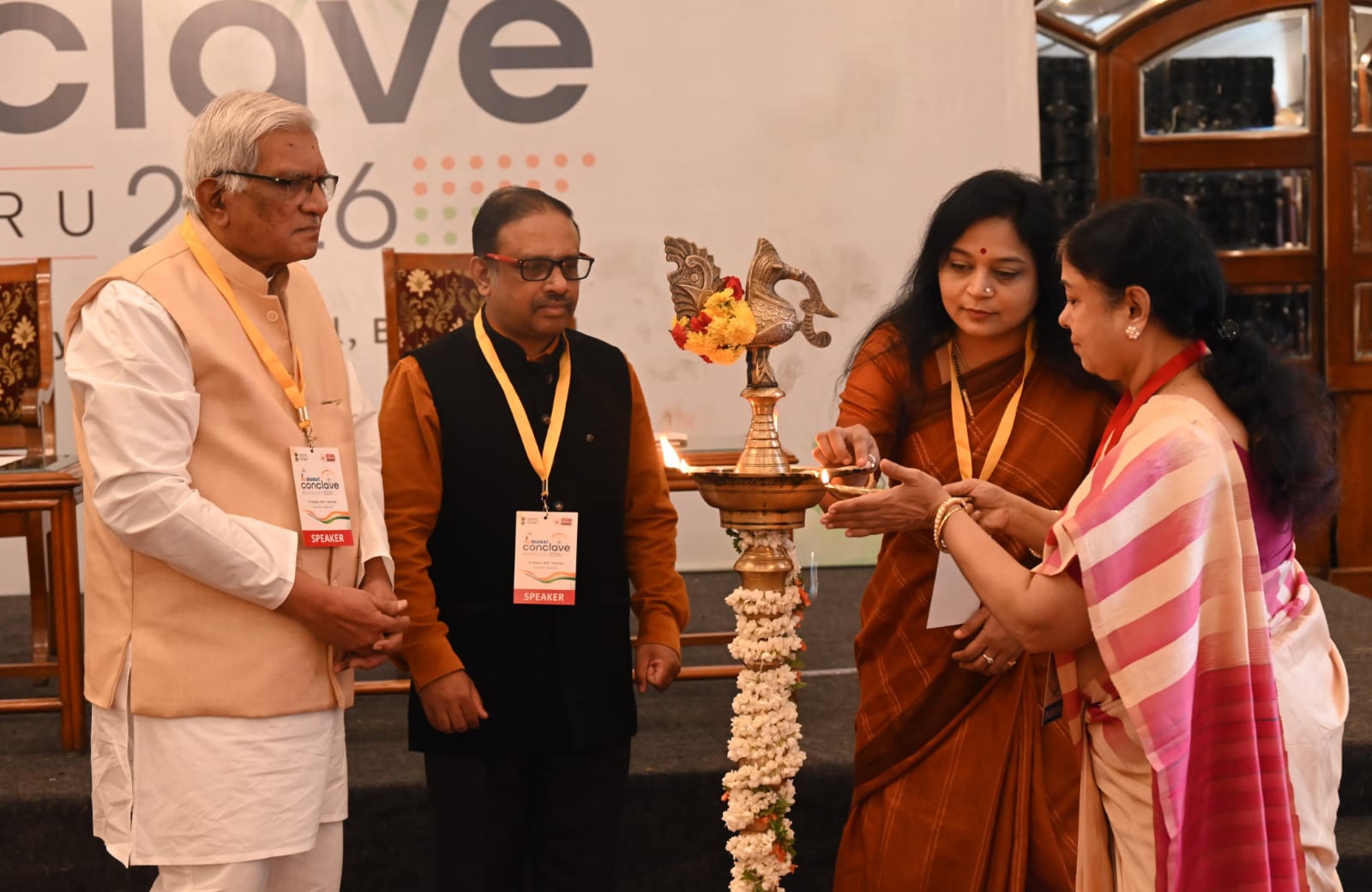
MyBharat Conclave 2026 organised by Disha Bharat in association with Ministry of Culture, Govt. Of India was held on 01 August 2026 at The Capitol Hotel, Bengaluru. The conclave commenced by reciting the National song Vande Mataram. The program was inaugurated by lighting of the lamp by Professor Anshu Joshi, an author, columnist, and a professor at JNU, New Delhi.; Shri Shivkumar G.V, Director at Indica Kautilya Center; Dr. Raghuram, President, Disha Bharat; and Smt.Rekha Ramachandran, Secretary and founder, Disha Bharat.
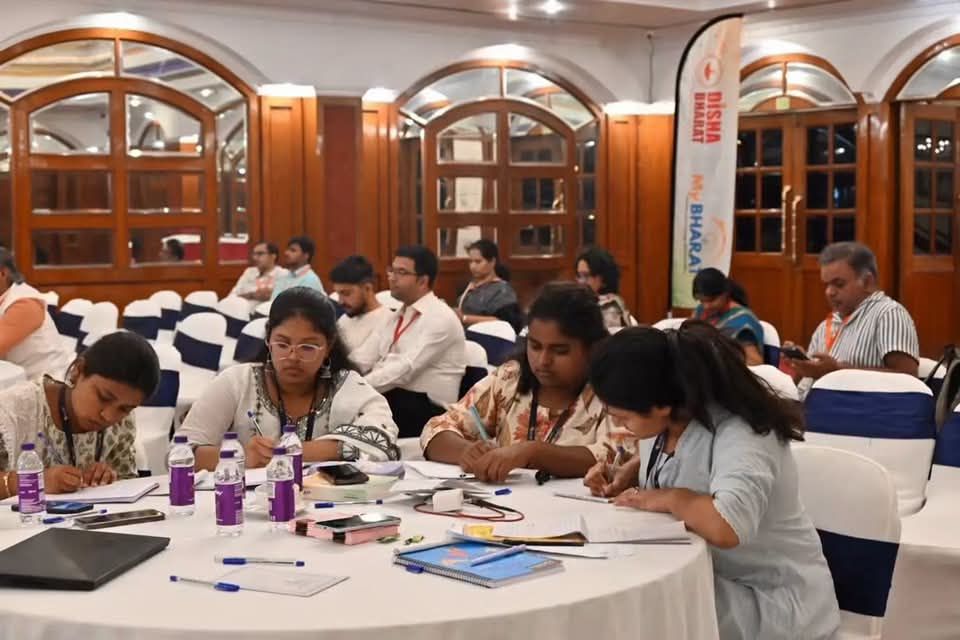
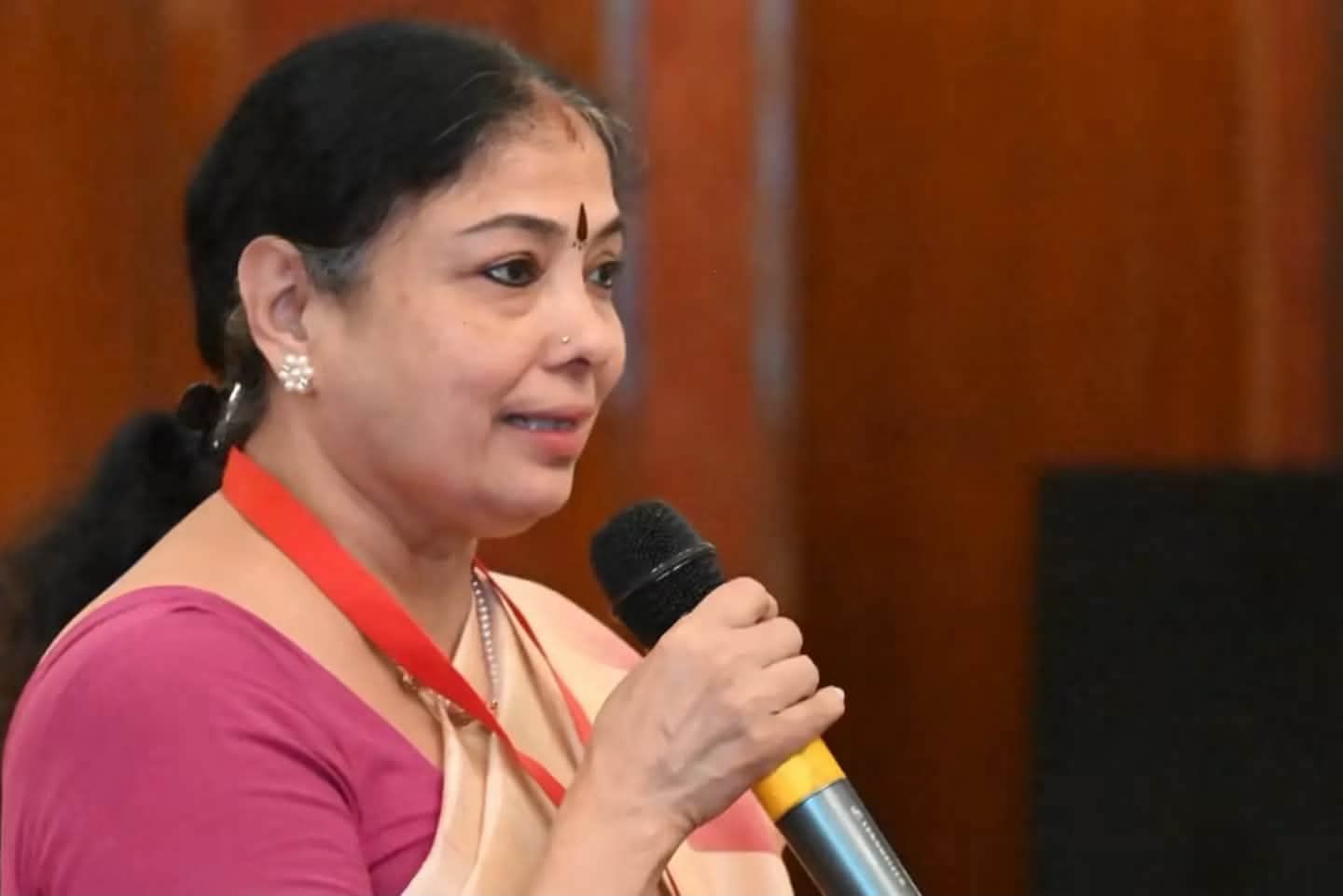
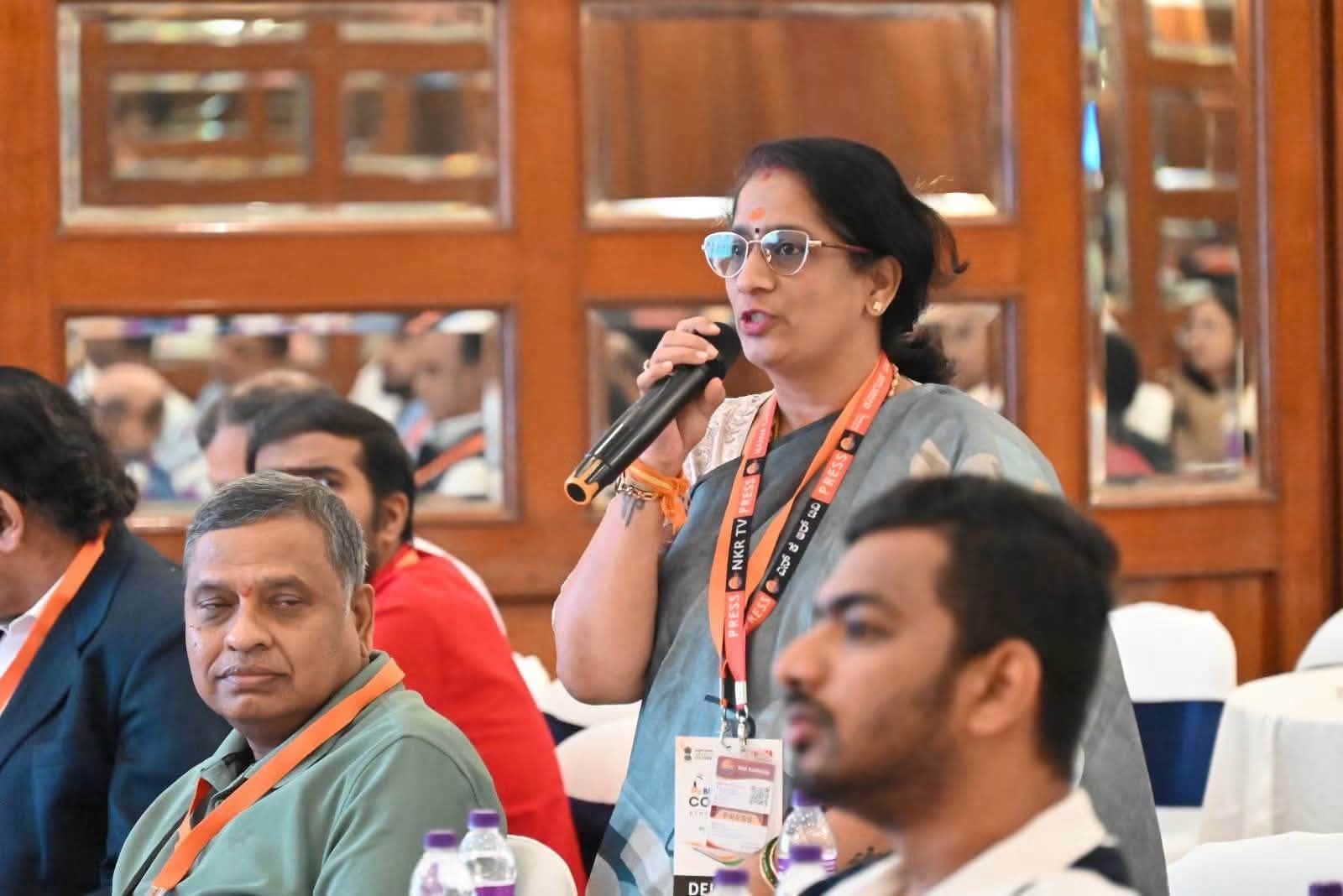
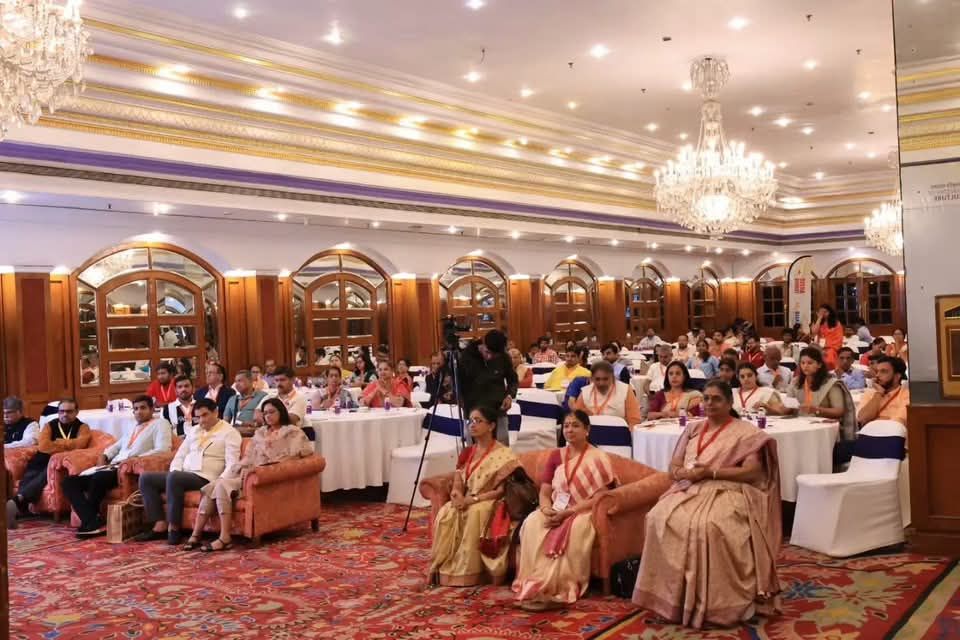
The day long conclave was well attended by academics, students, representatives of private bodies and public, with engaging Question and Answer session between participants and speakers/panellists during all the four session. The message was clear Bharat’s civilization is the root and future of India.
SESSION 1: Inaugural session
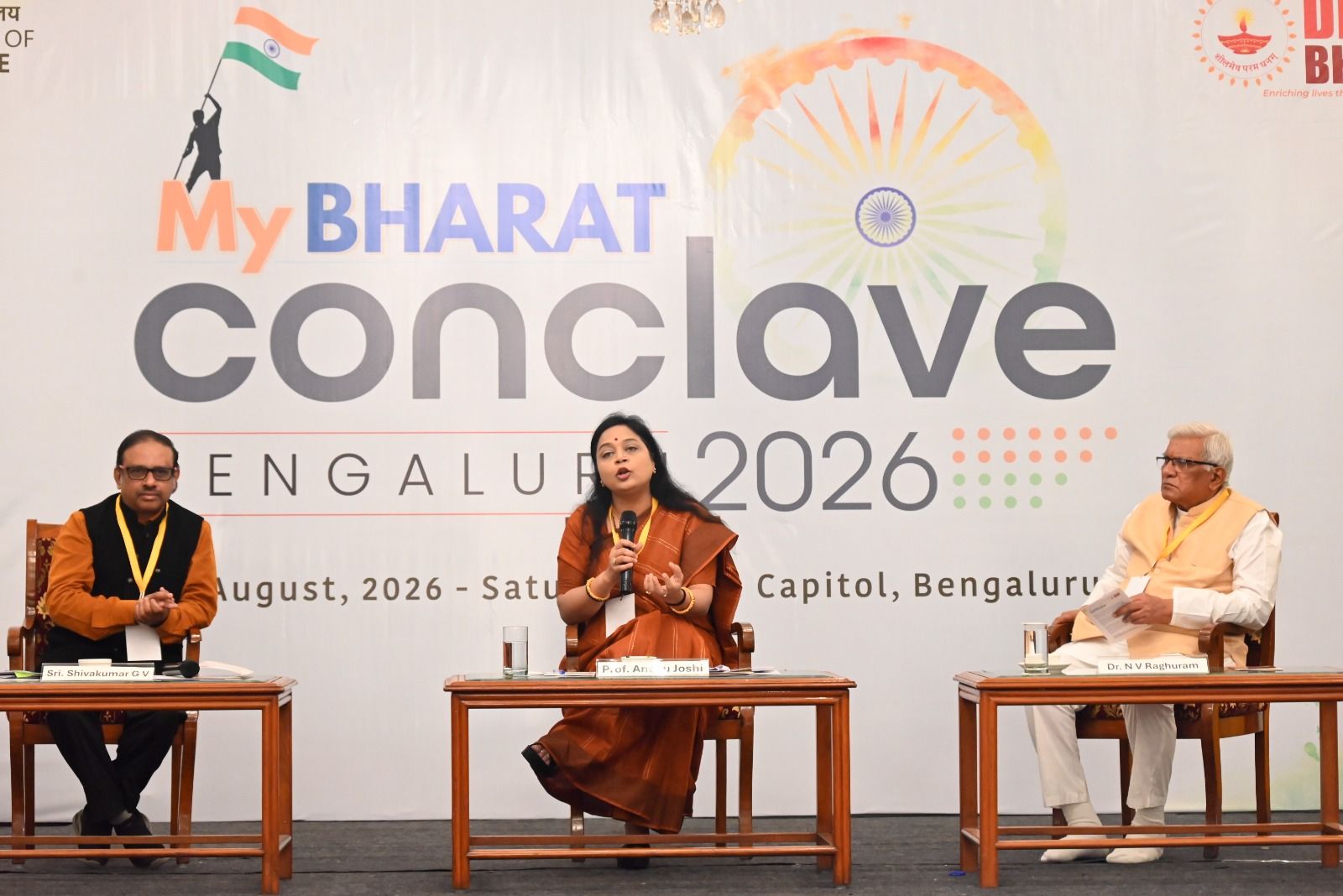
“India’s Global Leadership Rooted in Civilisational Ethos”: Prof Anshu Joshi at MyBHARAT Conclave at Bengaluru
During the inaugural session in her inaugural speech Professor Anshu Joshi, author, coloumnist, professor, JNU, New Delhi, emphasized on global leadership and India’s growth in anti-terror operations. She also spoke about the importance of SAGAR and MAHASAGAR policies under Prime Minister Narendra Modi’s government and praised our PM for traveling across the globe to Argentina, Bolivia, and Chile to secure natural resource deal with them. She also put forward the notion of ‘One Earth, One Family, and One Future’. She also opined that media should consider referring to IKS while stating and reporting facts.
Shri Shivkumar G V, Director at Indica Kautilya Centre commenced with a powerful opening statement ‘Even before 1947, Bharat was thought to be as a single entity!’. By quoting from the Vishnu Purana (Amsham 2, Chapter 3), and referring to the Mahabharata’s Yagna, Dhana, Tapa, Moksha, and Karma, Shri Shivaakumar emphasised on the need to support philosophical integrity.
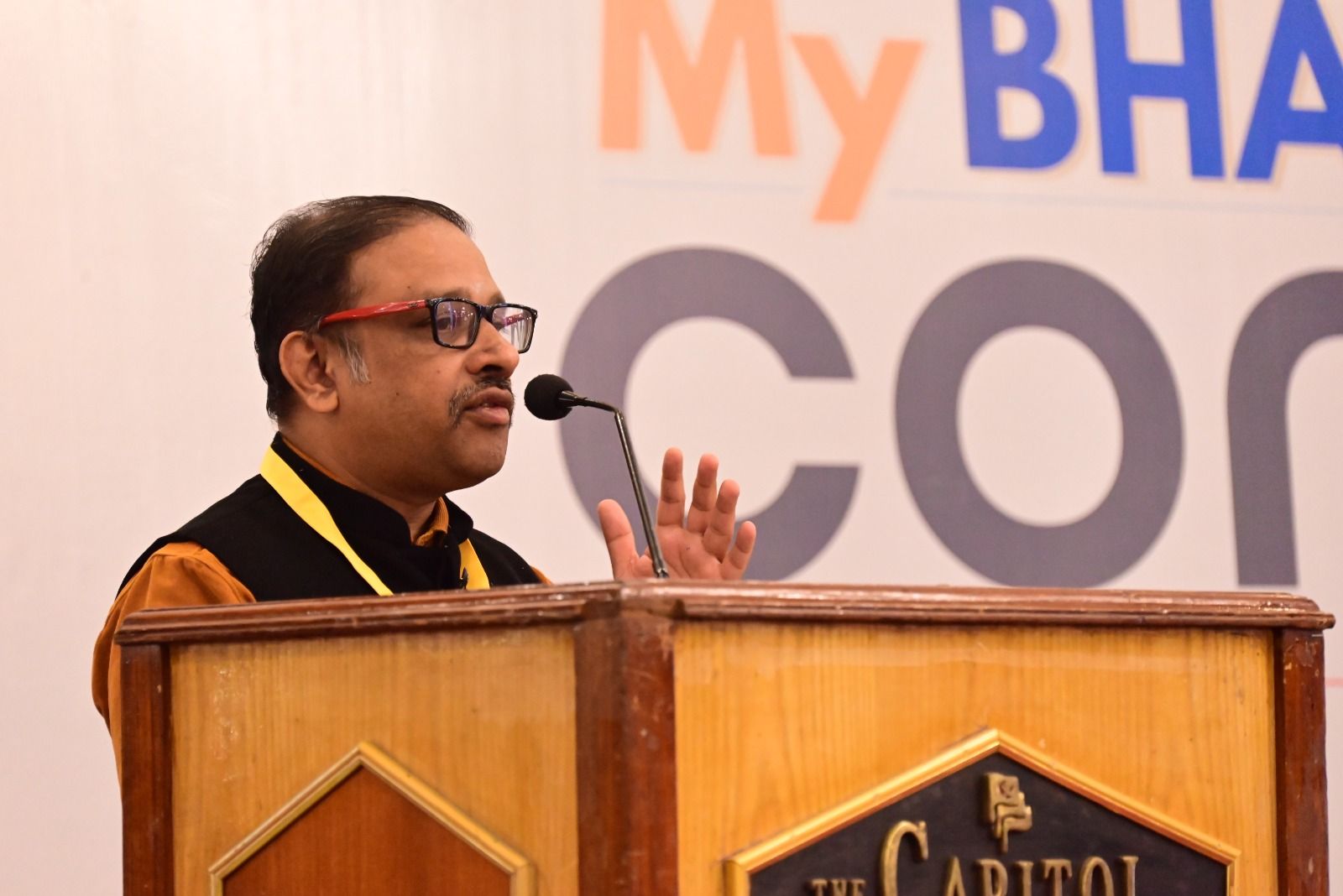
The session further developed with a debatable conversation between the delegates and speakers on the topics related to usage of the term India in Indian Knowledge System while the word Bharat is where Bharatiyas gain their identity, is not used. To this the august panellists referred to the root of the word India to Sind to Sindhu river to Hindu at its original form, thus reiterated the global acceptance to IKS naming nomenclature by the Government and that we have to accept both India and Bharat as words that belong to us, used interchangeably and not exclusively. The session was concluded by Dr. Raghuram’s Presidential address. He noted that the world wants India to be Bharat. Dharma never declines but is clouded. He also urged everyone not to shy away from our culture, identity, and practices. “If One wants to pray to God, pray openly” He said.
The inaugural session was moderated by Disha Bharat volunteer Dr. Sowmya, Director of Commerce Department, Sheshadripuram College (Kengeri).
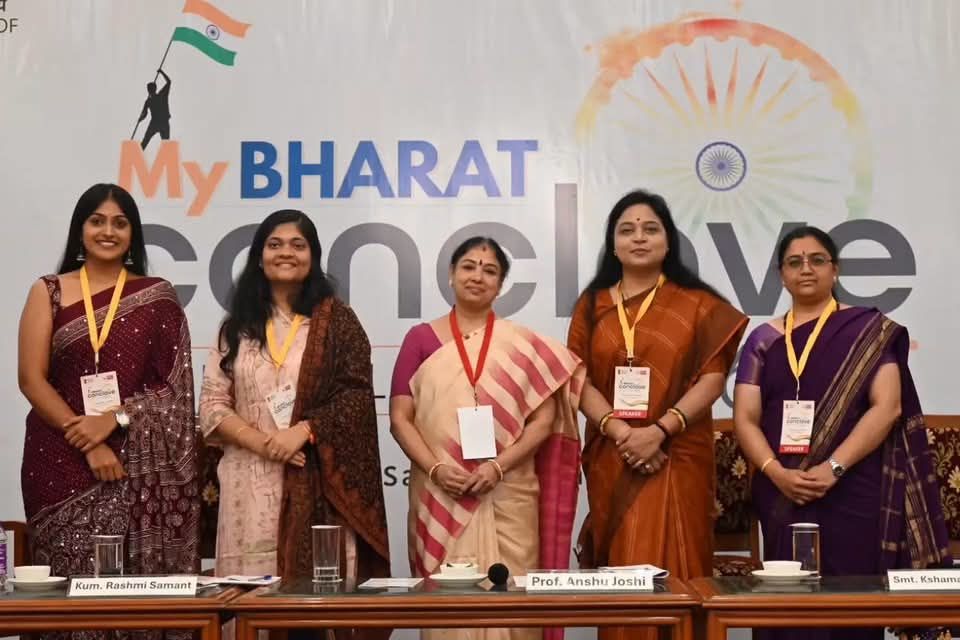
SESSION -2 . Theme : Bharat after independence: Nation building, democracy and constitution.
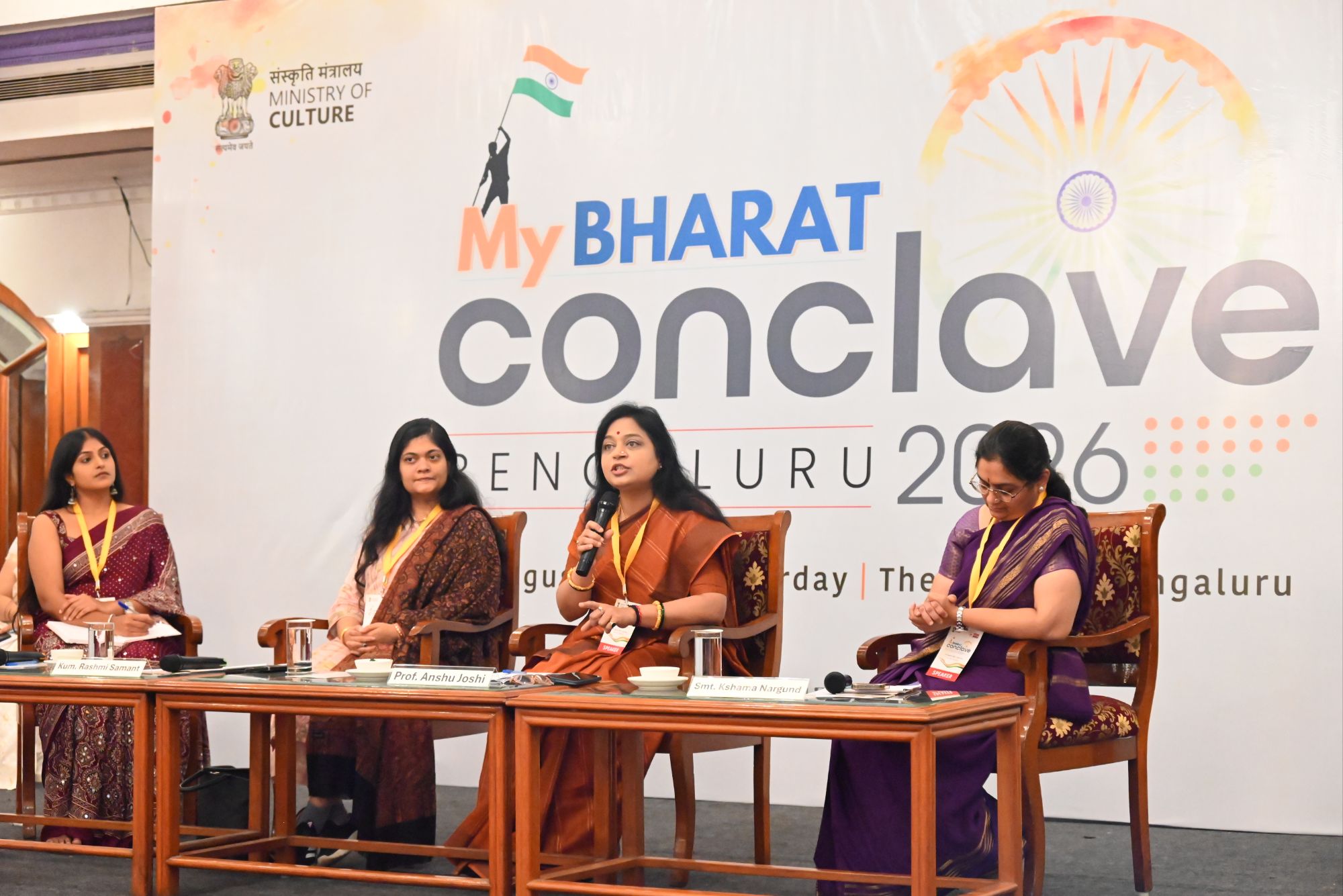
The panellist Prof.Anshu Joshi addressed the gathering stating that the constituent assembly drafted the Constitution of India with elements of modernization embedded in the vision of our constitution. ’Modernisation should not mean westernisation, it should be rooted in our culture! We should make sure constitution grows internally… She continued ‘Political independence came in 1947 but mental decolonization is still needed. Patriotism and criticism can coexist as it brings back the values of Bharat.
Prof Anshu Joshi emphasized that “Great power comes with Great responsibility : before being prey to false narratives, read discuss and be the face of the future”She concluded.
The session was then lead by Kum.Rashmi Samant who stated that political changes happen over night but mindset of the people takes time to change. According to the analogy it takes 3 generations for adapting the change, which means 2nd generation starts to build the institution, 3rd generation realizes the truth. She further spoke about Citizens perception of constitutional development/ amendment and said ‘However great the constitution is, if the people are bad it will be bad… likewise, if the people are good their mindset towards the constitution will be good’.She also advised that “attention span has been decreased in this competitive changing world. To overcome this we should be rooted in our Bharatiya culture”.
The next speaker/panelist Smt. Kshama Nargund Advocate, Author, Trustee, Disha Bharat emphasized that Constitution and Civilizational ethos sail on the same boat. Civilization flows within us unconsciously but depends on our own perspectives.’ The speaker also urged Genz to re interpret the ideas of Liberty, Equality and fraternity from an Indian perspective.She explained that equality is not about uniformity but about recognising oneness despite our differences.The session concluded with a strong message about the importance of India’s constitution and Bharatiya civilization to the youth of this country; Reminding the youth of our nation to be aware of fake narratives and progress towards a stronger Bharat. Also noted that modernisation should lead to grow rather than replacing culture with by quoting “आदि अमर वीरॊं का चरित्र हॊ, प्रखर पुनीत मार्ग है, बढ़े चलॊ, बढ़े चलॊ”, ‘Sarvejana sukhino bhavanthu’, “SWARAJYA – regain the swa(self discipline)”.
This session was moderated by CS Spoorthi Muralidhar,Coordinator, Thinkers forum, Karnataka.
SESSION 3. Theme : “Education and Technology: Bharat’s Global Positioning.”
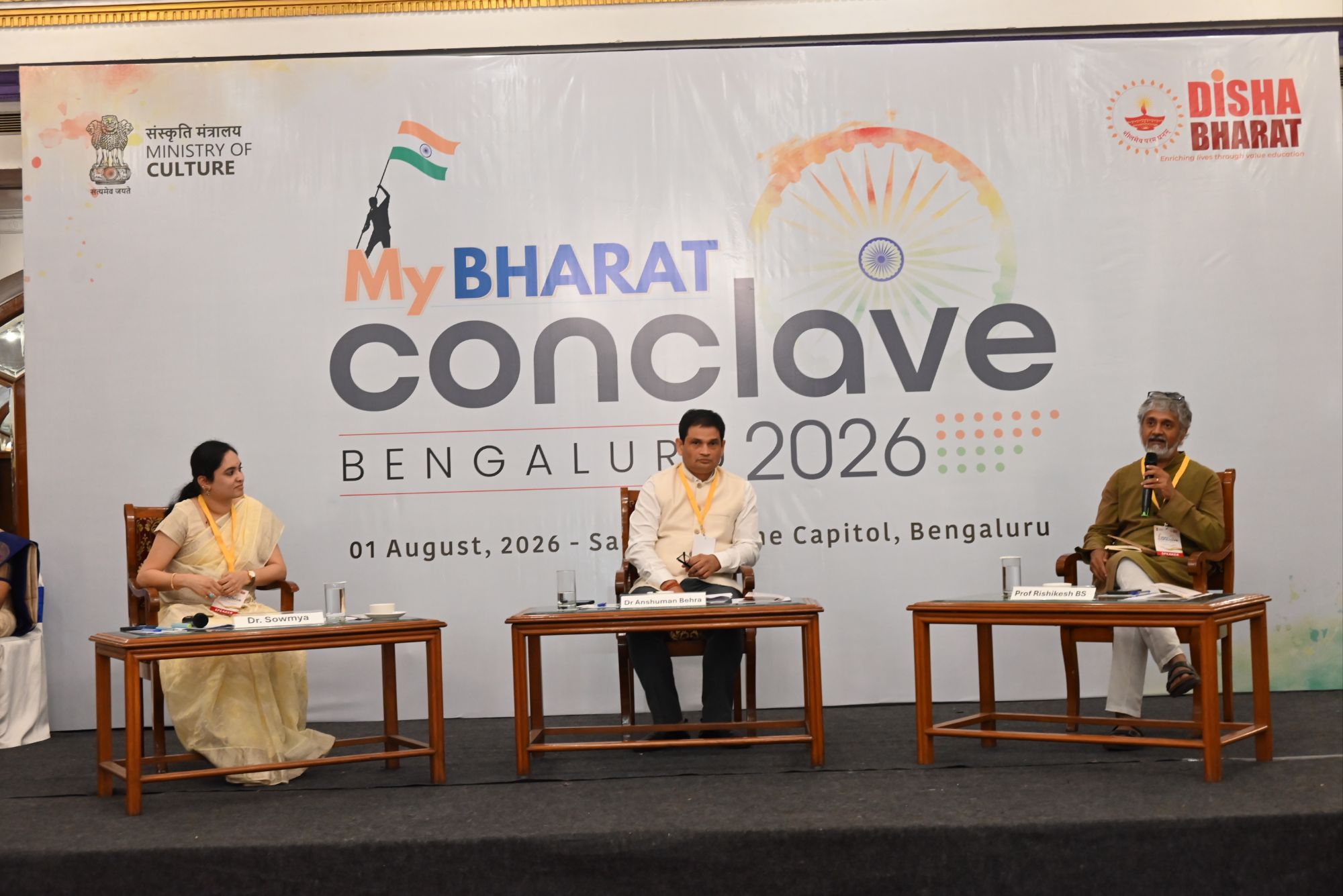
During the panel discussion, Dr. Anushman Behra, Department of Political Science, University of Hyderabad, highlighted that around 11 lakh Indian students were studying abroad during 2014–15. He stated, “Indians are not narrow-minded people,” adding that India now has approximately 18–19 lakh students enrolled in Indian colleges and universities. He noted that the country’s higher education system has expanded significantly, making quality education more accessible within India. He quotes education is no longer restricted to classrooms and to use technology responsively. Dr. Behra also questioned whether India is fully prepared to become a global leader in education. He criticized the mindset of settling for secondary positions, arguing that no Ministry of External Affairs or any other institution should encourage people to remain satisfied with mediocrity. Instead, he urged Indians to strive for excellence, as achieving leadership positions enhances the nation’s global reputation.
Another panelist Prof. Rishikesh B. S.,Professor at Azim Premji University challenged the belief that technology alone cannot solve educational problems. He emphasized the importance of FLN Foundational Literacy & Numeracy and ECCE Early Childhood Care & Education. He remarked ‘ the idea technology is the sole solution to educational challenges is a MYTH ! ‘ : that excessive dependence on technology has reduced the human brain’s ability to perform even simple tasks. According to him, technology is designed to assist human beings in carrying out tasks, not to replace or reshape the human mind. While technology can support education, it cannot solve every educational problem across the world. He also stressed that human interaction can never be replaced by Artificial Intelligence (AI).
The session was moderated by Dr. Sowmya Sunil, Coordinator, Disha Bharat who led the discussion and Q&A session. The message from the panellists was loud and clear : technology should complement, not replace, human learning. A strong educational ecosystem, supported by innovation, foundational learning, and a forward-looking vision, is essential for Bharat to achieve global leadership in education.
SESSION 4. Theme : Bharat at 2047: Road maps and oppourtunities.
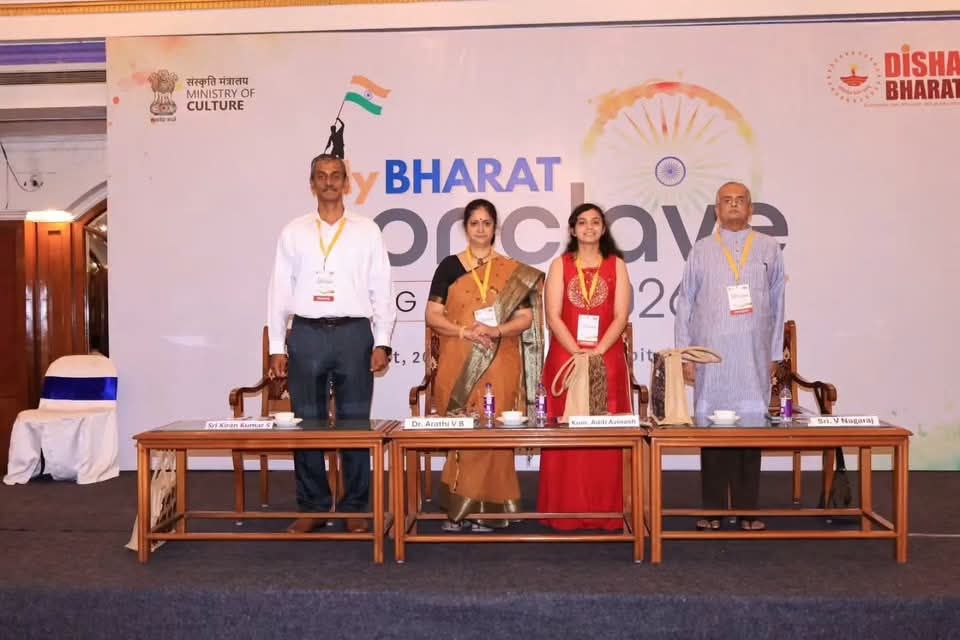
The session focused on India’s vision for being a developed nation by 2047 and highlighted the roadmap and opportunities to achieve this goal. It featured distinguished speakers including Dr. Arathi V.B., Director of VIBHU Academy, Bengaluru; Sri V. Nagaraj, President of Mythic Society; Kiran Kumar S., IT Professional; Kum. Aditi Avinash, Program Head of the Women Elite IKS Forum.
The session commenced with an inspiring address by Dr. Arathi V.B who quoted Swami Vivekananda: The country which has forgotten its past, forgets its future, emphasized the importance of preserving India’s cultural and historical heritage while embracing innovation and progress to achieve the vision of Bharat@2047. She advocated for including IKS compusorily in higher education and encouraged the study of ancient texts such as the Puranas, Shastras, and the Yoga Sutras. The speaker urged that Indian psychology and traditional knowledge offer valuable insights alongside modern disciplines. She also expressed concern over the younger generations growing disconnect from history and increasing dependence on AI and study materials, urging students to think critically, engage in healthy debates, and develop independent reasoning.
Panelist Kum. Aditi Avinash quoted India’s $4.2 trillion economy as the world’s sixth-largest and fastest-growing economy, yet per capita income remains $2,800 – about a fifth of China’s. She outlined a plan to build “Brand Bharat” by expanding Global Capability Centres (GCC). She noted that the GCC in India are shifting from back-office support to genuine engineering and AI leadership, with a target of nearly 5,000 centres by 2047. Manufacturing lags at 16-17% of GDP due to weak R&D investment, though they are engineering focused. GCCs could push it to 20-25% into engineering and AI hubs (targeting nearly 5,000 by 2047), raising manufacturing sector GDP share from 16-17% to 20-25%, thereby reversing brain drain which aims to bring skilled talent back home, and build on recent gains in defence and space exports. The core message was: government sets direction and takes the first risk, private industry builds and scales – and that steady execution is what actually builds Brand Bharat.
Panelist Sri Kiran Kumar opined Vikasit Bharat 2047 vision must balance technology with Bharatiya values, measuring progress beyond GDP. He emphasized on GYAN : G- Gareeb (poor), Y- yuva (youth), A- Annadata (provider), N- Nari Shakti (women’s power) as the four pillars of inclusive development, and urged responsible use of AI to boost productivity, not dependency! Referring Swami Vivekananda’s warning against forgetting the past, called for IKS to be made compulsory in higher education, citing texts like the Puranas and Yoga Sutras, and voiced concern over youth’s growing reliance on AI technology. Quoting Sadhguru, he said true leadership is about building rather than obstructing. He also touched on Indian knowledge system.
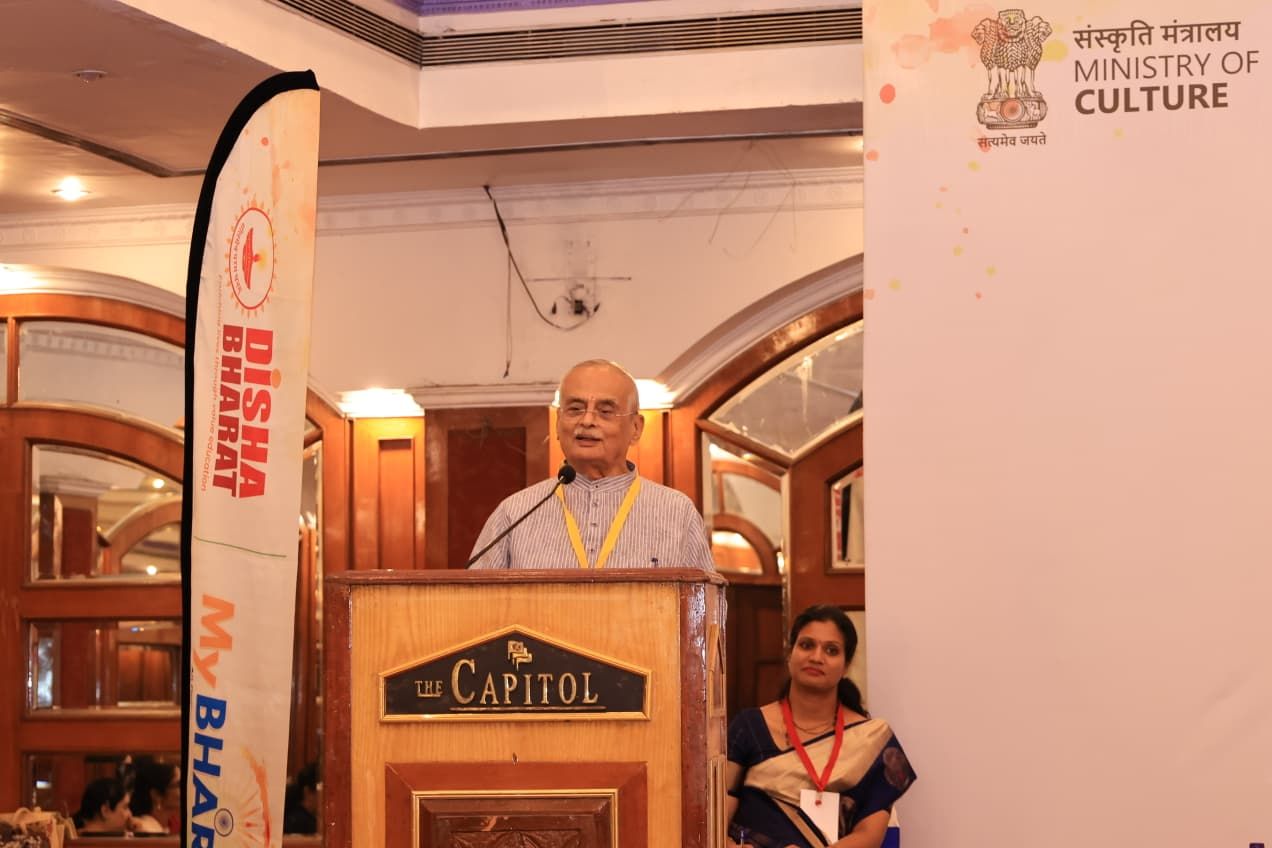
Concluding the conclave, panelist Sri V. Nagaraj, President, Mythic Society, traced the origin of Mythic Society’s name to a conversation with a Cambridge scholar in Malleswaram, decades ago. He addressed the gathering on the framework for India Vikasit Bharat as India’s rise from colonial suppression into a confident, fast-developing nation! By referring to Swami Vivekananda’s iconic quote ‘The longest night seems to be passing away, the sorest trouble seems to be coming to an end at last. The seeming corpse appears to be awaking and a voice is coming to us . For the infinite giant is rising to her feet’, he pointed out the latest achievements of India like vaccine developed during the COVID pandemic not only served the citizens of the motherland but also to global population, thereby India has made a strong stance in global geopolitics. . He urged that science still can’t fully explain consciousness, and described Dharma as one’s own feelings about society, work and constitute it. During his concluding that a spiritually rooted, economically strong Bharat could become a “Vishwaguru”. He also stated Disha Bharat’s moto for young generation- know your country, know your culture, and know yourself.
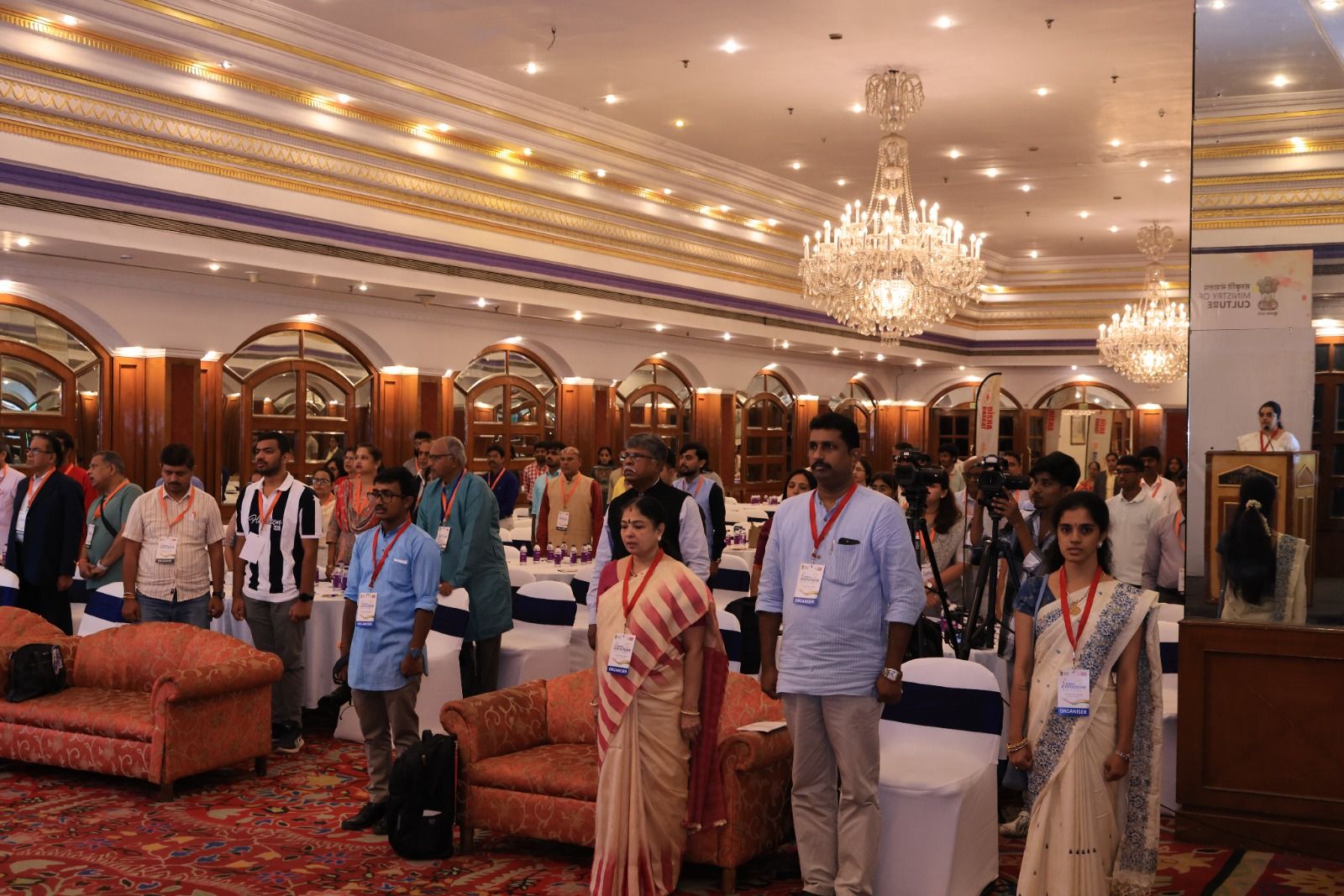
The conclave came to a close with the National anthem.