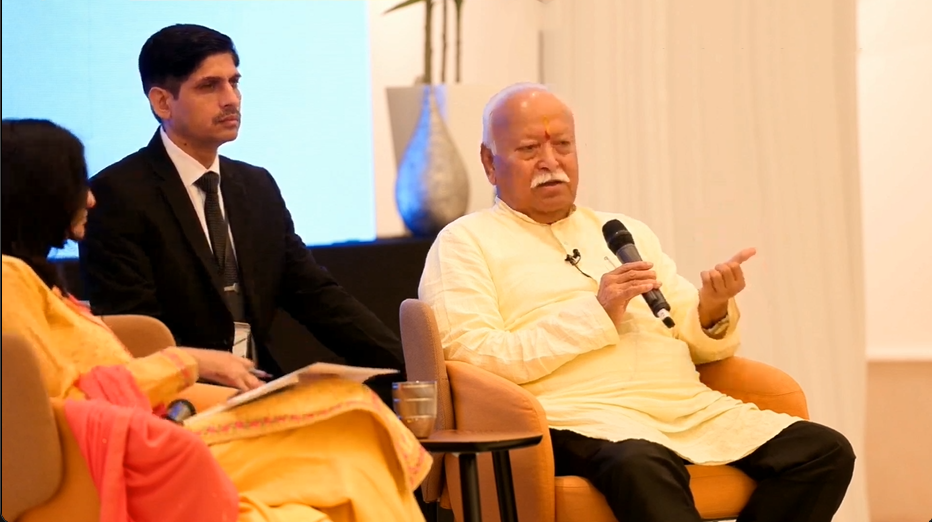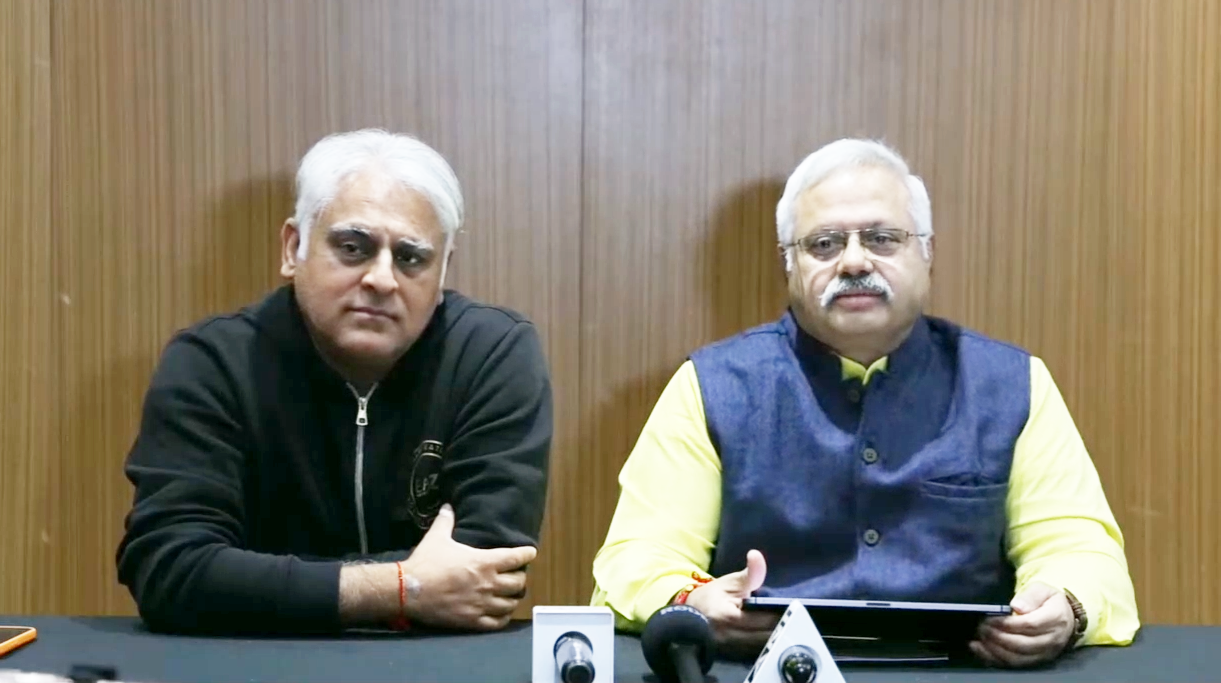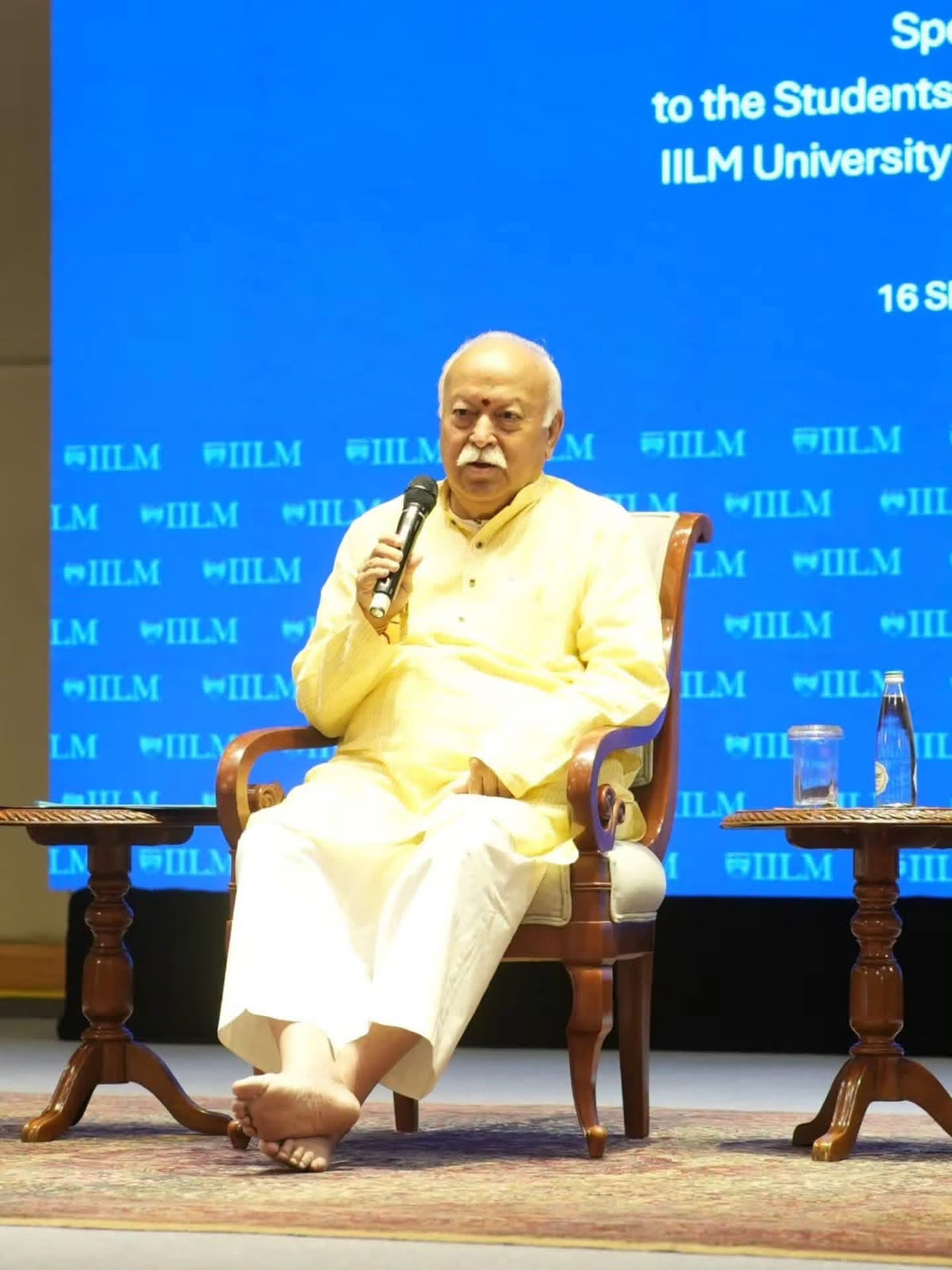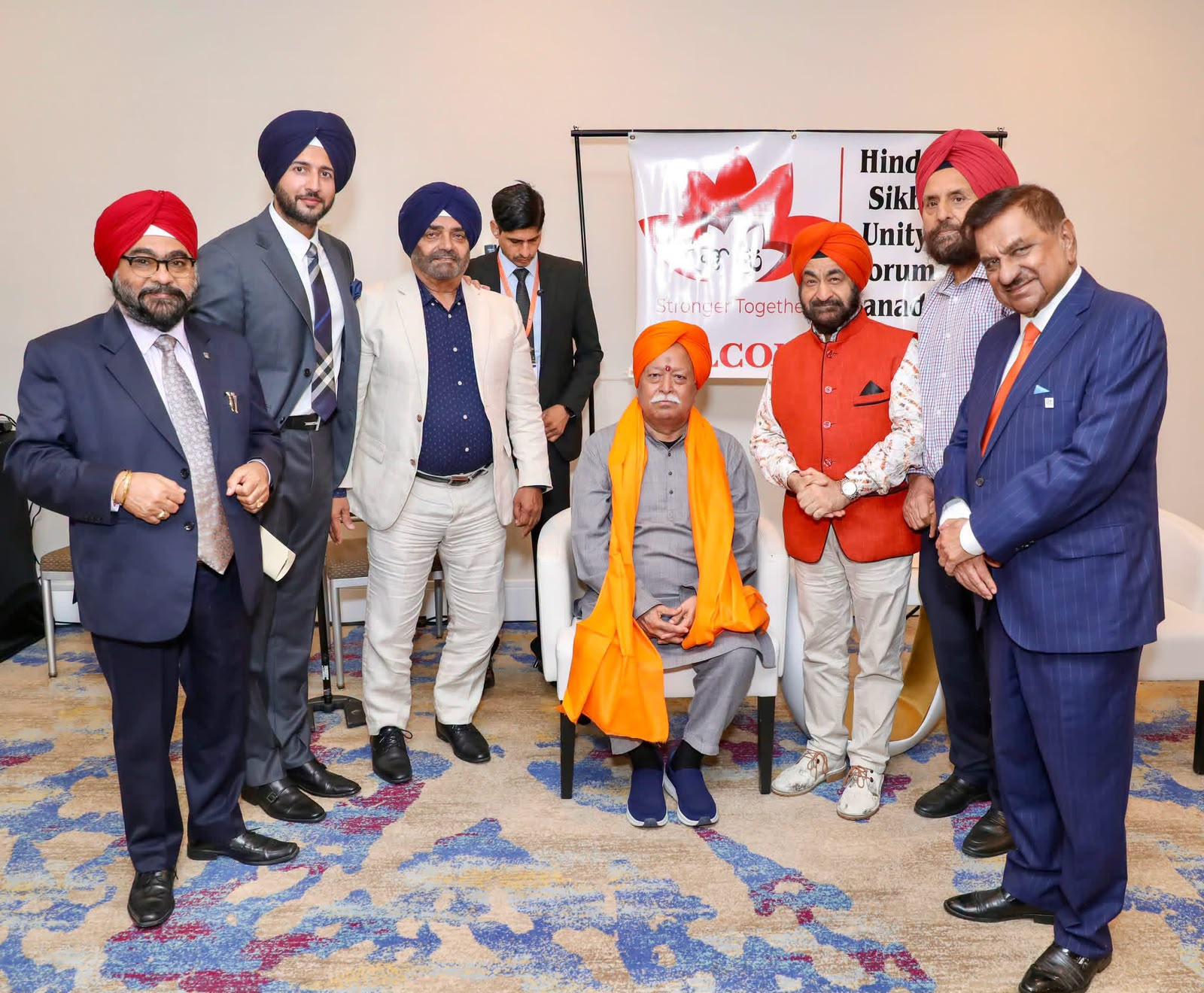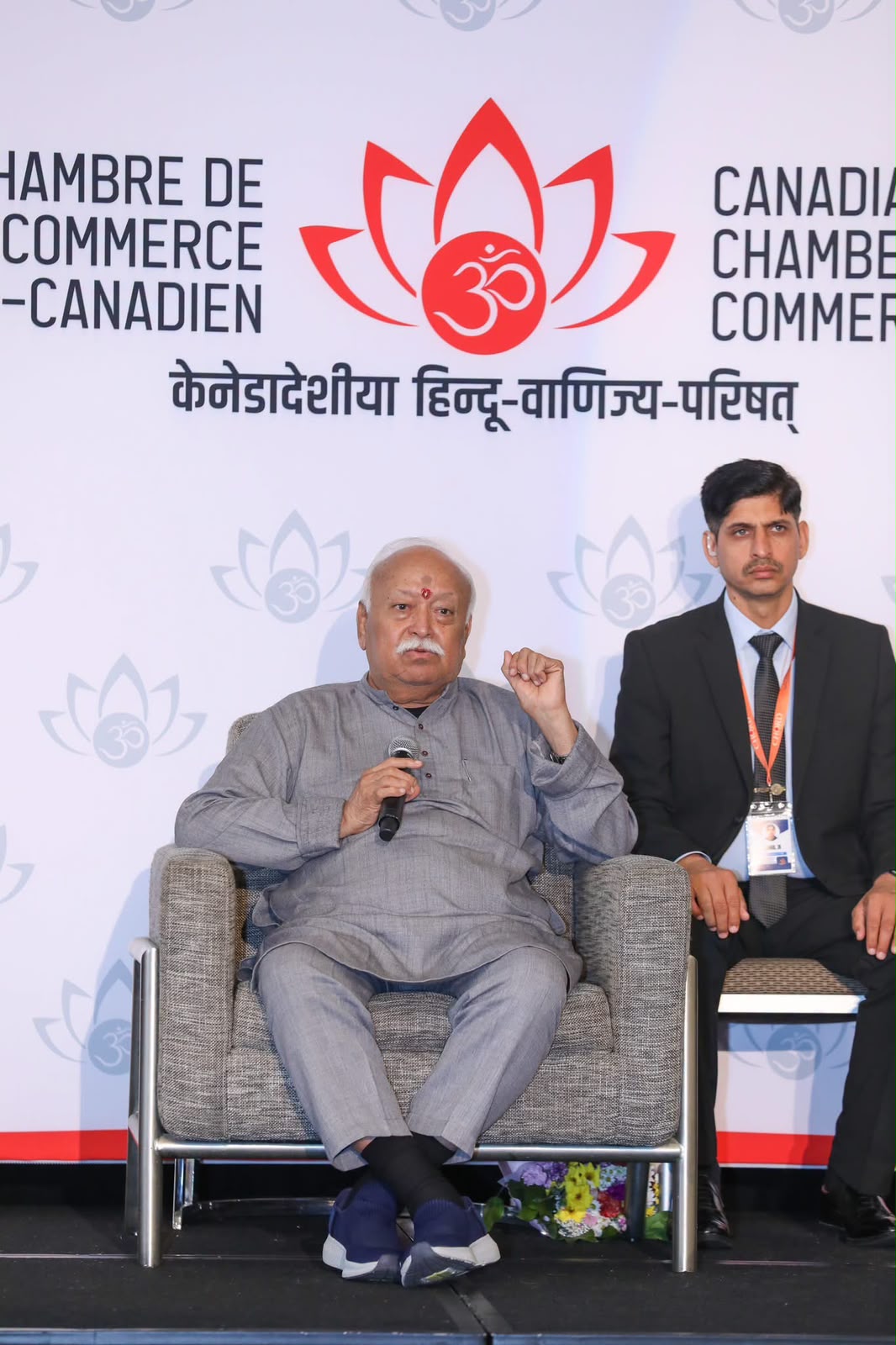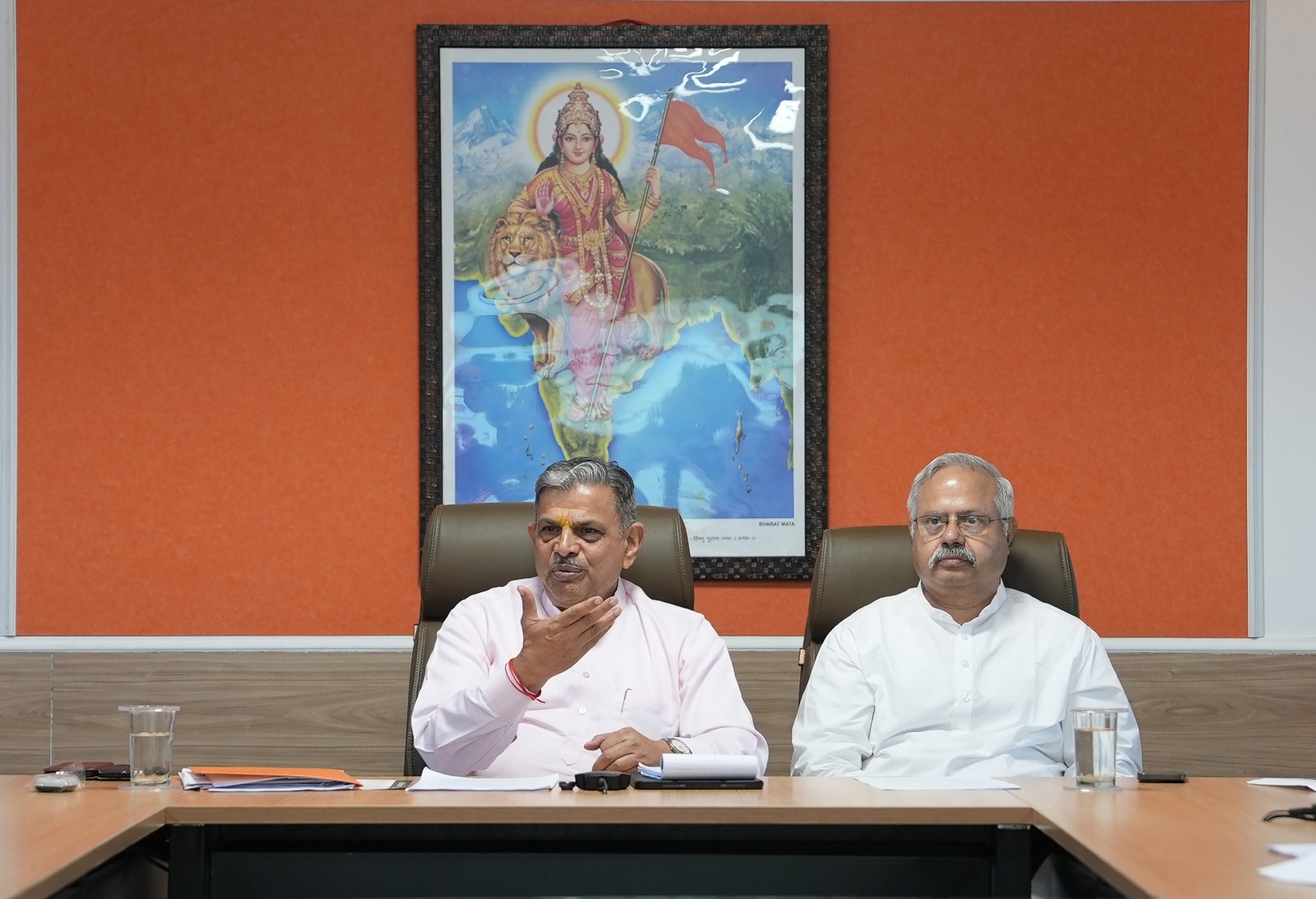
Shri Dattatreya Hosabale, Sarkaryavah of RSS briefed today some foreign news agencies about his recent trip to USA, UK and Germany on the occasion of RSS’s centenary
New Delhi, May 12, 2026
Engagements in the United Kingdom, the United States and Germany | April 2026
In April 2026, in the centenary year of Rashtriya Swayamsevak Sangh (RSS), RSS Sarkaryavah Sh. Dattatreya Hosabale undertook a sequence of engagements across the United Kingdom, the United States and Germany. The visits were conducted at the invitation of host institutions in all three countries, in the spirit of dialogue coinciding with the centenary of RSS. The orientation throughout was outward to humanity at large, offering a hundred years of reflection and experience in the cause of the welfare of all beings and the global good.
United Kingdom | 10 to 15 April 2026
Over six days in London and Rugby, RSS Sarkaryavah Sh. Dattatreya Hosabale engaged with British public life across academia, policy, the legislature, business and community organisations.
At Chatham House, the Royal Institute of International Affairs, he addressed a session on RSS View of the World, considering the civilizational values that underpin the work of RSS and the place of Bharat in the evolving global order.
At the International Centre for Sustainability in the City of London, he led a roundtable on Understanding Bharat from the Grassroots, examining the conception of Bharat as a civilizational entity rather than as a political construct alone.
An academic roundtable on RSS and Civic Institutions brought together researchers and faculty from the University of Oxford, University College London, the School of Oriental and African Studies, the London School of Economics, the University of Cambridge and the University of Sussex.
A cross-party dinner with Members of Parliament and dignitaries from the House of Commons and the House of Lords, attended by representatives of the Conservative Party, the Labour Party and the Liberal Democrats, considered RSS’s Role in Shaping India’s Future.
Informal sessions with senior business leaders in London addressed the Global Vision of RSS in the present geopolitical situation.
A further informal session brought together Hindu community leaders and representatives of community organisations across the United Kingdom.
The visit concluded with a Karyakarta Mandal of RSS inspired Hindu Swayamsevak Sangh UK in Rugby, a working assembly of the volunteers and functionaries who work with the wider HSS network in Britain.
United States |
16 to 26 April 2026
Ten days of engagements anchored by two principal events, together with conversations across the Indian American community in multiple cities.
THRIVE 2026 Summit | Stanford Faculty Club | 16 and
17 April
The inaugural invitation-only summit of the Global Science Innovation Forum convened Nobel laureates, global policymakers, technologists and ethicists. RSS Sarkaryavah Sh Dattatreya Hosabale spoke on the panel Science, Knowledge Systems and Civilizational Leadership. Co-panelists and participants included Professor Steven Chu, Nobel Laureate in Physics and former United States Secretary of Energy; Lieutenant General H.R. McMaster, former United States National Security Advisor; Ram Shriram, founding board member of Google; Vinod Khosla, founder of Khosla Ventures; and Professor Dame Juliet Gerrard, former Chief Scientific Advisor to the Prime Minister of New Zealand.
The Sarkaryavah’s central proposition was that scientific and technological progress must be evaluated through the three-fold lens of Economy, Ecology and Ethics. He observed that “there was never a divide between the spiritual and the scientific, only a unified pursuit of truth,” and that “what we call spiritual texts today often encoded deep scientific frameworks.”
Hudson Institute Fireside Dialogue | Washington, D.C.
| 23 April
In a fireside dialogue with the foreign policy thinker and historian Walter Russell Mead, the Sarkaryavah articulated the philosophy of oneness that animates RSS thought. He observed that “Hindu philosophy and Hindu culture, by their very structure, do not allow it to be supremacist,” that “Hindus have never invaded any country and Hindus have nothing to apologise for,” and that “humility begins with a simple realisation: we are all part of the same universal energy.” He identified the three foundations of the India-United States relationship as mutual trust, a level playing field and mutual respect.
Community Reception |
Hilton McLean, Virginia |
23
April
A reception was held on the theme India’s Global Vision and Role in the Emerging World: Civilisational Foundations for Prospering Together, organised by the Foundation for India and Indian Diaspora Studies in association with the Hudson Institute. The Sarkaryavah was joined on the panel by Walter Russell Mead and by Walter Andersen, the long-standing scholar of RSS, who described the movement as a stabilising influence in Bharat.
Addressing the reflections of modern life, the Sarkaryavah observed that humanity has built “bigger houses, but smaller families,” that the present age contains “more knowledge, but less judgment, more experts, but more problems,” and that humanity has “conquered outer space, but not inner space.” The Bharatiya philosophy, he noted, “recognizes nature as Mother, with enough for our need but not to fulfil our greed.” Of Bharat’s civilizational claim, he said that “when Bharat says the world is one family, it says it from some experience of practice.”
Diaspora and Media Engagement
The visit also included a community engagement in the Midwest hosted by leaders of the Indian American community. On 24 April, in Washington, D.C., the Sarkaryavah gave an interview to National Public Radio, marking a rare engagement by RSS with the United States mainstream media.
Germany |
28 to 29 April 2026
Two days of discussions in Berlin with leading German policy institutions and the Indian community.
At Stiftung Wissenschaft und Politik, the German Institute for International and Security Affairs, the discussion addressed the place of Bharat in the evolving global landscape, the role of civilizational perspectives in international relations, and the contribution of civil society institutions to social cohesion.