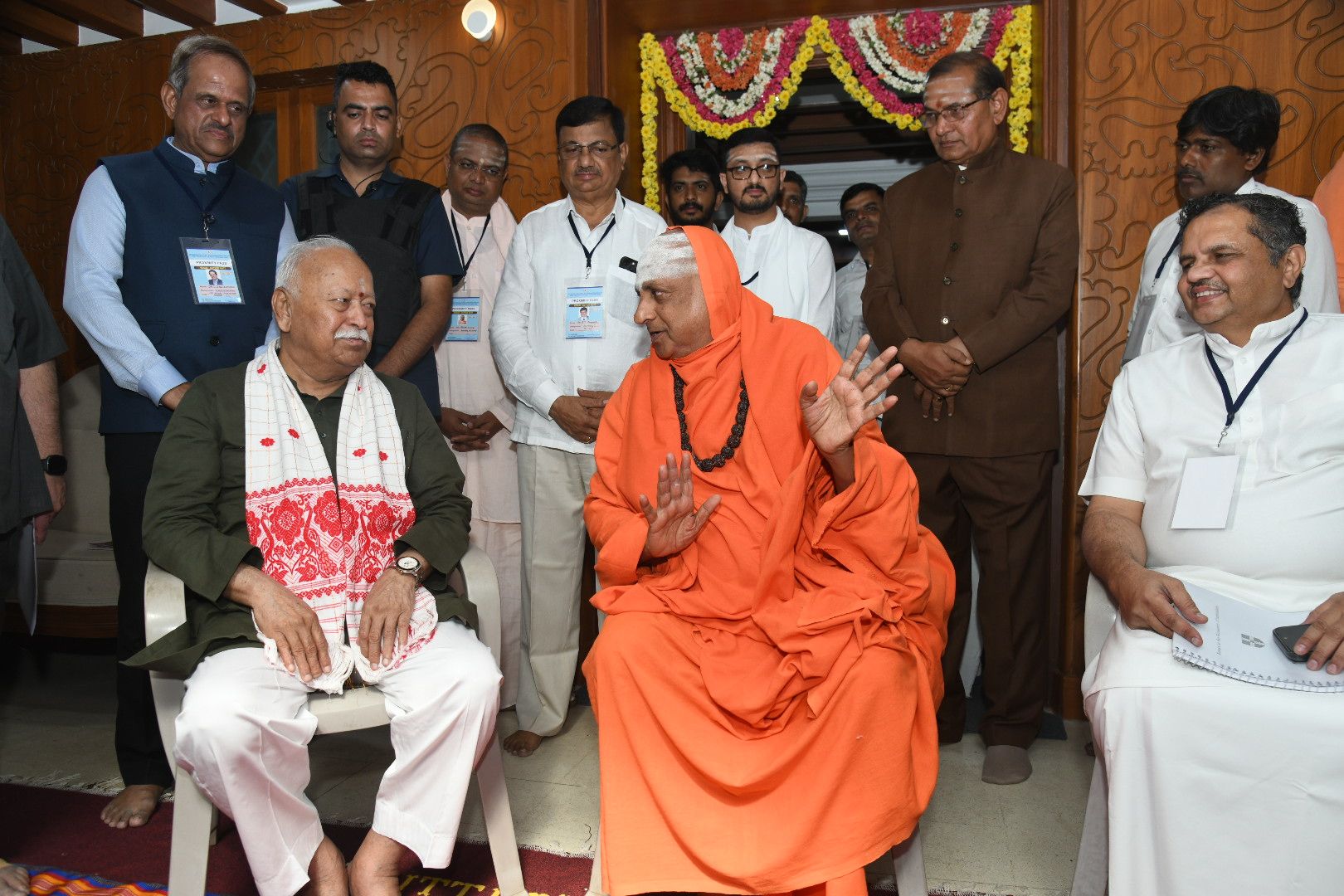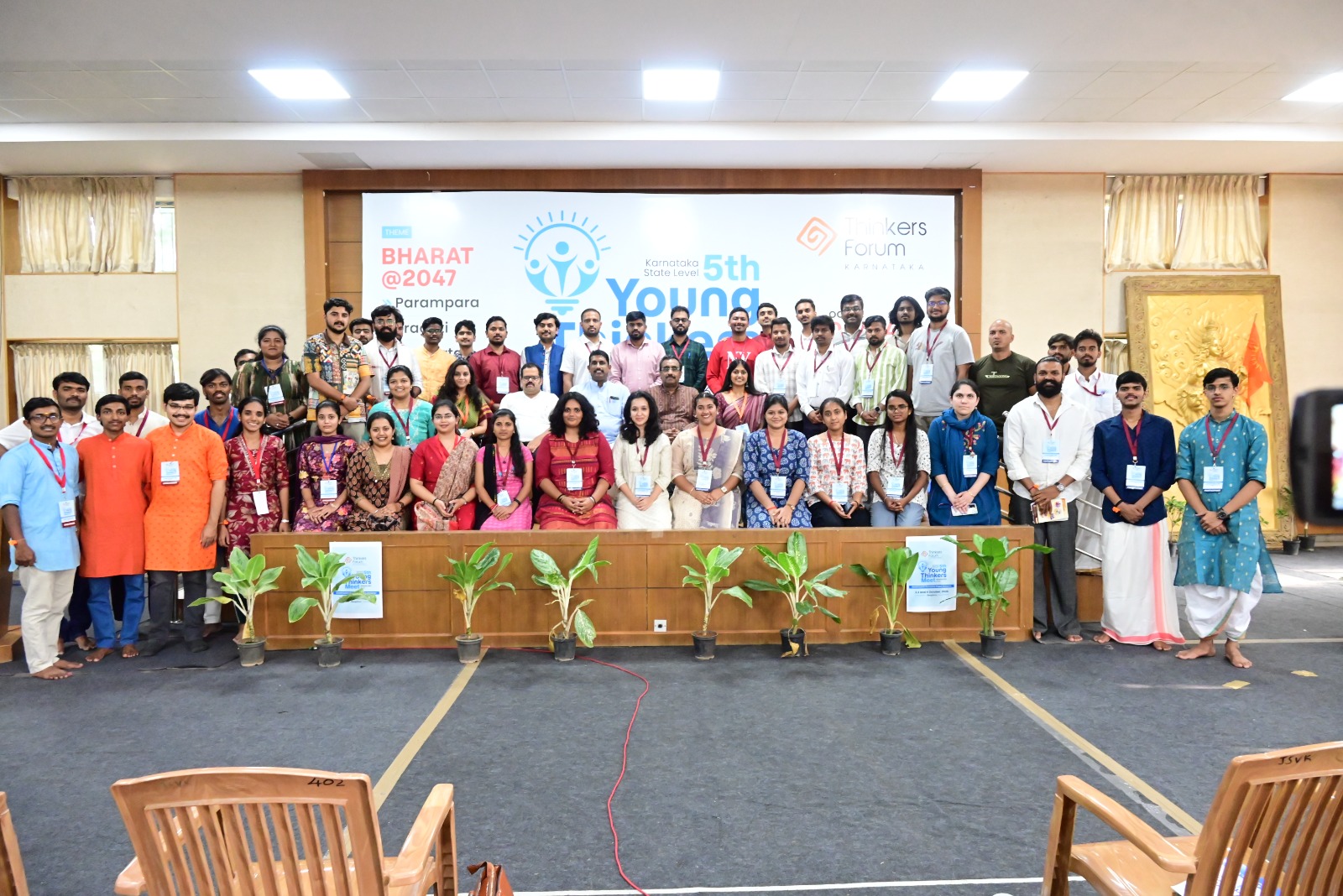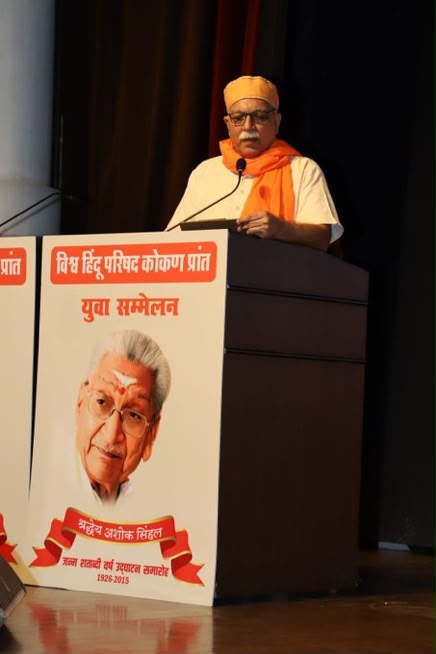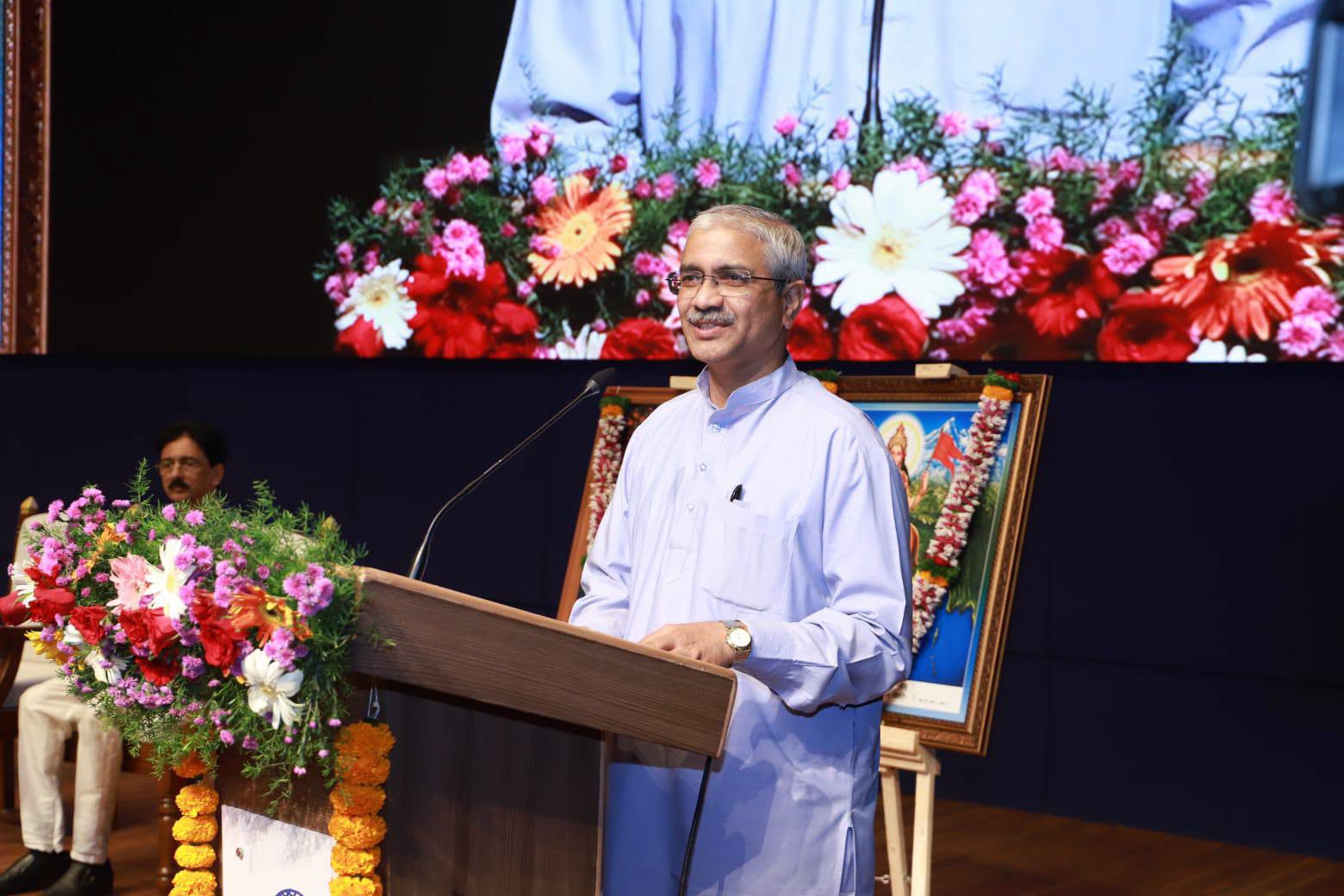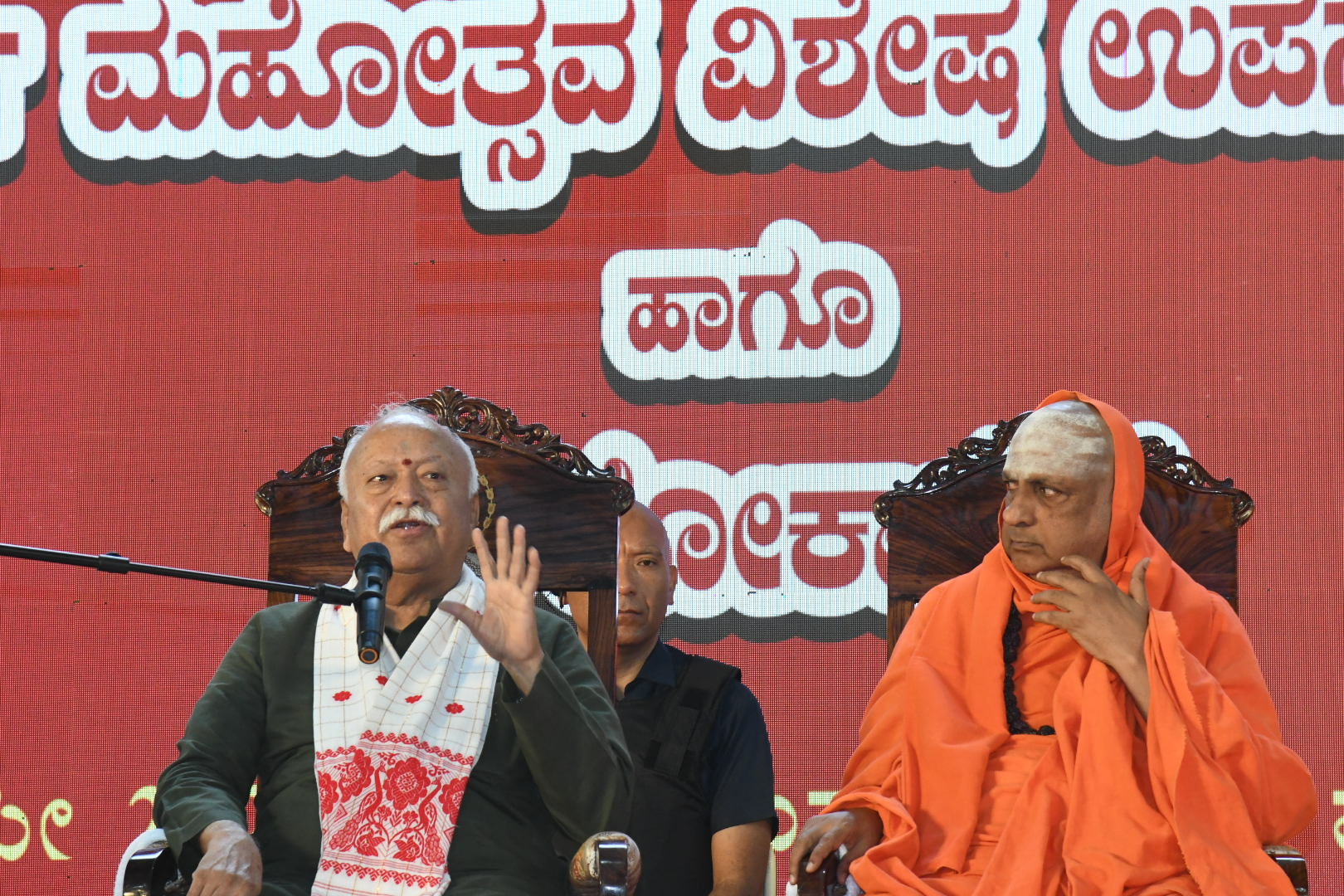
Sutturu, Mysuru May 7, 2026: The foundation of Bharatiya society lies in the realization of the oneness of existence, where relationships are guided not by contractual benefit but by an inherent sense of duty, belonging and mutual responsibility said RSS Sarasanghachalak Dr. Mohan Bhagwat.
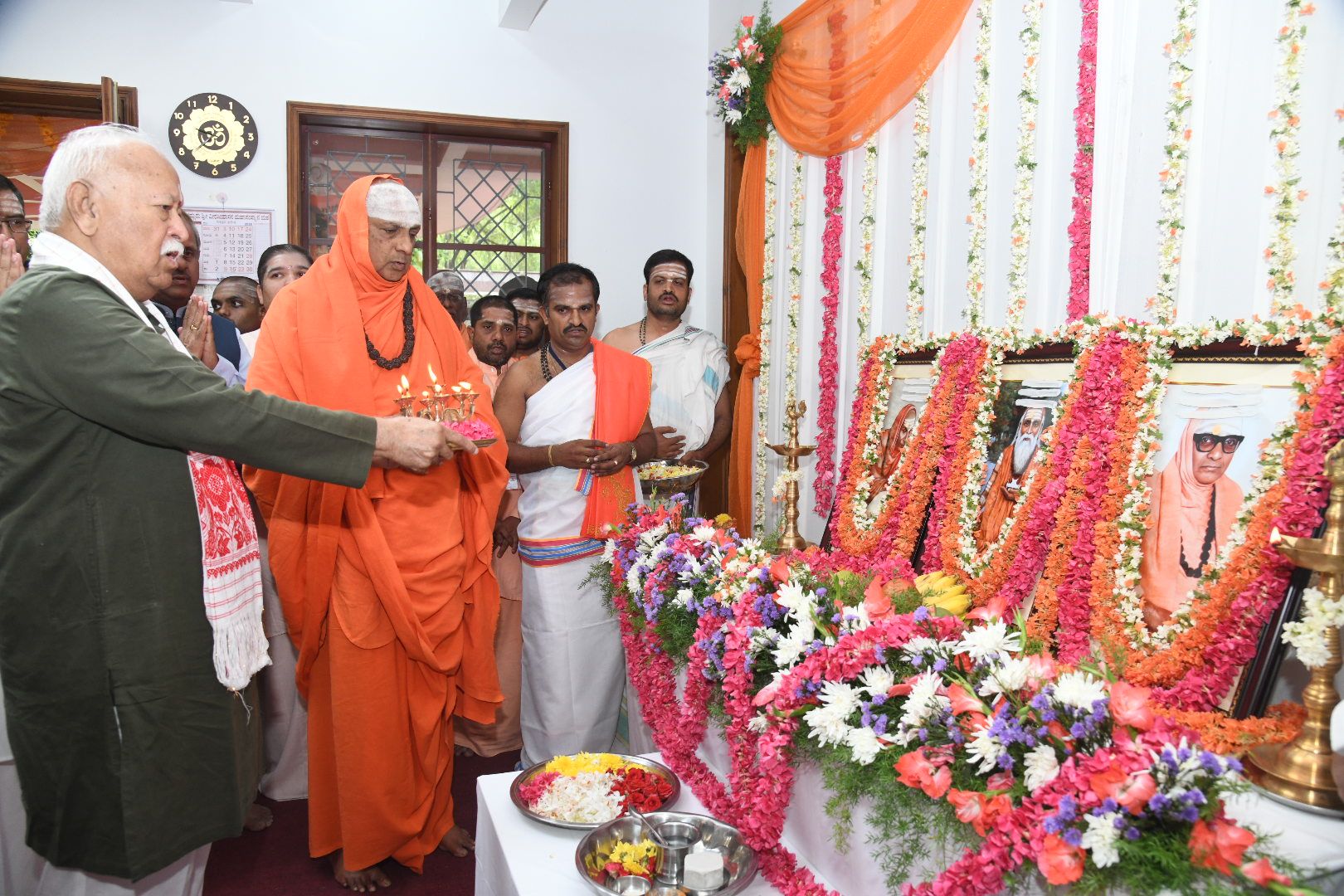
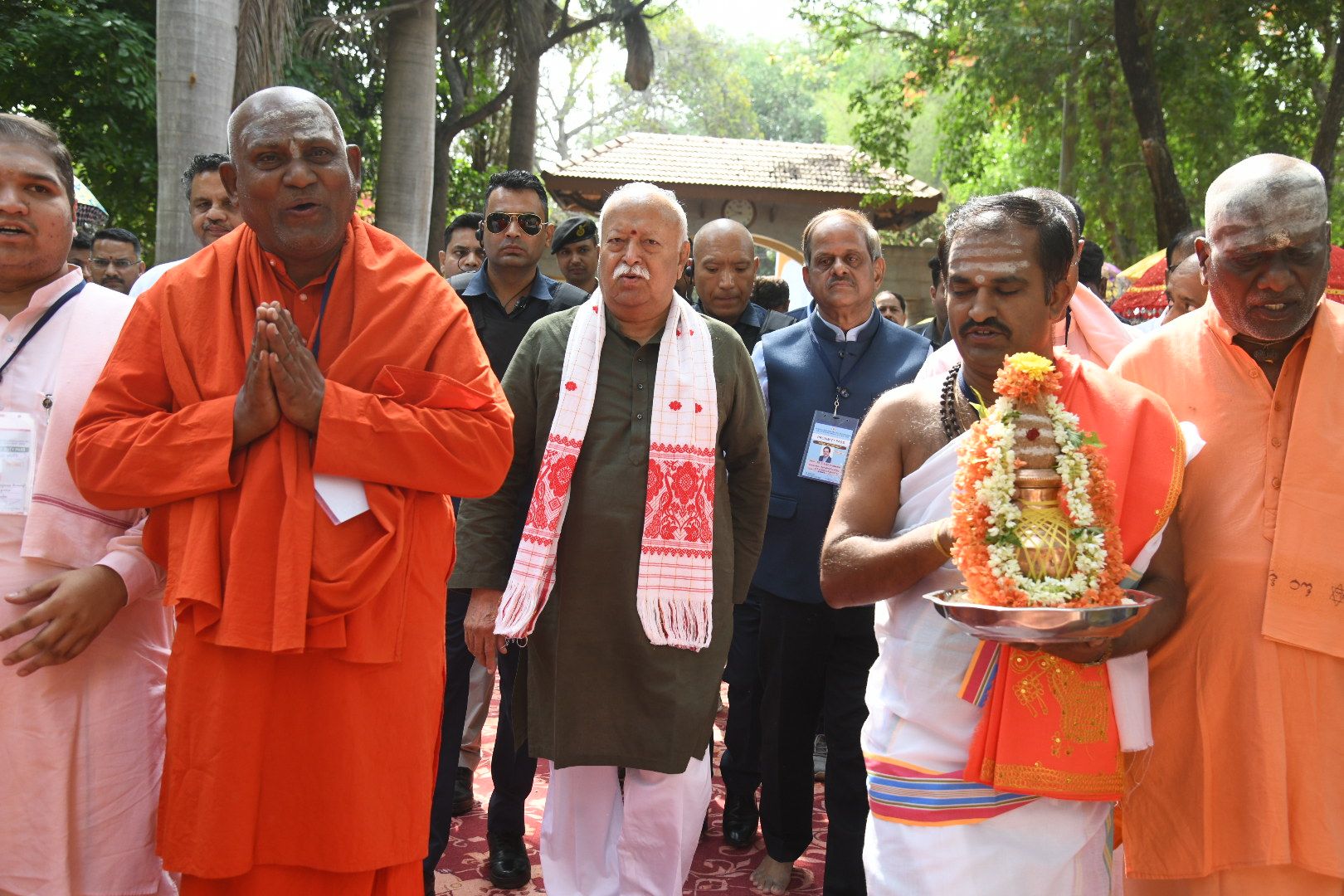
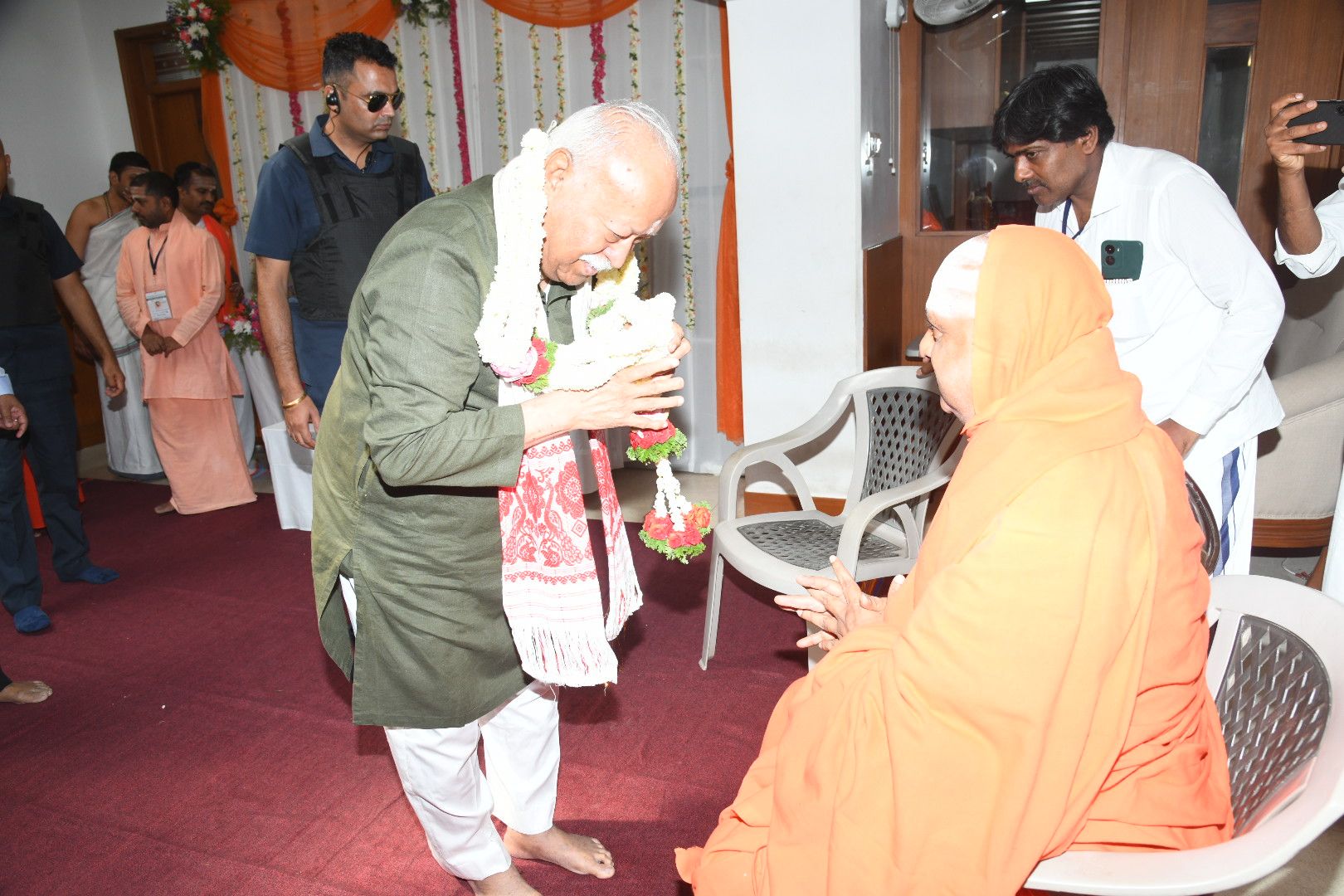
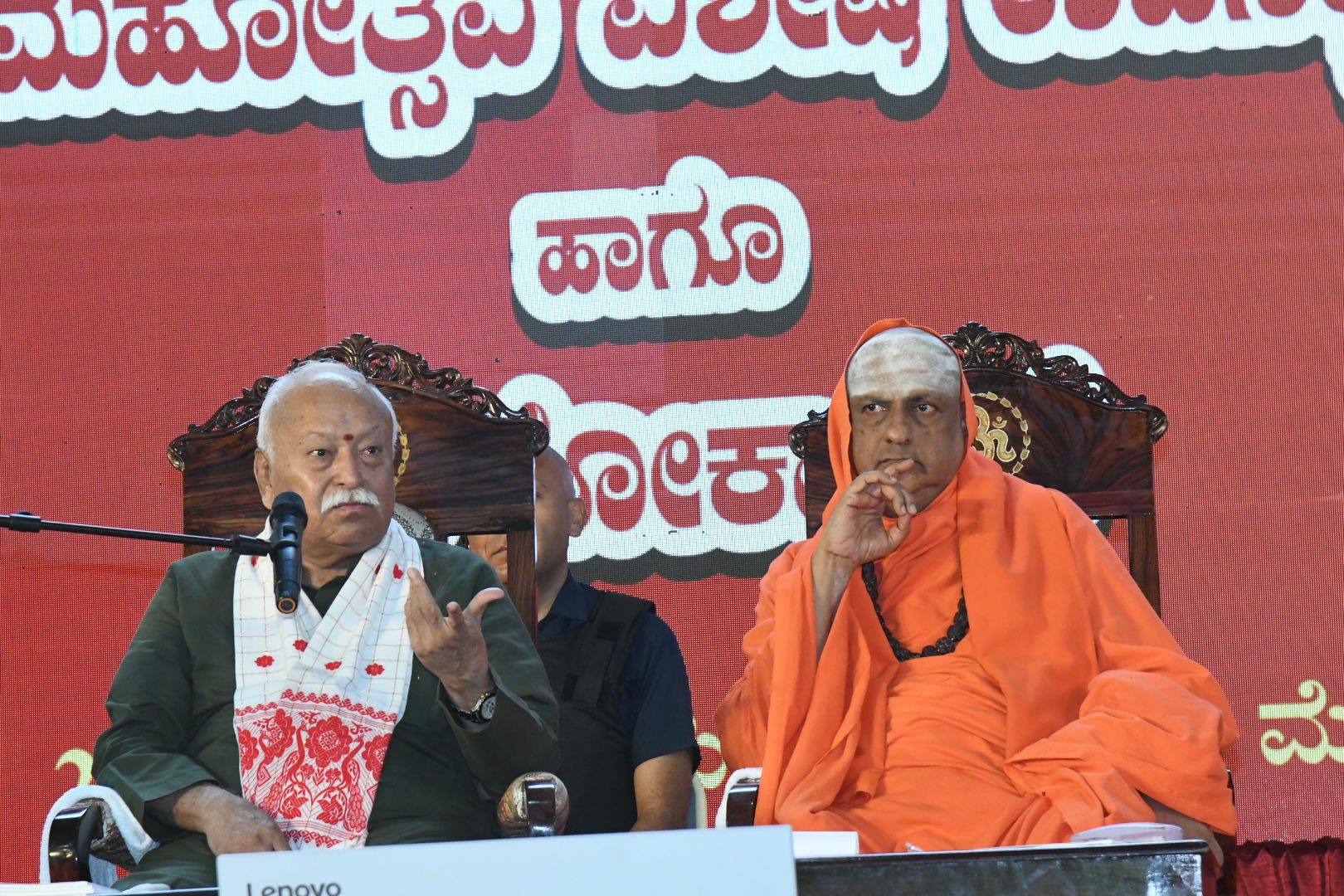
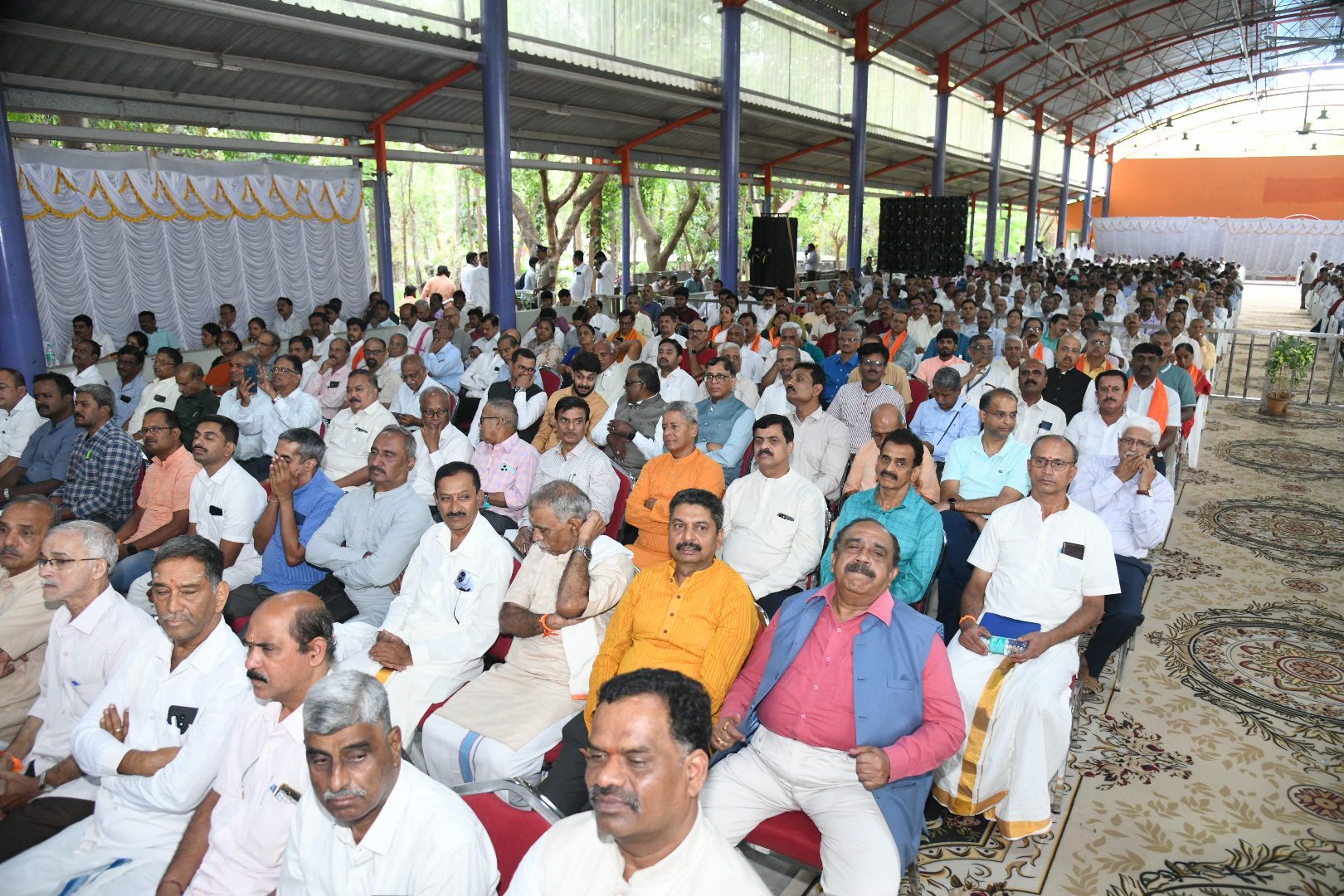
He delivered a Special Lecture on ‘Social Hormony for Nation’s Progress’ at JSS Mahavidyapeetha, Sutturu, Mysuru, Karnataka.
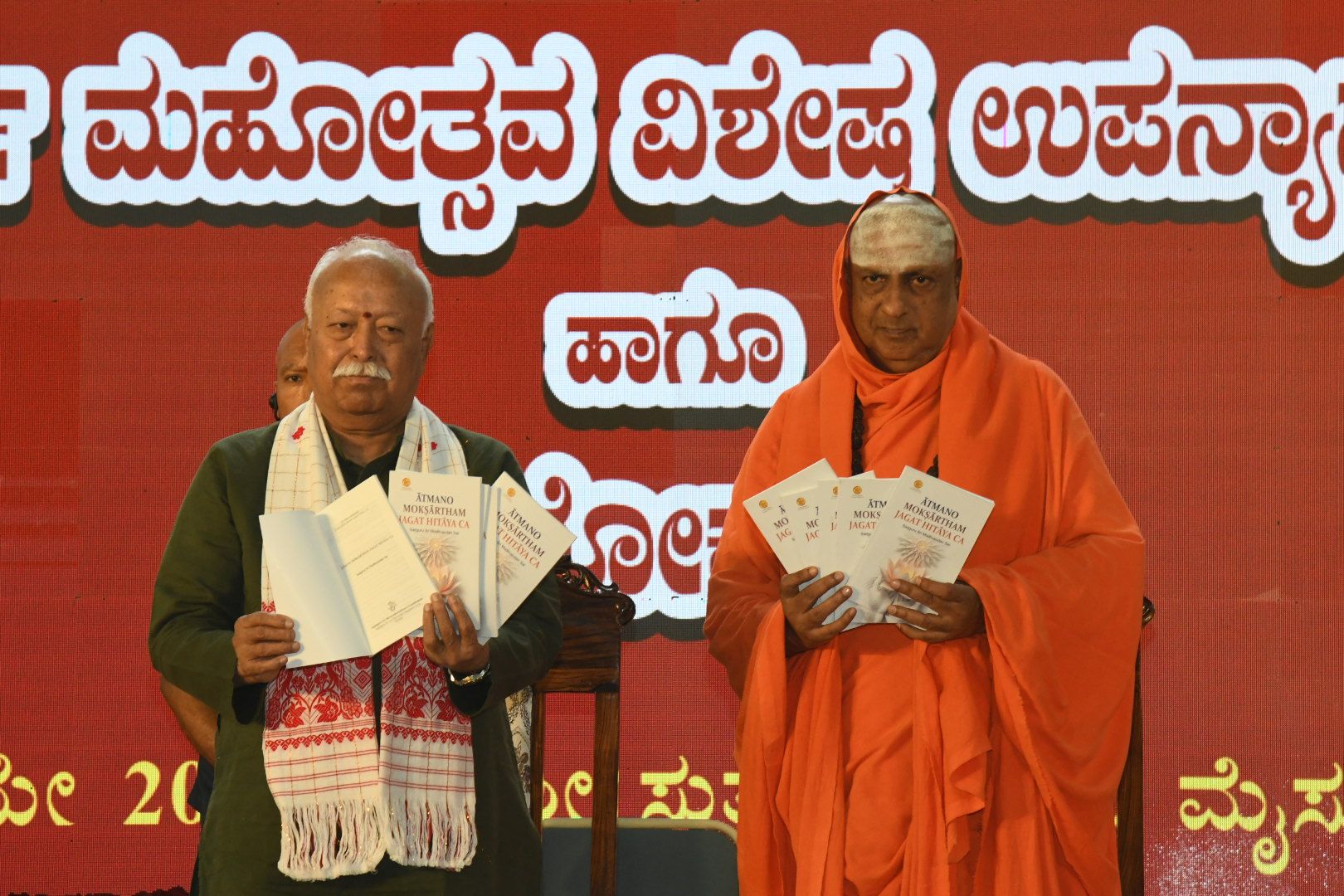
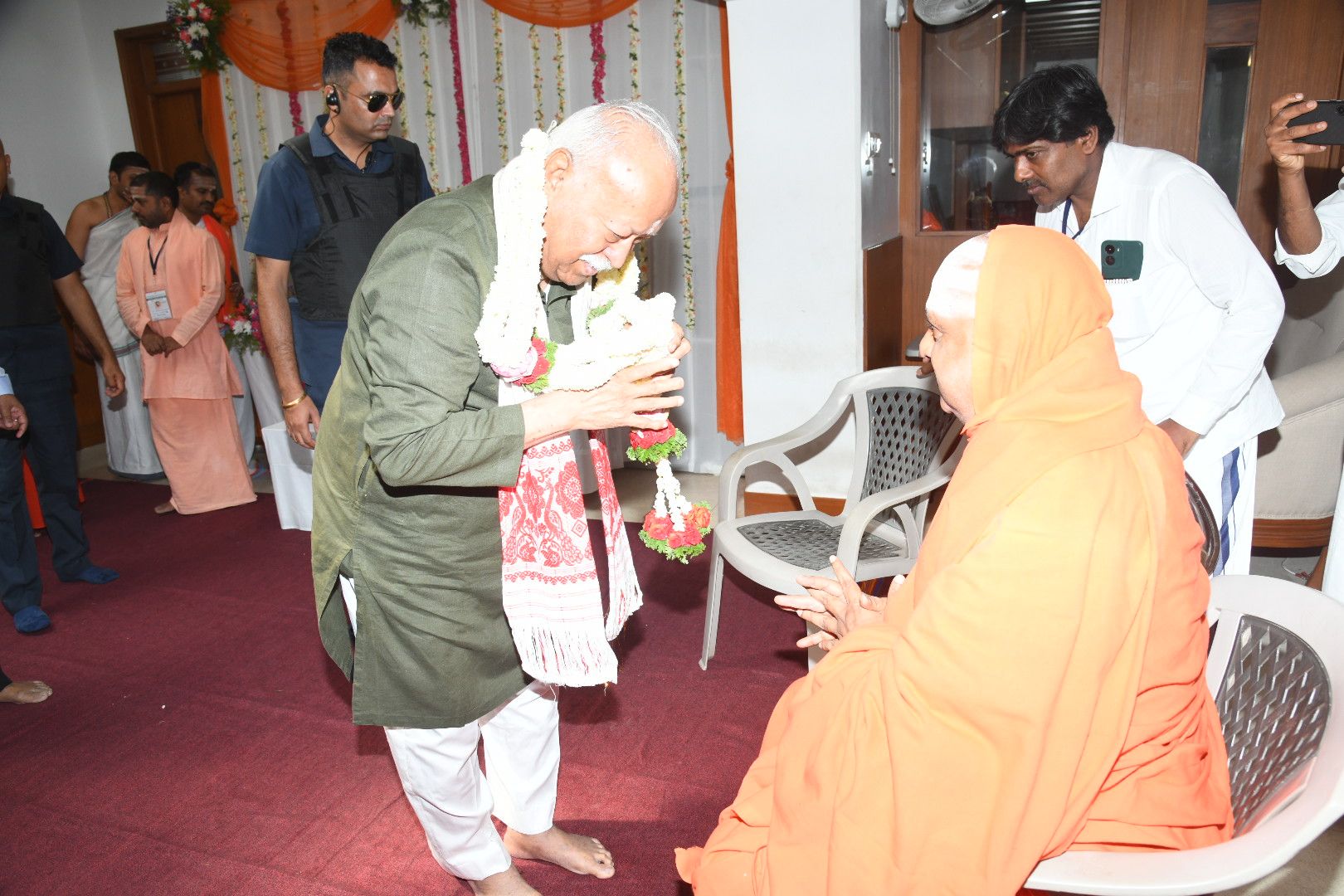
Bhagwatji released a book ‘Atmano Mokshartham Jagat Hitayacha’ along with Pujya Jagadguru Sri Shivaratri Deshikendra Mahaswamiji of Suttur Kshetra.
He said that unlike the Western concept of society, which is often based on a social contract where individuals associate primarily for mutual advantage, the Bharatiya understanding of “Samaj” is fundamentally different.
Quoting the Western framework, he said it operates on the idea that “those who are useful are taken along, while those who are not are left behind,” reflecting a relationship based on utility.
Bhagwat contrasted this with the Bharatiya outlook, stating, “There is no contract. It is our duty. Whether you benefit me or not, you are one of mine.”
He said that in this worldview, human relationships are not merely transactional but arise from the deeper realization that “everything is one, and that oneness is the truth of existence.”
He added that service to others is therefore not an obligation imposed externally, but a natural expression of this understanding of unity.
Bhagwat said that in Bharatiya tradition, society is not a mere collection of individuals living together for convenience. It is a long-standing collective existence where people develop affinity through shared life, culture and surroundings, leading to a natural sense of unity.
He said, “Samaj denotes people who live together for a long period, and therefore develop affinity towards each other,” highlighting the natural evolution of belonging.
He further said that this sense of unity extends to the idea that “Vasudhaiva Kutumbakam,” the world is one family, is not just a slogan but a lived civilisational truth.
Bhagwat said that because of this inner sense of oneness, exclusion based on utility does not define Bharatiya society. He said that even in daily life, this spirit is reflected in small acts of trust and sharing.
He gave an example, saying that even when someone cannot immediately pay a rickshaw fare, the response often is, “Let it go… even birds do not eat money,” reflecting a cultural ethos of compassion and trust.
He said, “This is our culture. This is our society,” contrasting it with societies where such expressions of trust are rare.
Bhagwat said that this worldview extends beyond society to the idea of nationhood. In Bharat, he said, the nation is not defined merely by the state or political structure, but by a civilisational consciousness rooted in land, people and shared values.
He said that Bharat historically considered the land itself as the unifying factor, stating that “the land up to the sea is one nation,” reflecting a cultural and civilisational unity beyond political boundaries.
He added that this land is not merely a means of living but is regarded as “Matrubhumi”, which has shaped the cultural and spiritual identity of Bharat.
Bhagwat said that this civilisational understanding has historically shaped Bharat’s outlook, where diversity in language, region and customs coexisted with a deeper unity based on shared consciousness.
He said that the essence of Bharatiya thought is the recognition that all living beings are interconnected, and that “everything is one, not just all are one, but all is one.”
He said this realization leads to a state of inner completeness, adding that “when you experience that oneness continuously, you attain imperishable happiness.”
Bhagwat said that Bharatiya tradition therefore emphasizes service (seva) and cooperation over competition, and coordination over conflict.
He contrasted this with the Western idea of “struggle for existence and survival of the fittest,” saying that Bharat’s approach is based on cooperation and mutual upliftment.
He said, “Those who are perfect will help others to come up,” highlighting the responsibility of capability.
He added that true development is not merely material progress, but a balanced growth rooted in harmony, sharing and restraint.
He said that when society forgets this principle, conflicts arise from excessive desire and limited resources, but when it is followed, it leads to equilibrium and collective welfare.
Bhagwat said that the ultimate vision of Bharatiya thought is a society where individuals recognize their interconnectedness and act with responsibility towards one another.
He said, “We belong to each other,” and concluded that harmony in society emerges not through compulsion, but through the realisation of oneness as the highest truth.