– Rajesh Padmar, Prant Prachar Pramukh, Karnataka Dakshin RSS
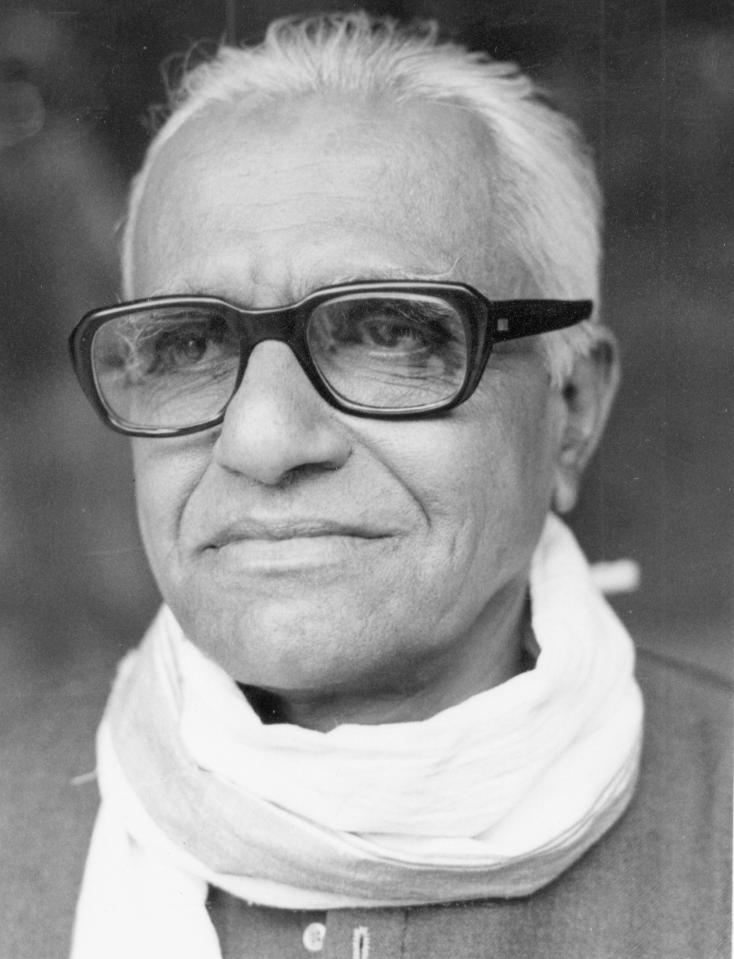
May 26, 2026 marks the celebration of the 100th birth anniversary of Sri Ho. Ve. Seshadri (May 26, 1926 – May 26, 2026) —a senior Pracharak, an exceptional organizer, a profound thinker, and an accomplished writer.
Born in Bengaluru on May 26, 1926, H. V. Seshadri came into contact with the Sangh in 1942. Following his postgraduate studies—an M.Sc. in Chemistry—he became a pracharak (full-time worker) of the Sangh in 1946. He joined as a pracharak alongside K. Suryanarayana Rao and Champakanath, who were part of the first group of three pracharaks in Karnataka.
He served as the Kolar District Pracharak in 1947; was arrested during the ban on the Sangh in 1948; became the Pranta Karyavaha in 1953; held the additional responsibility of Mangaluru Division Pracharak from 1953 to 1956; served as the Karnataka Pranta Pracharak in 1960, Sahakshetra Pracharak in 1980, and Dakshina Kshetra Pracharak in 1981; took on the roles of Akhil Bharatiya Pracharak Pramukh in 1983 and Sahasarakaryavaha in 1984; served as Sarakaryavaha from 1987 to 2000; and subsequently held the positions of Sahasarakaryavaha in 2000 and Akhil Bharatiya Pracharak Pramukh in 2003.
HV Sheshadri ji gad addressed Worlf Hindu Conference in New York in 1984 and Hindu Sangam at Bradford UK. Sheshadri ji was known for his intellectual contributions, was highly respected by thinkers and scholars across the socio-political spectrum. His articles were widely discussed in several diaspora across universities and intellectual meets.
HV Shesgadri ji passed away on August 14, 2005, at 6:57 PM at Bengaluru.
He was cremated at the Chamajapet crematorium in Bangalore on August 15, 2005. Funeral was attended by the then RSS Sarasanghachalak KS Sudarshan, then Sarakaryavah Dr Mohan Bhagwat, then Sahasarakaryavah Madan Das Devi, Suresh Joshi, Suresh Soni, Former Prime Minister Atal Bihari Vajpayee, BJP President LK ADVANI, Senior leaders Dr Murali Manohar Joshi, Gujarat Chief Minister Narendra Modi, Rajnath Singh, Madhya Pradesh Chief Minister Babulal Gaur, Jharkhand Chief Minister Arjun Munda, BJP Leaders Pramod Mahajan, VHP Veteran Ashok Singhal, NDA Convenor George Fernandes, Congress Leader CK Jaffer Sherrief and many others.
“Seshadri possessed a creative, sensitive, and equanimous personality. He was a proponent of universal ideas,” remarked K. S. Sudarshan Ji, the fifth Sarsanghchalak.
He authored a total of 41 books—30 in Kannada and 11 in English. H. V. Seshadri was a prolific writer, contributing hundreds of articles, columns, and inspirational letters to various publications, including Utthana, Vikrama, and Organiser.
In 1982, the work TorBeral by Ho. Ve. Seshadri received an award from the Karnataka Sahitya Akademi (under the Government of Karnataka). It is one of the books that garnered significant acclaim within intellectual circles.
Even amidst his relentless travel schedule, he continued to write unceasingly, thereby expanding and strengthening the intellectual framework of the Swayamsevaks* (volunteers). He also shared the vision and ideals of the Sangh with society at large.
Books by HV Sheshadri ji:
1. Yugavatara (1967)
2. Tayi Kadihalu (1969)
3. Krantiyalla Bhranti (1970)
4. Amma Bagilu Tegi (1970)
5. Shivaji (1972)
6. Korike (1973)
7. Guru Govind Singh (1974)
8. Bhugilu (1977)
9. Assamina Artasvara (1980)
10. Meenakshipuram – Ondu Echcharike (1981)
11. Tor Beralu (1981)
12. Aa Kalaratriya Prashne (1981)
13. Adhunika Manava Jivanada Kurukshetradalli Parthasarathi Yaru? (1982)
14. Mrugajala, Nijajala (1983)
15. Bharatadalli Kraista Chatuvatikegalu (1985)
16. Pariprashna (1986)
17. Kritiroopa Sanghadarshana (1990)
18. Idonde Daari (1995)
19. Vikrutiyinda Samskrutiyedege (1995)
20. Desha Vibhajaneya Durantakathe (1995)
21. Navanirmanada Olapadaragalu (1996)
22. Charaiveti (1996)
23. Kaidivige (1996)
24. Dishabodha (1998)
25. Nyayika Aayogagala Kannalli Matantara (1999)
26. Samarasateya Savalu (1999)
27. Samajayoga (2001)
28. Hindu Samajakke Savalugalu – Pariharagalu (2002)
29. Jagrutatmarigagi (2004)
30. Shri Guruji (2005)
31. Dr Hegdewar – Epoch Maker (1981)
32. Christian Missions in the eyes of Gandhiji (1981)
33. Warning of Meenakshipuram (1981)
34. The Tragic Story of Partition (1982)
35. RSS – A Vision in Action (1988)
36. Hindus abroad – The Dilemma: Dollar or Dharma (1990)
37. Universal Spirit of Hindu Nationalism (1991)
38. The Way (1991)
39. Implications of Christian Conversions (1999)
40. Yoga – A Science Imperative (2000)
41. Sri Guruji (2005)
Columnist S Gurumurthy wrote an article as A tribute to HV Sheshadri in the Daily Pioneer is below :
HV Sheshadri shaped many leaders but his name will not figure among those ‘known’ as leaders. He was a thinker but will not be among those who are ‘known’ as thinkers. He was an intellectual. But his name will not be in the list of ‘known’ intellectuals. He was a writer but will not be among the ‘known’ writers.
HV Seshadri, was the former general secretary of the RSS, and one of the tallest leaders of the Rashtriya Swayamsevak Sangh (RSS). He was little known to the outside world as what he was because he did not think, write, or lead others to be ‘known’. He wrote books to shape men who would make the country strong, not to make himself popular. He toured ceaselessly and met hundreds of thousands of people to strengthen the motherland, not to become popular or build a vote-bank for himself.
His demise provided the context for the first news item about him as a person to appear in the media. But even that courtesy is because he belonged to the RSS which is well-known.
In fact, like many of his colleagues and seniors in the organisation, Seshadri shunned popularity by design. He knew the limitation and risks of popularity. When Mahatma Gandhi withdrew the Non-Cooperation movement, and a BBC correspondent asked him what did he think of the general perception that his popularity had waned, the Mahatma replied, “Popularity comes without invitation and goes without farewell.” So superior minds like Seshadri knew how transient popularity is and how debilitating it is to chase it.
But even though he knew the limitations of popularity, he worked to produce popular leaders, because popular leaders are needed to lead and run the country. The only difference was that they should be popular leaders, not popularity-seekers. Only persons who do not seek popularity, who actually shun popularity, can produce and inspire popular leaders and guide them.
It is not easy to manage popularity. To become popular is easier than remaining popular. This is where a popular leader needs the lead of someone who is least known. Chandragupta was known, but little detail is known about his mentor, Kautilya. Chhatrapati Shivaji is popular in history books but not the saint Ramdas who shaped him. This is the rishi-raj tradition of this ancient country. So we had had known rulers ruling and unknown rishis guiding them. Seshadri belonged to the rishi tradition.
But Seshadri knew that leaders alone cannot make the country. When someone said “Great is a country that has heroes,” Galileo responded by saying, “Greater is a country that does not need heroes.” Seshadri strove for a nation that does not need heroes. To dispense with the need for heroes is a stupendous task. Only a country that has highly evolved and patriotic men and women can dispense with the need for heroes. This is precisely what Seshadri worked for. This is the task which Swami Vivekanand described in his lecture on My Plan of Campaign in Chennai
after he returned from America as ‘man-making’ mission. It is this mission which he believed was equally a nation-building task.
So the twin and sequential mission of man-making and nation-building became the fundamental work the RSS. This self-effacing objective became the life mission of Seshadri. He joins the immortal but popularly unknown category of great men and women who have lived and worked for this ancient land of rishis and munis without asking for anything in return. Seshadri follows the tradition of his mission where the mission alone is known, but not the missionary. The name of the RSS is popularly known, but not the name of its founder even. This is the tradition to which Seshadri belongs, and this is the tradition into which he has merged.
Seshadri, like many in the tradition of rishis, became part of the foundation of this ancient nation, lying below the plinth and supporting the tower of the temple of Mother India. Thus disappears one more soldier in the cause of Bharatmata into her lap. The man who built many men with capital ‘M’ who lead different public domain of this vast nation of one-sixth of humanity, is no more. Seshadri was born for a mission and lived his whole life for the service of the mission till his fragile body which he over-worked gave way at age 80.
RSS Sarasanghachalak addressing after inaugurating HV Sheshadri Memorial Playground at SVYASA University Campus Jigani, Bengaluru on Nov -17-2014
In his inaugural address, RSS Sarasanghachalak Mohan Bhagwat remembered the legacy of HV Sheshadri. “HV Sheshadriji was a senior RSS ideologue and Pracharak, was Sarakaryavah (General Secretary) of RSS. Sheshadri’s contribution is high for the organisation in terms of intellectual activities, guidance for swayamsevaks to improve their skills on any assigned assignments. Sheshadriji will be ever remembered in making Yoga as part of RSS activities. I got an opportunity share my memory and remember the legacy of a great personality today ” said Mohan Bhagwat.