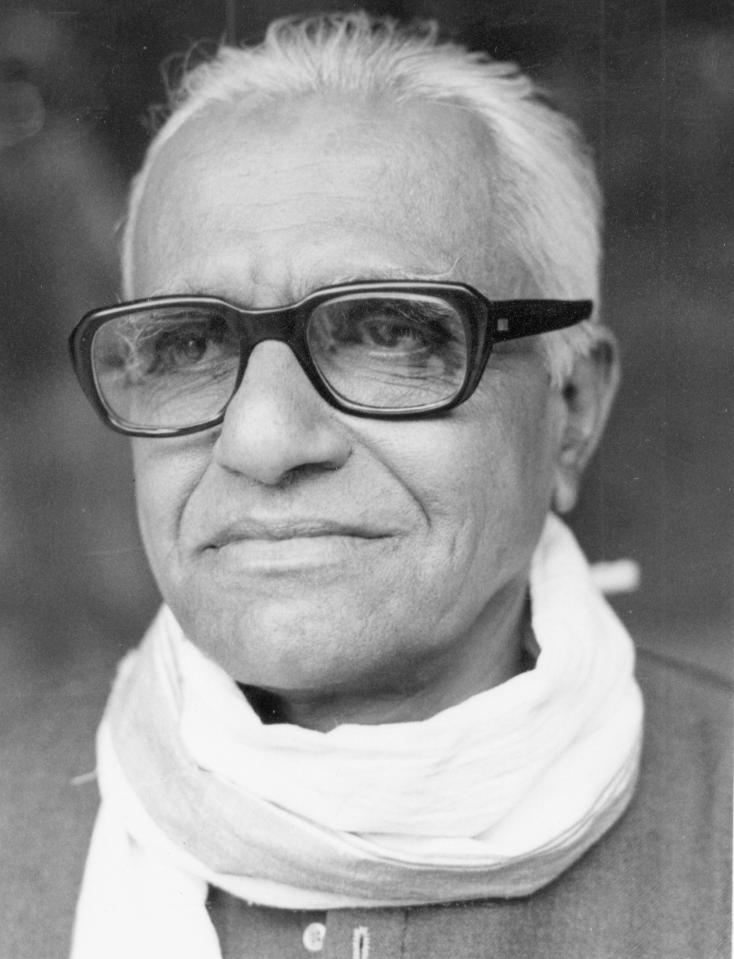
– Manjunath Ajjampura, Columnist, Author and Hon. Editor: Voice of India Kannada Series and Arun Shourie Series, Rashtrotthana Parishat
Yes, that was a dark era. The 20th century of the Common Era was an adverse time marked by the intellectual decline of Indian identity (Bharateeya Asmitha). Thousands upon thousands of temples were destroyed by Islamic invasions, and forced conversions took place. Our women were subjected to rape and even sold in slave markets.
An even more regrettable period followed when the British completely dismantled our industries, our education system, and our agriculture. Consequently, over the last century or two, we lost understanding of our own identity. We did not understand what Dharma was, and being “Hindu” became a matter of confusion for ourselves. What the British did was no small measure. Setting that aside, the language of the British continues the destruction of our identity to this day; the suffocating tentacles of the English language tighten more and more each day. Amidst this linguistic form of colonial assault, we must now strive to preserve our Indian languages and literature.
Over the past couple of centuries, Swami Dayananda Saraswati, Swami Vivekananda, and Maharishi Aurobindo shed light on our Sanatana Dharma and the Abrahamic faiths. In the 20th century, the damage caused—and still being caused—by the concept of “Sarva Dharma Samabhava” has been immense.
Mainly due to English-medium schools and colleges, the vast majority emerging from our universities (including scholars) ended up misunderstanding Dharma and religious creeds, as well as the unscientific Aryan-Dravidian theory. Such is the reach and powerful impact of textbooks and curricula.
During this transitional phase in India’s history, the lack of awareness of the truth created an aura of darkness around us for decades. Rare thinkers such as Guruji Golwalkar, Deendayal Upadhyaya, Sita Ram Goel, and Ram Swarup opened our eyes to many such realities.
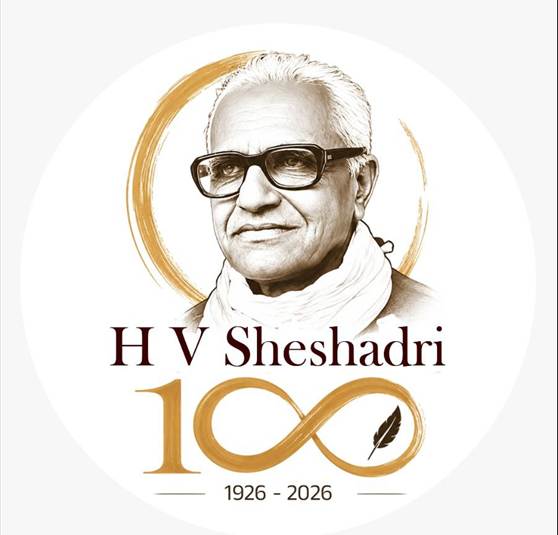
H. V. Seshadri served as the Pranta Pracharak (provincial organizer) of the Rashtriya Swayamsevak Sangh for the then-undivided Karnataka for twenty years, from 1960 to 1980. That was a complex era across India’s political, social, and cultural landscapes—marked by political upheavals, the Emergency, unchecked conversions by missionaries, ideological dominance of Communism across cultural domains, a political narrative that framed the very word “Hindu” as the embodiment of communalism, sterilization and family planning drives specifically targeted at Hindu populations, and the machinations of global syndicates set on eradicating our indigenous cattle breeds and ancient agricultural practices… the list goes on.
For a nationalist thinker and writer like Seshadri, it was a period fraught with incredible challenges. Even as he expanded the Sangh’s activities, the columns, articles, and books he wrote opened the eyes of the entire Hindu society. To the question of whether a single individual could accomplish so much, his own achievements stood as the living answer. Although Seshadri originally began writing in Kannada, his works and volumes were translated and published in languages like English and Hindi, sparking wide awareness.
For thousands of years, the very essence of India has been cultural. Though numerous empires rose, flourished, and ruled here, all of them were expansionist in form rather than aggressive, destructive, or annihilating toward others like the Abrahamic creeds.
However, our greatest weakness has been that we possess neither self-awareness (Atmabodha or Swayambodha) nor an understanding of the adversary (Shatrubodha). We never undertook the task of critically understanding the invaders who arrived with the intent to destroy us, along with their theological doctrines. We failed to comprehend the Islamic invaders and the European Christian colonial machinations. The painful reality is that even to this day, we have not understood them.
H. V. Seshadri produced literature during an exceedingly trying period. He personally authored works in both Kannada and English, writing with a clarity that served as a compass for the nation. Many of his articles were also translated into Hindi and other languages. Five to six decades ago, he penned columns in a style both incisive and engaging, and those columns remain a vital treasure to this day. His achievement lies in producing top-tier national literature for India.
Falling into the hands of Communist and Islamist historians, the historiography of India itself was distorted. It was distorted to such an extent that even today, one finds only contempt and prejudice toward Hindu Dharma and heritage among those educated in our schools and colleges. During such adverse times, he wrote grounded in exhaustive study and research. To this day, many authors regard Seshadri’s works as foundational reference texts—such is the enduring substance of his books.
The grim pictures depicting the tragic succession of events surrounding Partition unfolded through Seshadri’s pen. When the original work was published in 1982, none of these details were known to the public at all. It was only later, following the publication of Sita Ram Goel’s “Voice of India” series of works, that the true facts regarding Partition and independence began to register in the public consciousness.
Even four to five decades later, H. V. Seshadri’s compilations of ideological and reflective writings continue to guide Hindu society in the right direction. “Bhugilu” (The Flare-up), an anthology he edited, is not merely a record of the excesses of the Emergency, but also offers constructive insights on the concepts of democracy and freedom. Works such as “Aa Kaalaratriya Prashne” (The Question of That Dark Night), “Desha Vibhajaneya Duranta Kathe” and its English counterpart “The Tragic Story of Partition” present such vital documentation and insights into the partition of India that eminent authors like Sita Ram Goel and Arun Shourie have cited Seshadri’s words in their own works.
Guruji Golwalkar, who led the Rashtriya Swayamsevak Sangh as its Sarsanghchalak for thirty-three years, was an eminent thinker, writer, and orator. In the nationally important undertaking of compiling his thoughts—first into English as “Bunch of Thoughts” and subsequently into Kannada as “Chintanaganga”—Seshadri made a profound contribution.
Following the destruction of our Gurukuls and ancient universities, an intellectual vacuum engulfed the whole of India. The ideologies and narratives of Islam, Christianity, and Communism posed a challenge to our very identity. Within our own academic and intellectual circles, there was widespread ignorance and disdain towards Sanatana Dharma and indigenous Indian thought. For the Sangh, for Guruji, and for Seshadri, it was truly a period of ideological struggle. The insights forged in that intellectual churn, along with the works published during that time, continue to enlighten Hindu society to this day.
Despite their internal conflicts, Islam, Communism, and Christianity have been lying in wait for centuries to devastate Sanatana Dharma and Hindu society. Seshadri stands prominent among the nation’s foremost thinkers who provided us with the insights needed to create awareness regarding these malevolent forces.
Even though India appears on the surface to have gained the upper hand across numerous domains today, if appropriate measures are not taken on a war footing against the demographic invasion driven by Islam and the multifaceted dangers of relentless missionary conversions—both past and ongoing across several states—the destruction of Sanatana Dharma and Hindu society remains certain. Therefore, the need of the hour is to revisit and heed Seshadri’s thoughts once again.
What has been most fatal to Sanatana Dharma and Hindu society is the conversion to Islam and Christianity over the course of millennia. Whether conducted by the edge of the sword through force, or driven by deceit and inducement, these conversions have consistently been, and continue to be, perilous to our nation, our Dharma, and our society. Looking at today’s Islamic states such as Afghanistan, Pakistan, and Bangladesh—or within our own country, at Kashmir, Kerala, West Bengal, and the northeastern states—taking into account the Hindu population and observing the plight of Hindus there brings the full horror of religious conversion into sharp focus.
Hardly one in a million, perhaps, ever converted out of genuine admiration or acceptance of the theology of these Abrahamic faiths. Our senior thinkers have consistently cautioned that “conversion of faith is a conversion of nationality.” Seshadri’s articles, booklets, and volumes—such as “Aasaamina Aartaswara” (The Anguished Cry of Assam, 1980), “Meenakshipuram – Ondu Eccharike” (Meenakshipuram: A Warning, 1981), “Bharatadalli Kraista Chatuvatikegalu” (Christian Activities in India, 1985), and in English, “Warning of Meenakshipuram” (1981) and “Implications of Christian Conversions” (1999)—opened the eyes of Hindu society and fostered widespread awareness.
Three decades ago, Seshadri was already speaking of the significance of the “Ghar Wapsi” (“Return to the Hindu Dharma”) movement. Hindu society today has become a conglomerate of castes; harmony among these castes is the only true solution to the caste problem. In past centuries, when various castes were forcibly converted, their caste-specific Hindu temples were transformed into mosques, and these mosques were identified after those very caste names—such as Paharedaron ki Masjid, Rangrezon ki Masjid, Dhobiyon ki Masjid, and so on.
Over many decades, I have discussed this with numerous thinkers and luminaries, including H. V. Seshadri. They have held that whether Christians or Muslims, their return to their former Hindu castes is the only solution. In other words, only the “Ghar Wapsi” (“Return to the Hindu Dharma “) campaign can save this country and Hindu society. This endeavor can be accomplished solely by the heads of mutts and the swamis. Yet, the majority of mutt heads and swamis remain confined within the boundaries of their own castes and sub-castes, like frogs in a well. They do not contemplate Hindu society as a whole, nor do they undertake the duty of protecting Dharma. At present, Hindu society stands at a juncture where mass “Ghar Wapsi” seems impossible. Looking at the alarming rate of Population Jihad and conversions, within another decade, Sanatana Dharma and Hindu society will have crossed the point of no return. May Seshadri’s thoughts and writings on this subject lend momentum to the “Ghar Wapsi” movement, and may our Dharma and society be preserved.
Dharmo Rakshati Rakshitah (Dharma protects those who protect it).