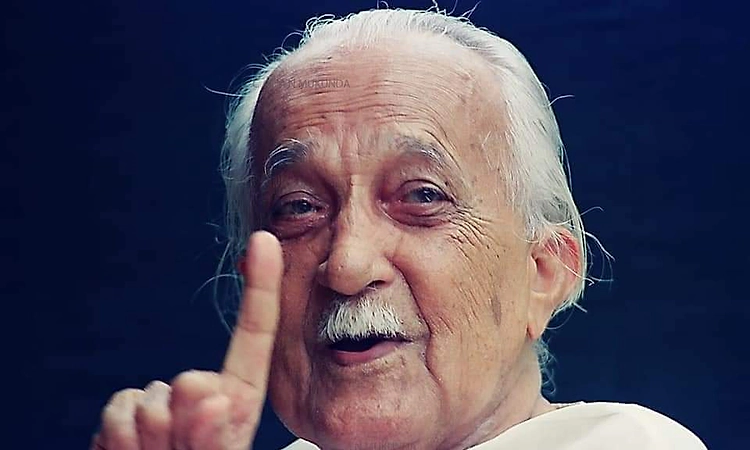
Today is the birth anniversary of the great scientist
– An article by Kum.Roshni, Student, Sheshadripuram Degree College Mysore
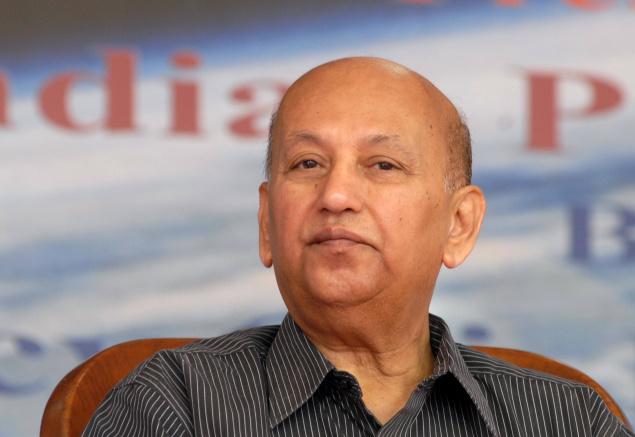
Udupi Ramachandra Rao (1932–2017) was one of India’s most distinguished space scientists and a major architect of the country’s satellite technology program. He was born on 10 March 1932 in Adamaru village near Udupi, in Karnataka, India. From an early age, Rao showed a deep interest in science and mathematics. He completed his higher education at Banaras Hindu University and later earned a Ph.D. from Gujarat University. His early research focused on space science and cosmic rays, which later became the foundation of his contributions to India’s space program.
Rao began his career as a cosmic-ray scientist and worked under Vikram Sarabhai, later continuing his research at the Massachusetts Institute of Technology. His experiments on several Pioneer Program spacecraft and Explorer Program spacecraft improved scientific understanding of solar cosmic rays and the electromagnetic conditions of interplanetary space.
In 1966, Rao returned to India and joined the Indian Space Research Organisation. Recognizing the importance of space technology for national development, he took responsibility in 1972 for establishing satellite technology in India. Under his leadership, India’s first satellite, Aryabhata, was launched in 1975. He guided the development of more than 18 satellites, including Bhaskara satellites, APPLE satellite, Rohini satellite series, INSAT-1 series, INSAT-2 series, IRS-1A, and IRS-1B, which supported communication, meteorology, and remote sensing services.
Rao served as Chairman of ISRO from 1984 to 1994 and played a crucial role in strengthening India’s space capabilities. In recognition of his achievements, he became the first Indian space scientist inducted into the Satellite Hall of Fame in Washington, D.C., in 2013 and was also inducted into the International Astronautical Federation Hall of Fame. He received prestigious awards such as the Padma Bhushan and Padma Vibhushan. Rao passed away on 24 July 2017, leaving a lasting legacy in India’s space exploration and satellite technology development.